[ Problem ]
Real life doesn't follow a fitness plan
Fitness apps often expect people to follow fixed routines. But sleep, energy, and schedules change every day. When a plan no longer fits, people skip workouts, stop tracking meals, or abandon their routine entirely.
You're given a seven-day plan, and God forbid you step outside it. That's definitely not for me.
 Polina
When an app just tells me what to do, I don't like it. I won't do it. I'll just delete it.
 Veronika
Sometimes I'd only last a couple of days. I came back to that app more than once.
Polina
The design challenge
How might we make healthy routines flexible enough to fit real life?
[ Research ]
People were already finding their own workarounds
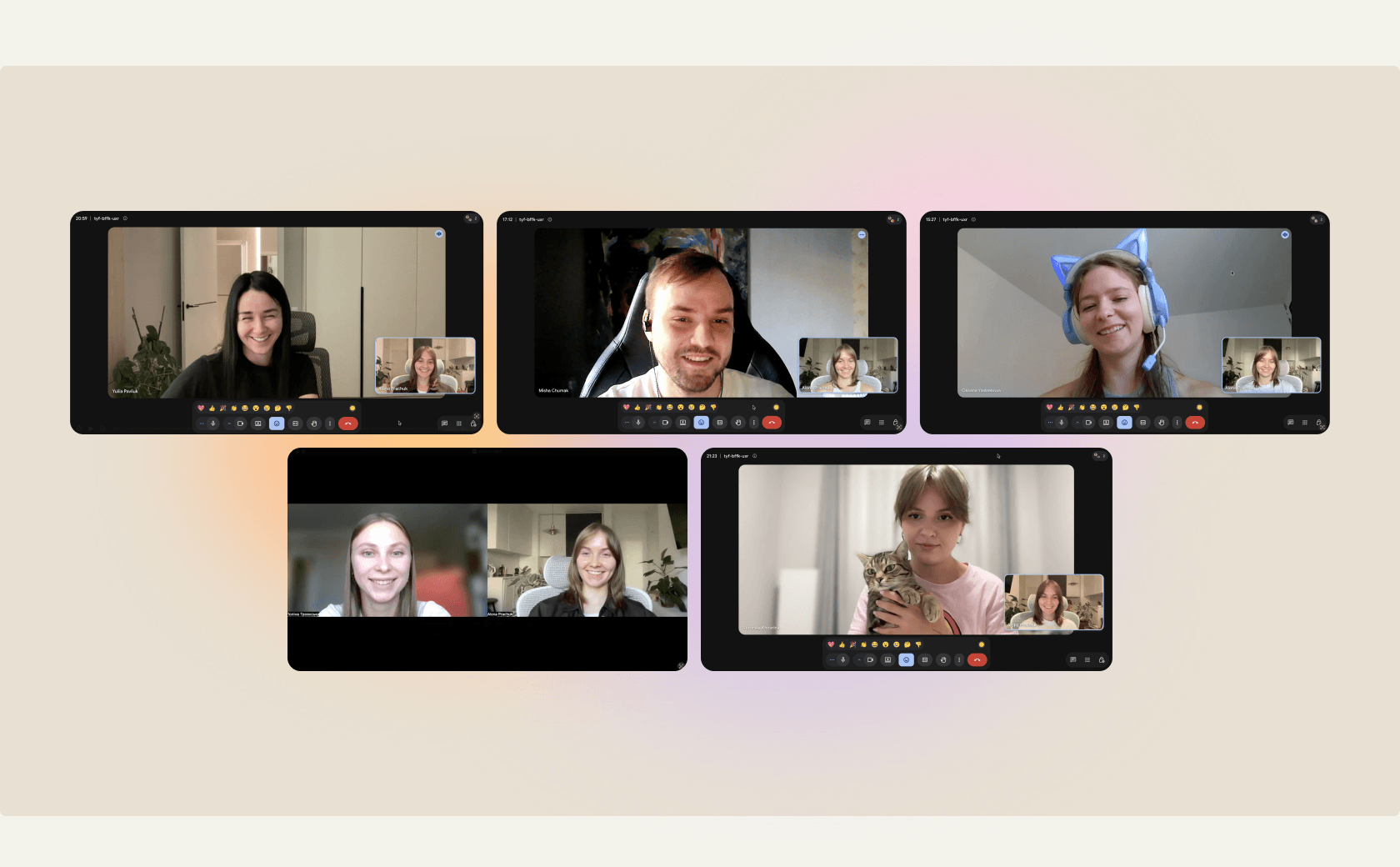
I started with a project brief and competitor analysis, then interviewed five people about how they manage fitness, nutrition, and recovery. AI took on the routine work here and at later stages, from the competitor analysis and pulling key quotes to first drafts of the information architecture and wireframes. I made the decisions and reworked what it produced.
I analyzed 530 tagged highlights in Dovetail to find recurring behaviors, frustrations, and unmet needs. What came up, and how many of the five people said it:
Daily plan
- 5/5Sleep and energy shaped their day
- 4/5Still wanted to move on low-energy days
Food
- 5/5Found manual food logging tiring
- 5/5Struggled to decide what to eat
- 3/5Wanted meal ideas from what's at home
Recommendations
- 5/5Needed to know why something was suggested
- 4/5Wanted to swap a recommendation
- 4/5Looked for exercise technique explained
Progress and tools
- 5/5Wanted to see change over time
- 4/5Wanted food, training, and sleep in one place
The best clues came from what people were already doing
All five already used ChatGPT or Claude to estimate meals from photos, cook from what’s at home, find alternatives and track training. Feelvy brings these scattered tasks into one place.
I dictated all the ingredients I had to ChatGPT, sent photos, and asked it to suggest meals that fit my calorie and macro targets.
VeronikaI write to ChatGPT to create a meal plan, or tell it what ingredients I want to use or already have.
PolinaI photographed absolutely everything I ate for ChatGPT, and it worked out the numbers from the pictures.
 Julia
Very often I asked it to count the calories in a dish.
 Oksana
I send Claude my results every week. Once a month it tells me how many training days I had and how many workouts I actually did.
 Misha
Who I designed for
Maya represents the primary user group: busy adults with unpredictable schedules who want to manage their weight, build strength, and maintain healthier habits without juggling multiple apps.
[ Product Direction ]
What if the plan followed the person?
Three principles came out of the research:
- Adapt to the day. Match the plan to sleep, energy, and available time.
- Reduce effort. Simplify food logging, meal planning, and everyday decisions.
- Keep users in control. Make AI suggestions understandable, editable, and optional.
Ideas with less research support, like cycle-based planning (2 of 5), stayed out of the core experience.
The information architecture below groups Feelvy into five areas: Today, Nutrition, Workout, Progress, and Settings, with Today as the daily hub for workouts, food, and recovery. From it, I mapped the key journeys in wireframes before moving to high-fidelity design.
[ Onboarding ]
The plan starts with the person
The insight
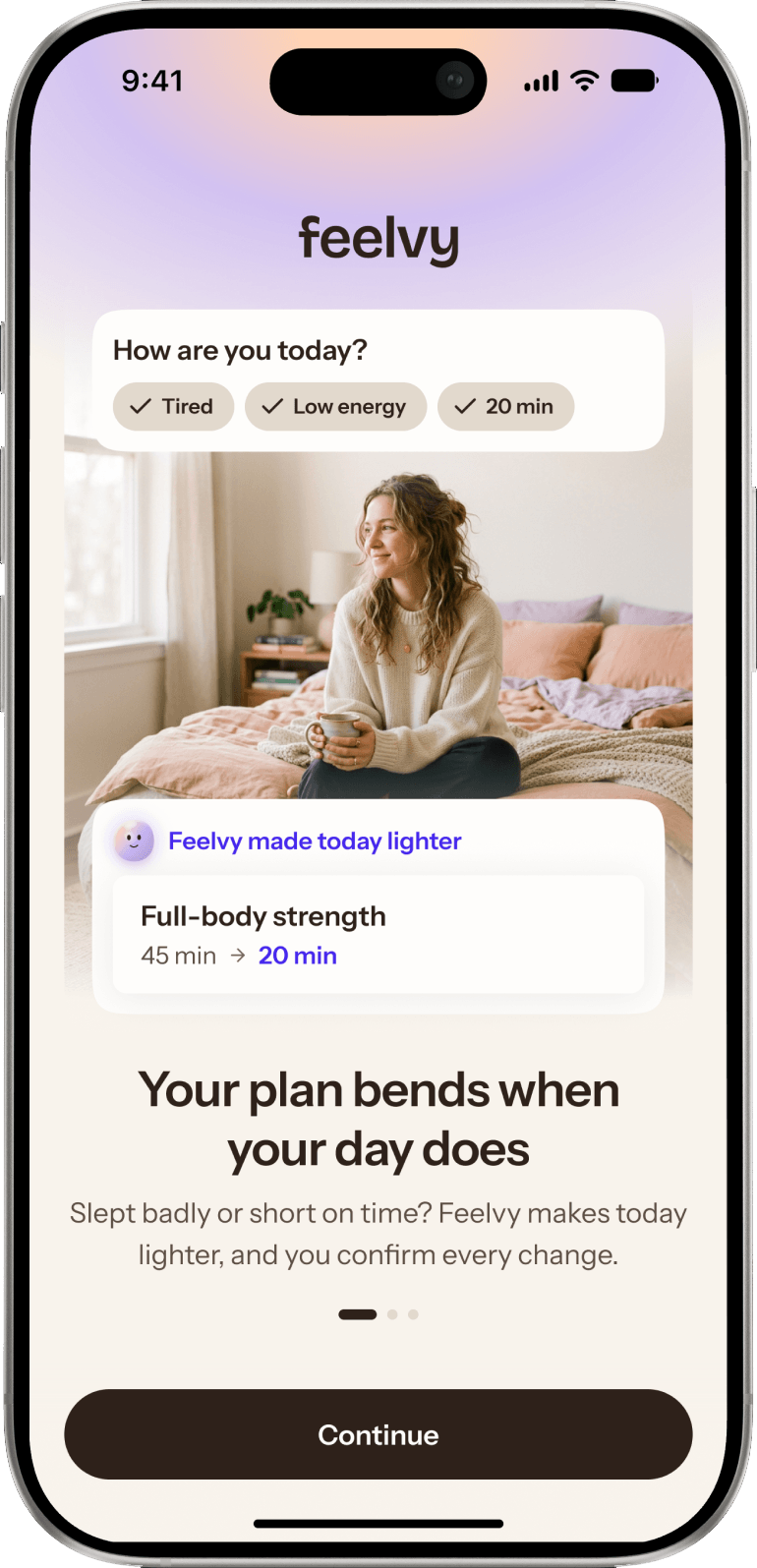
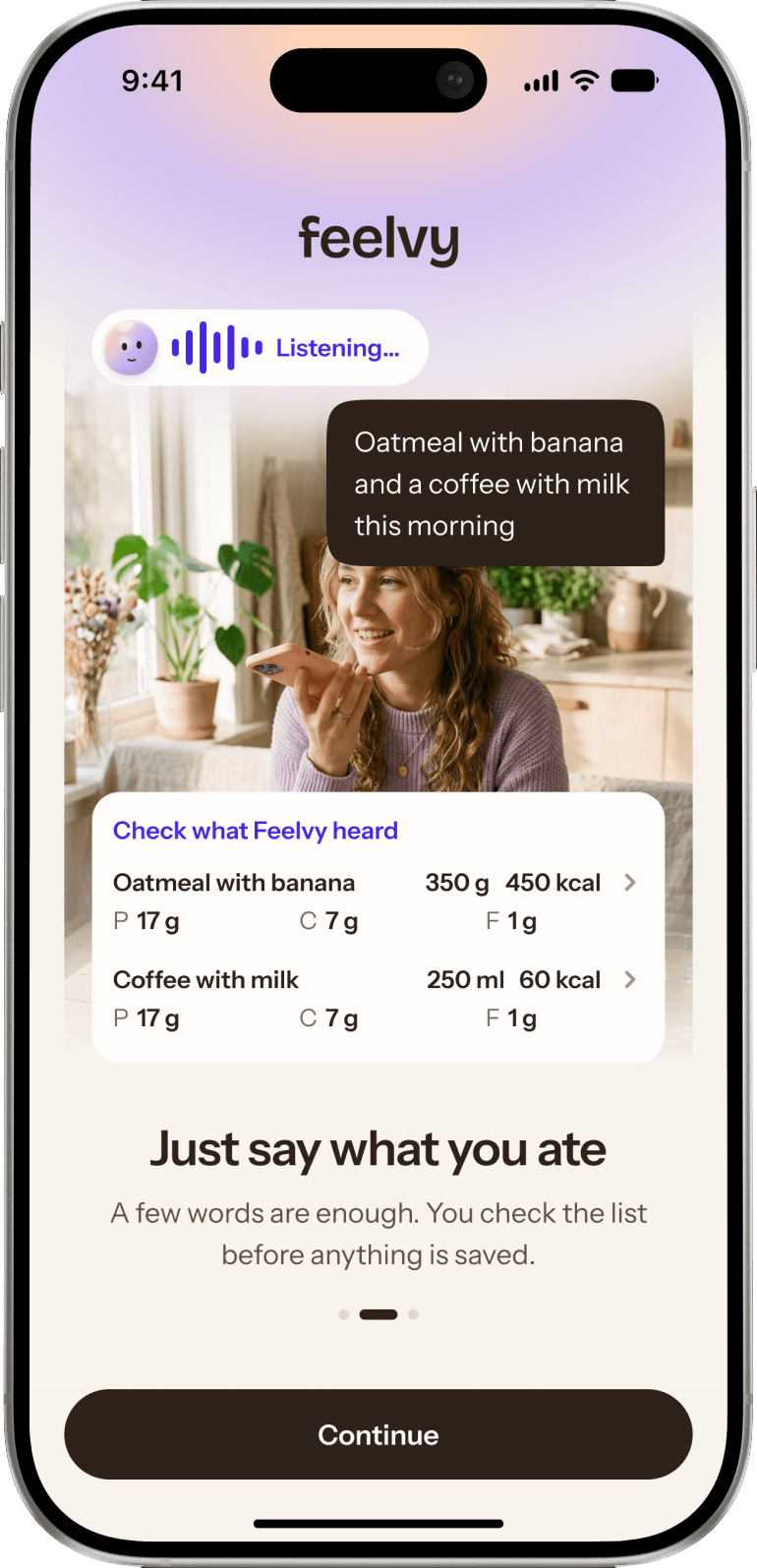
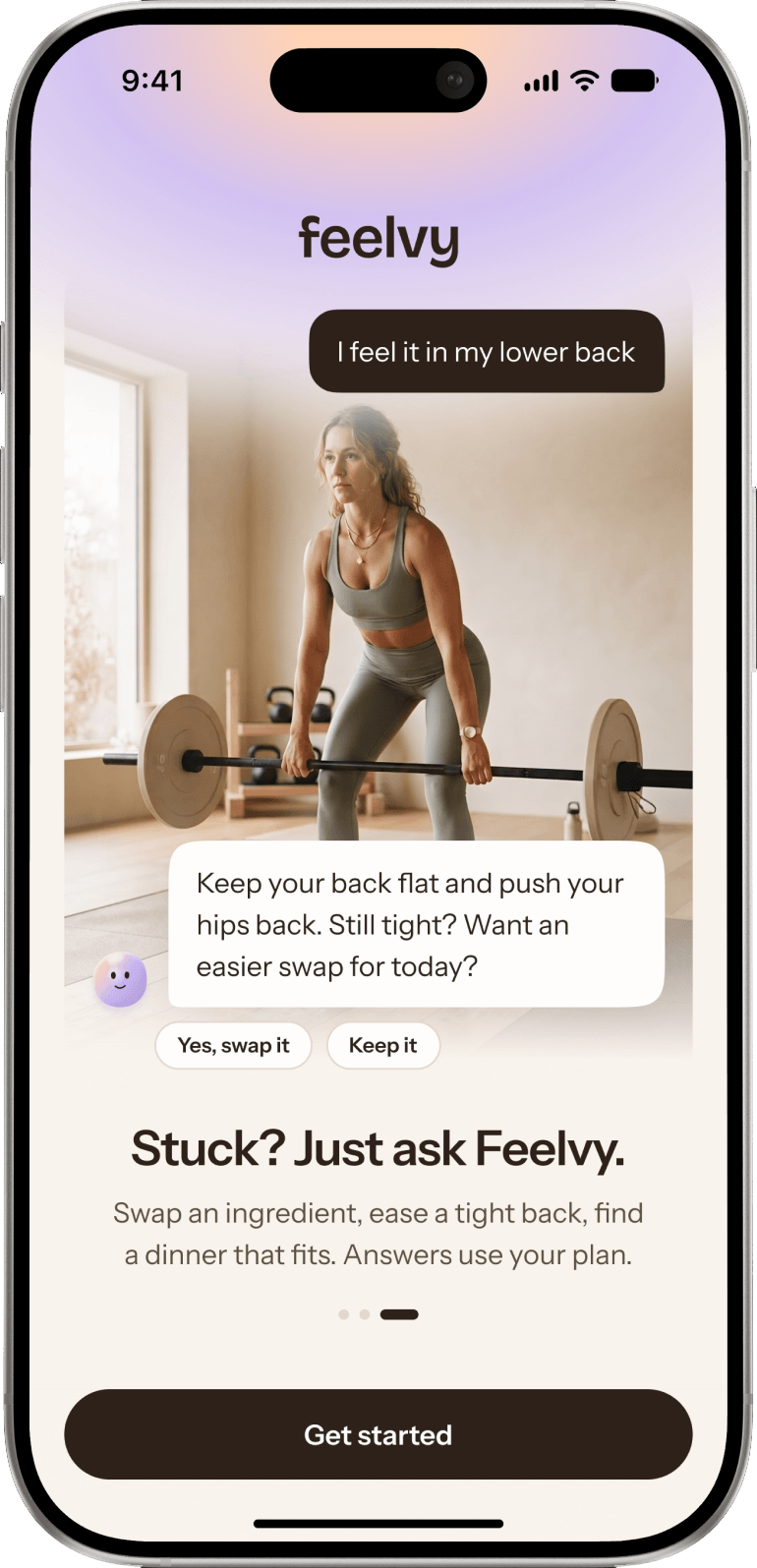
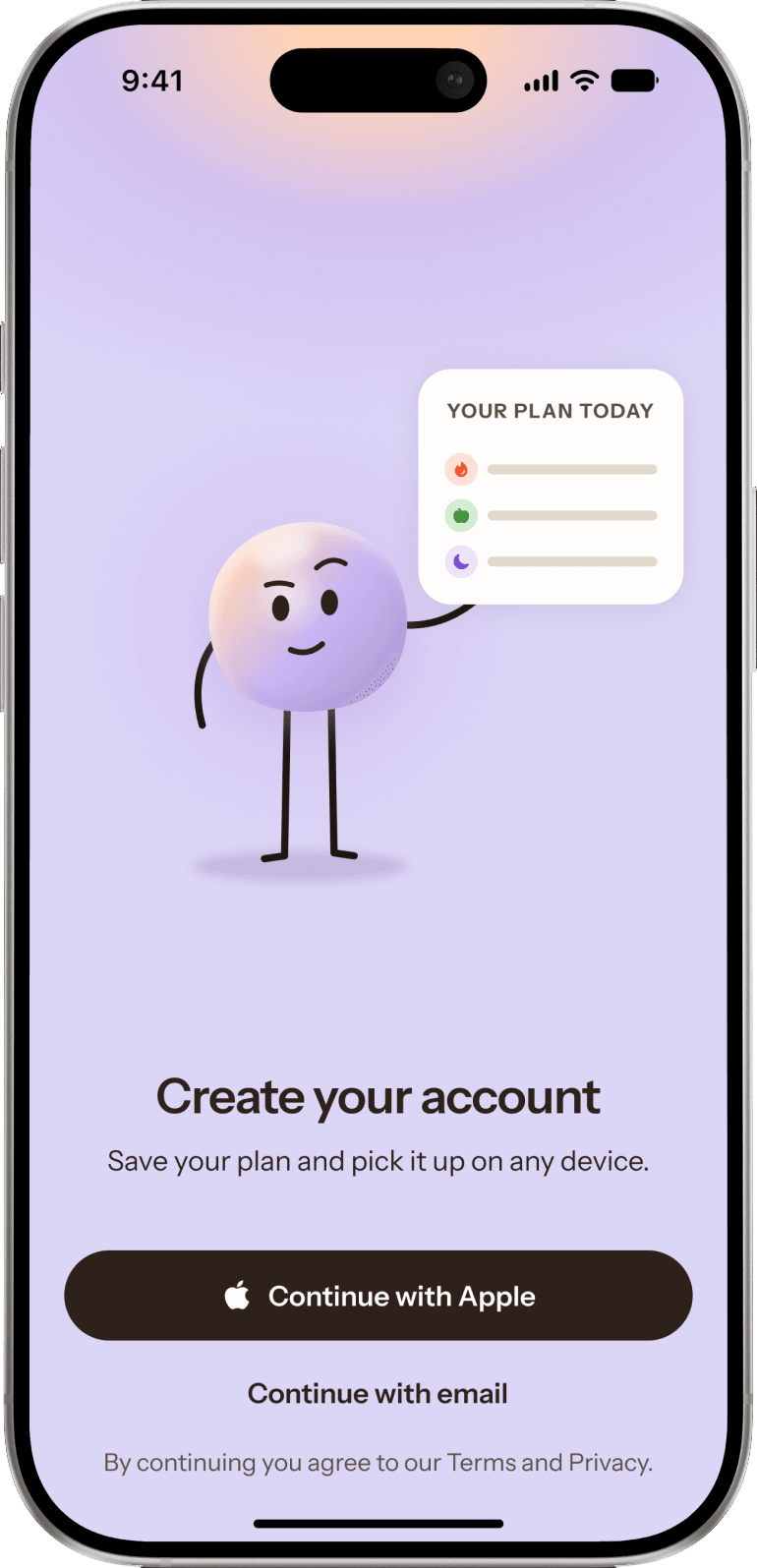
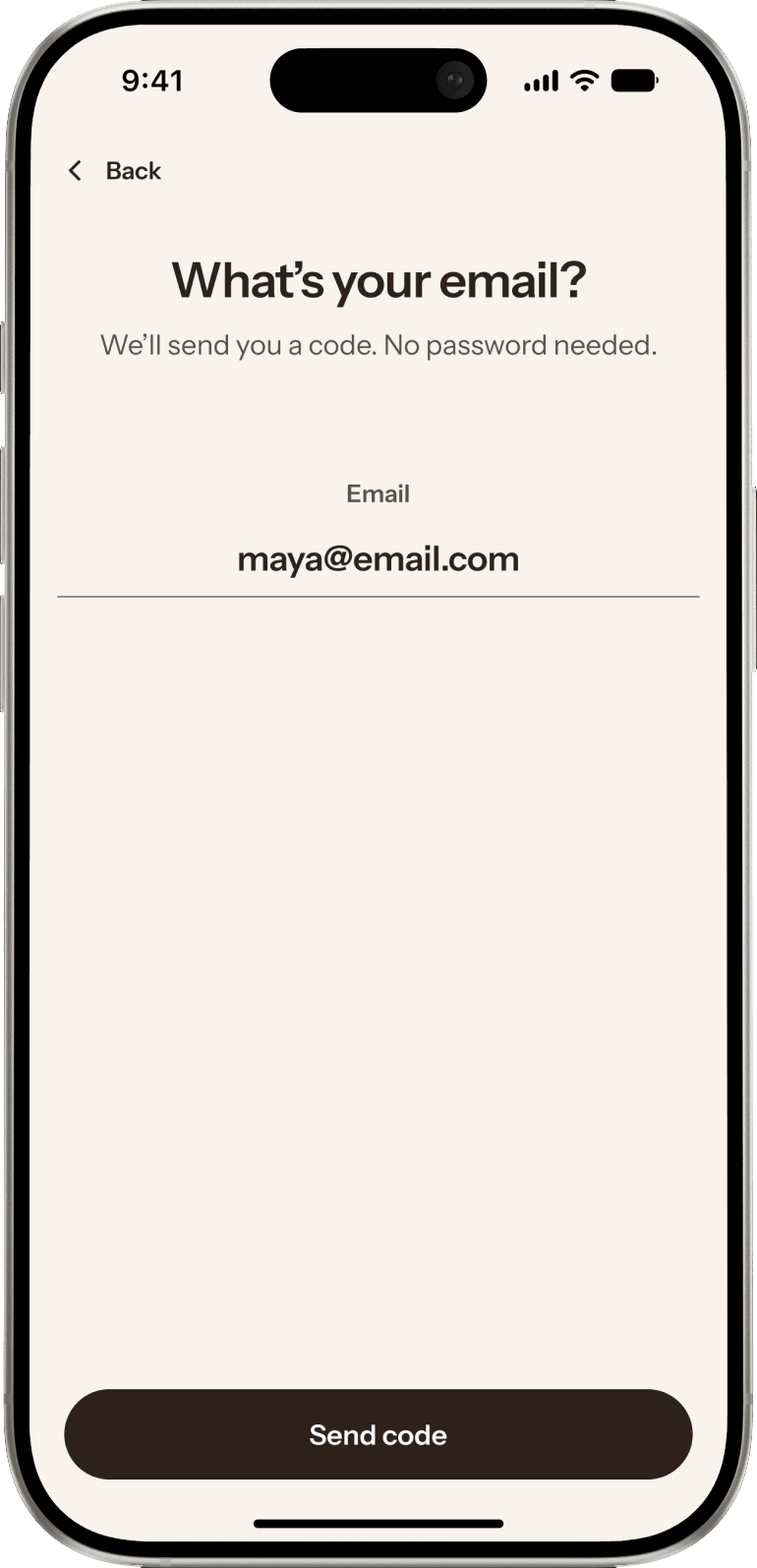
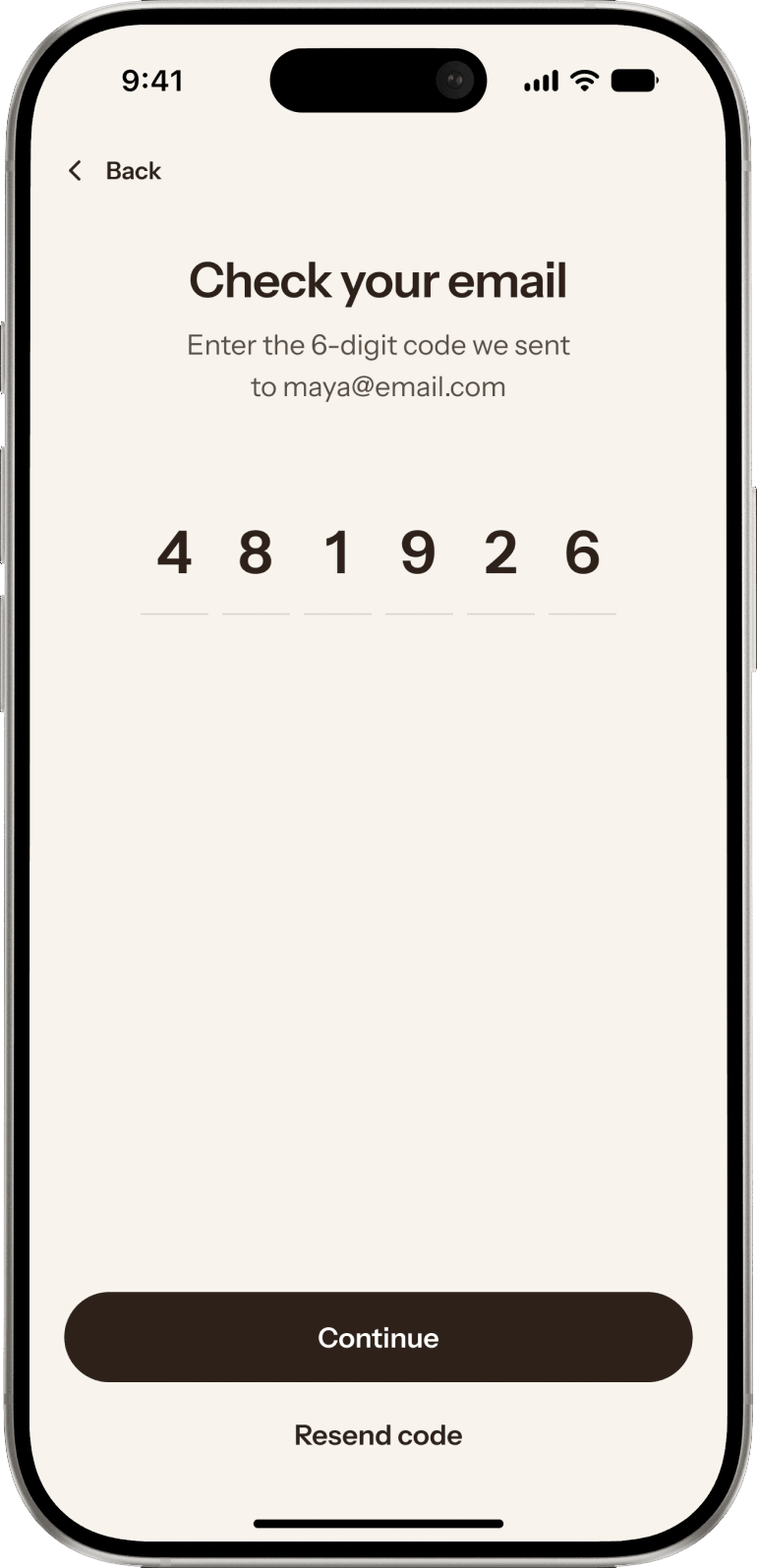
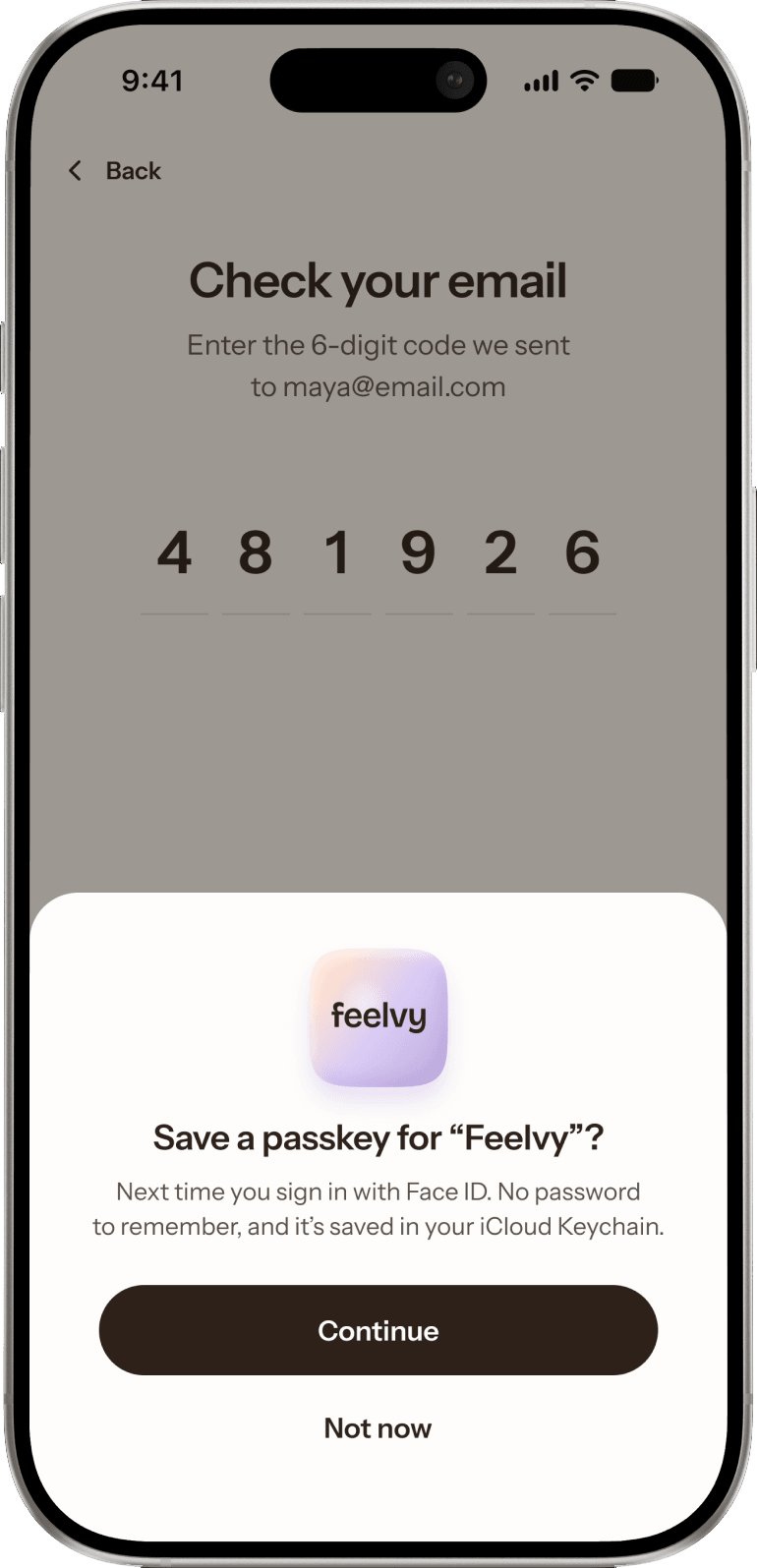
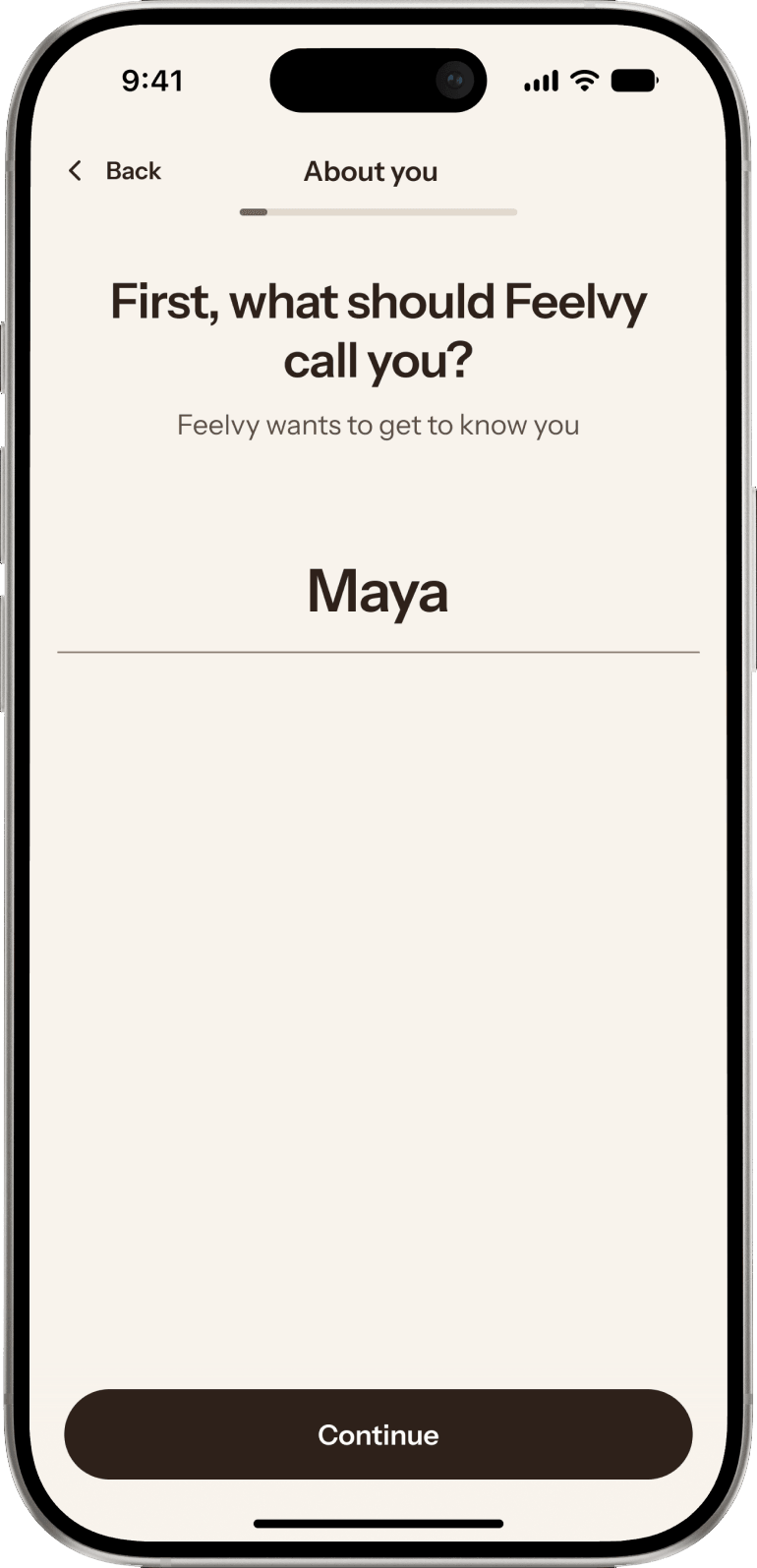
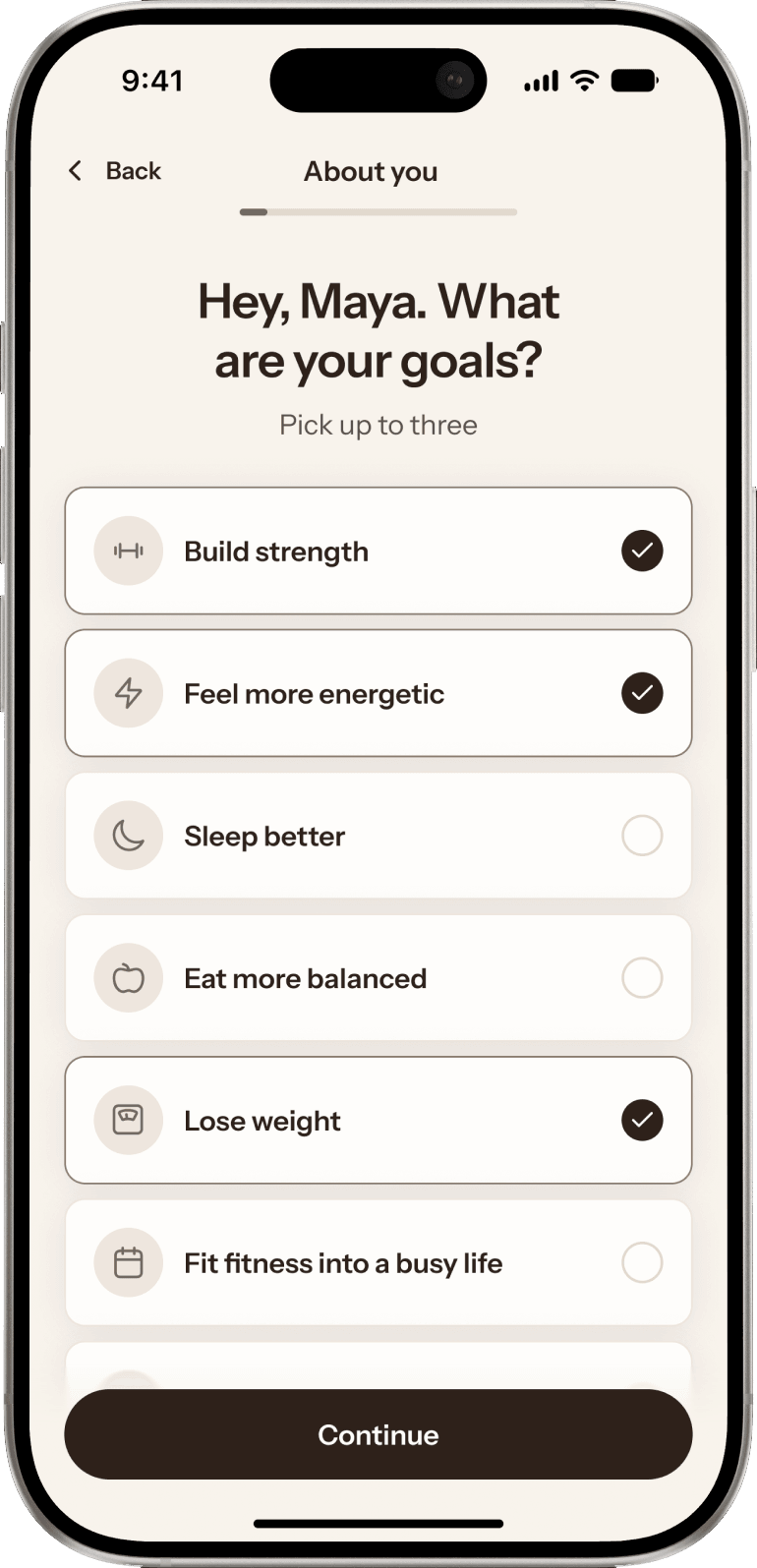
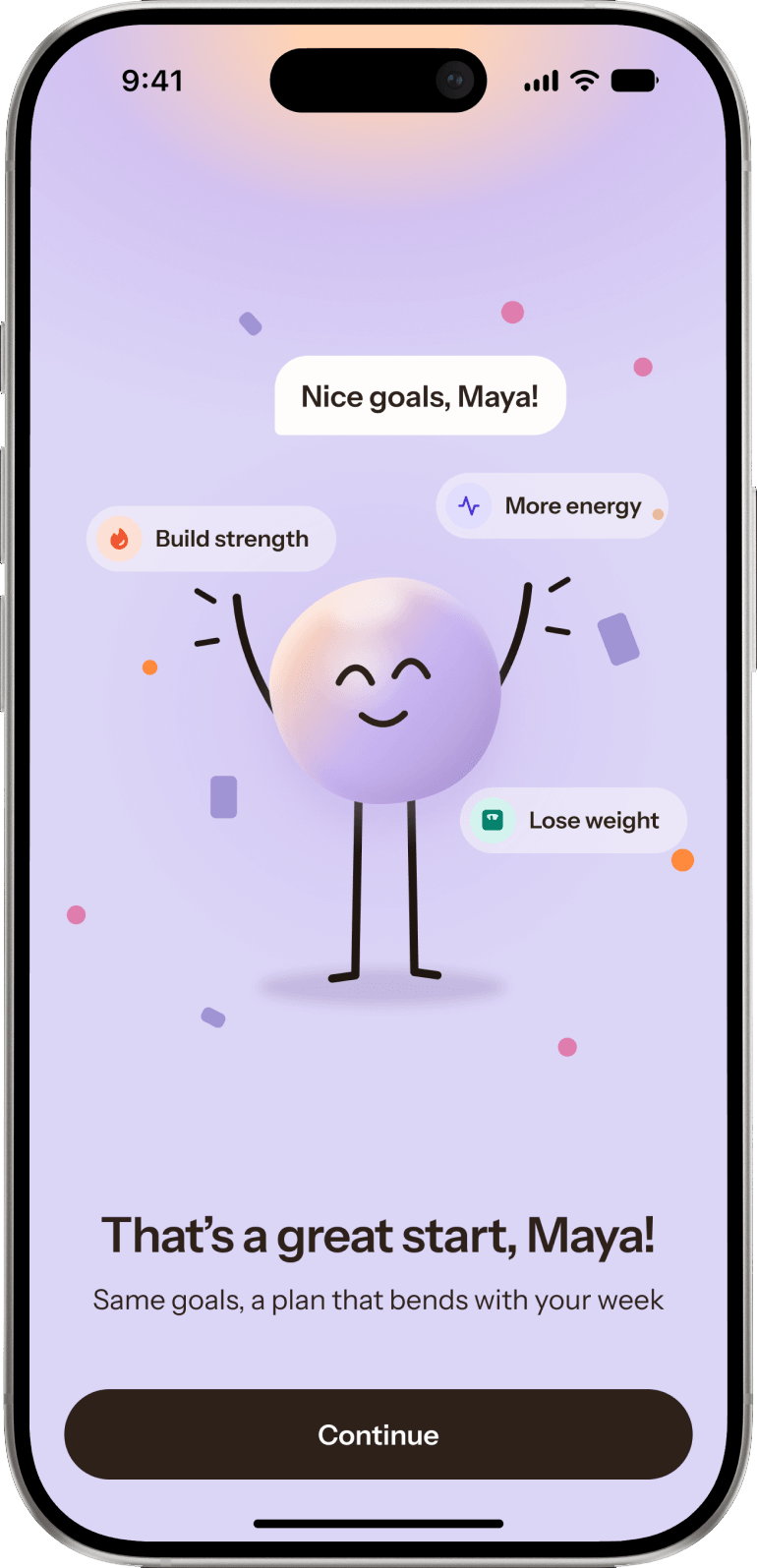
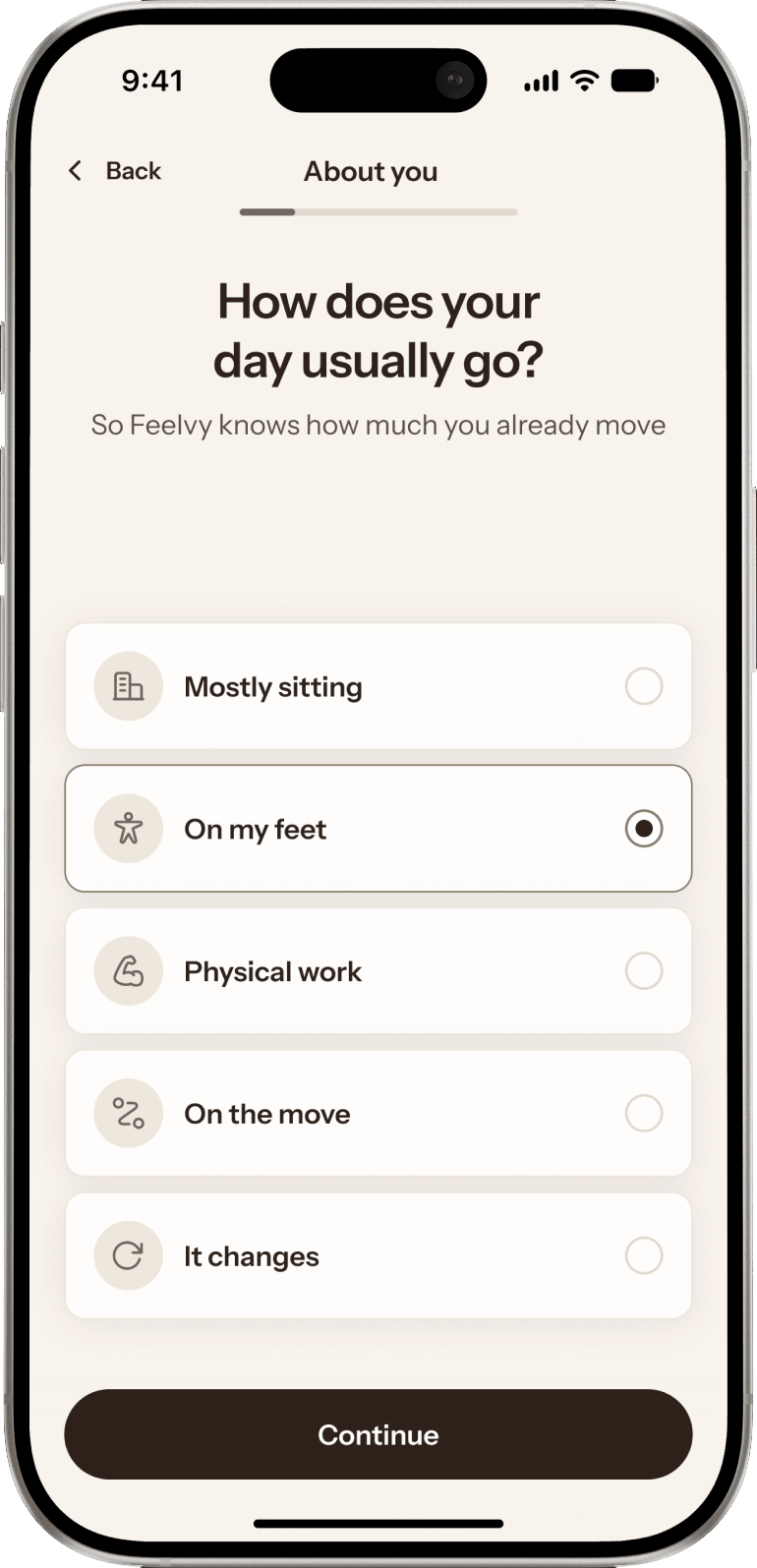
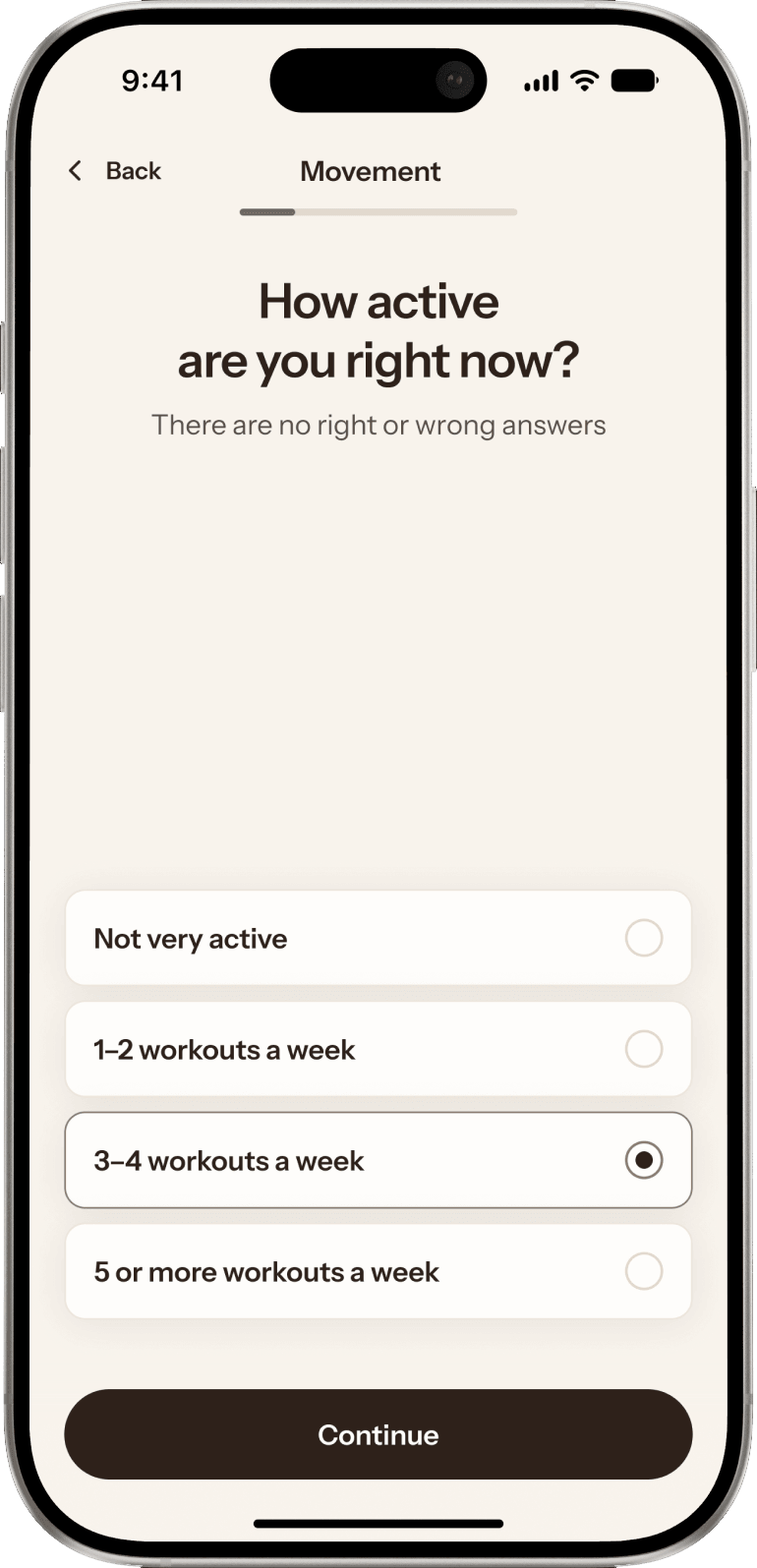
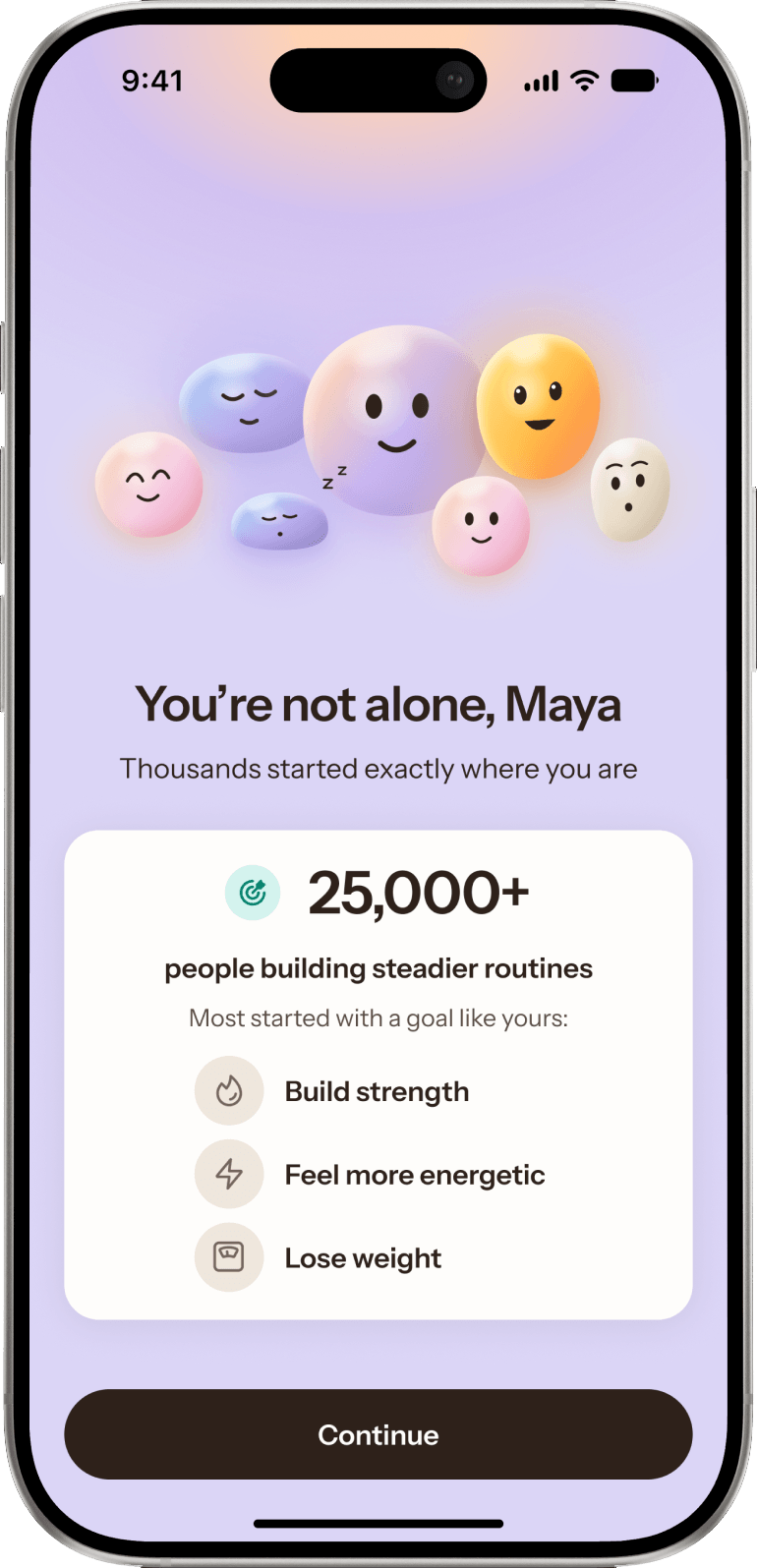
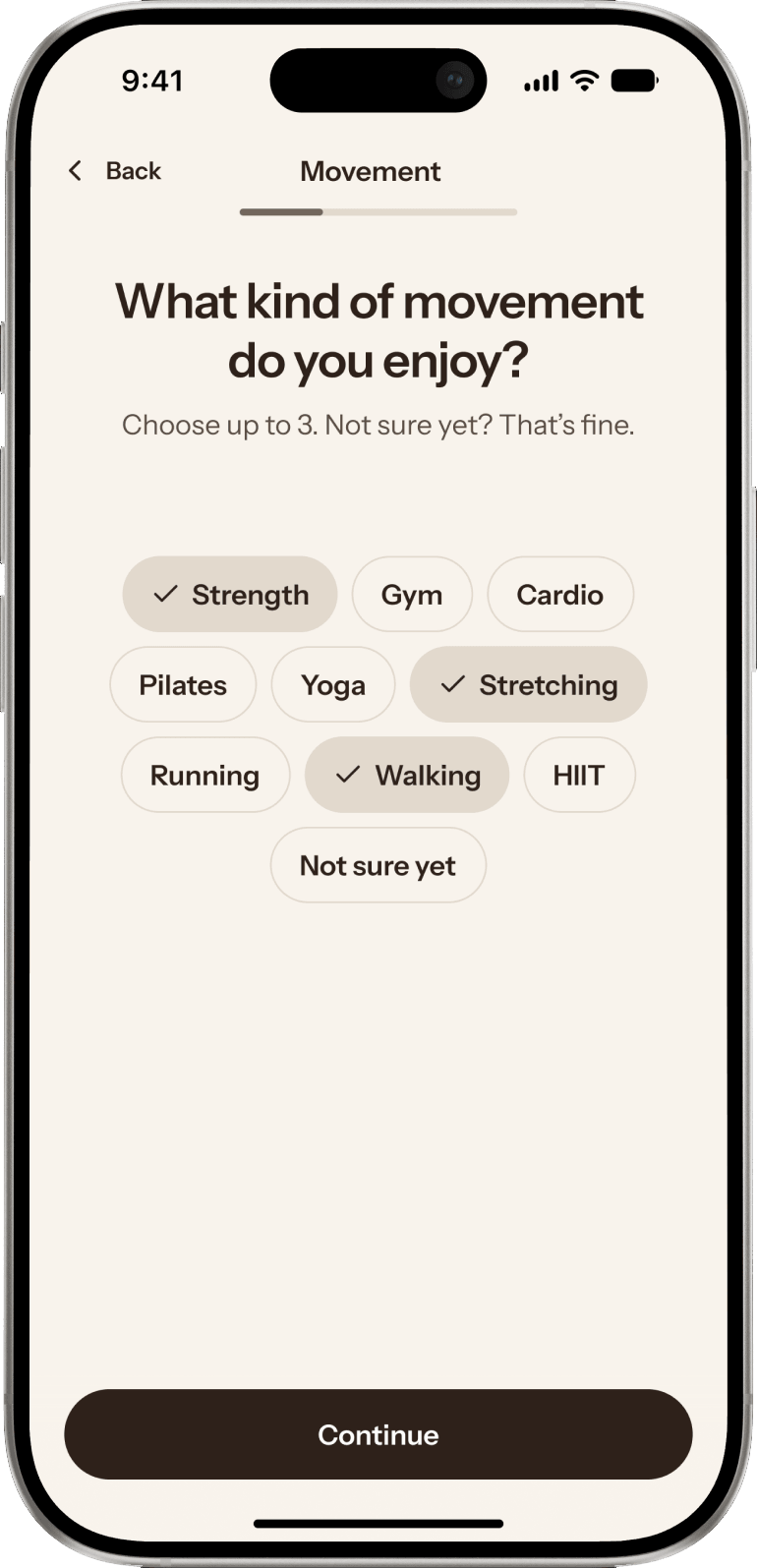
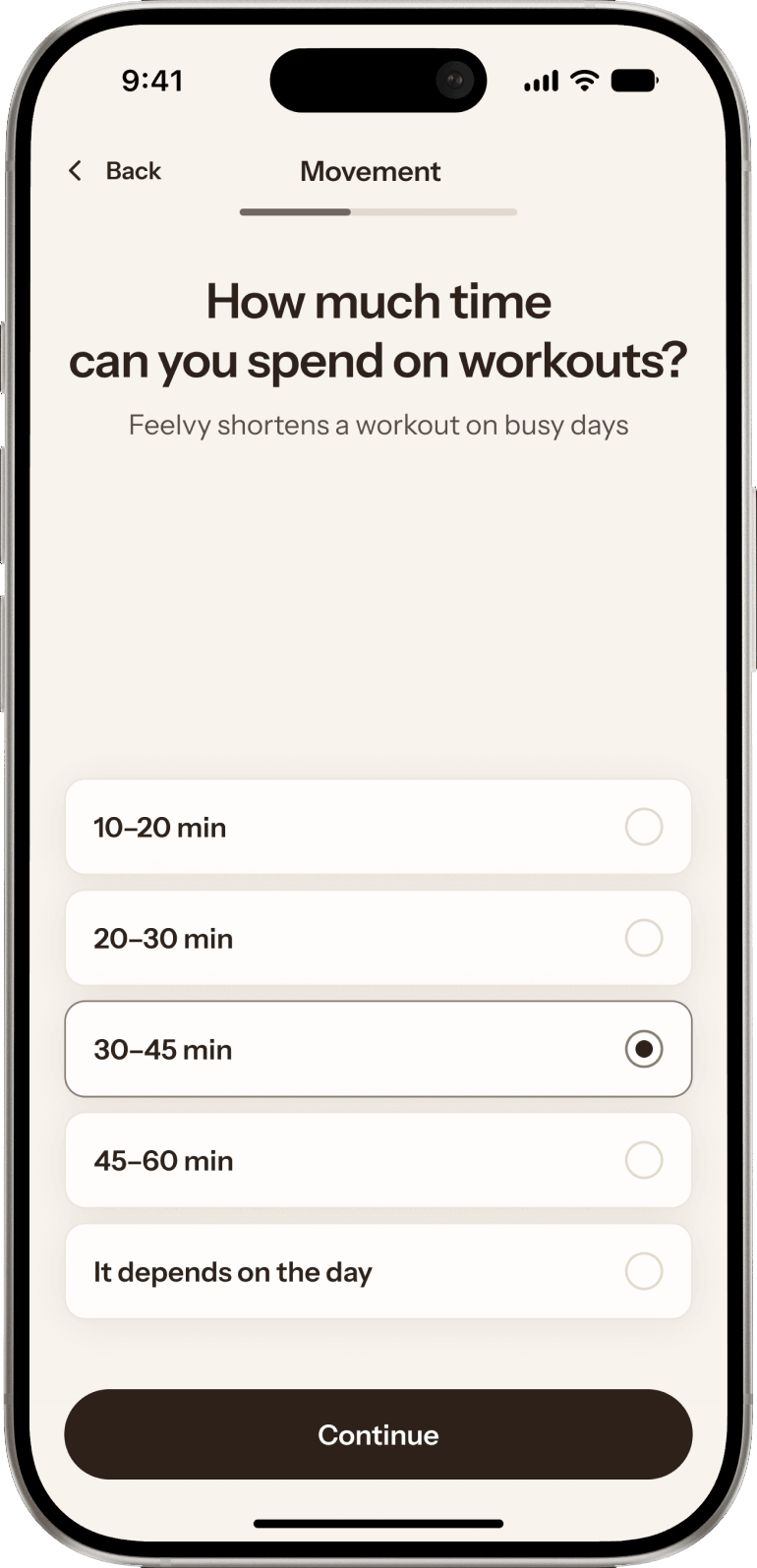
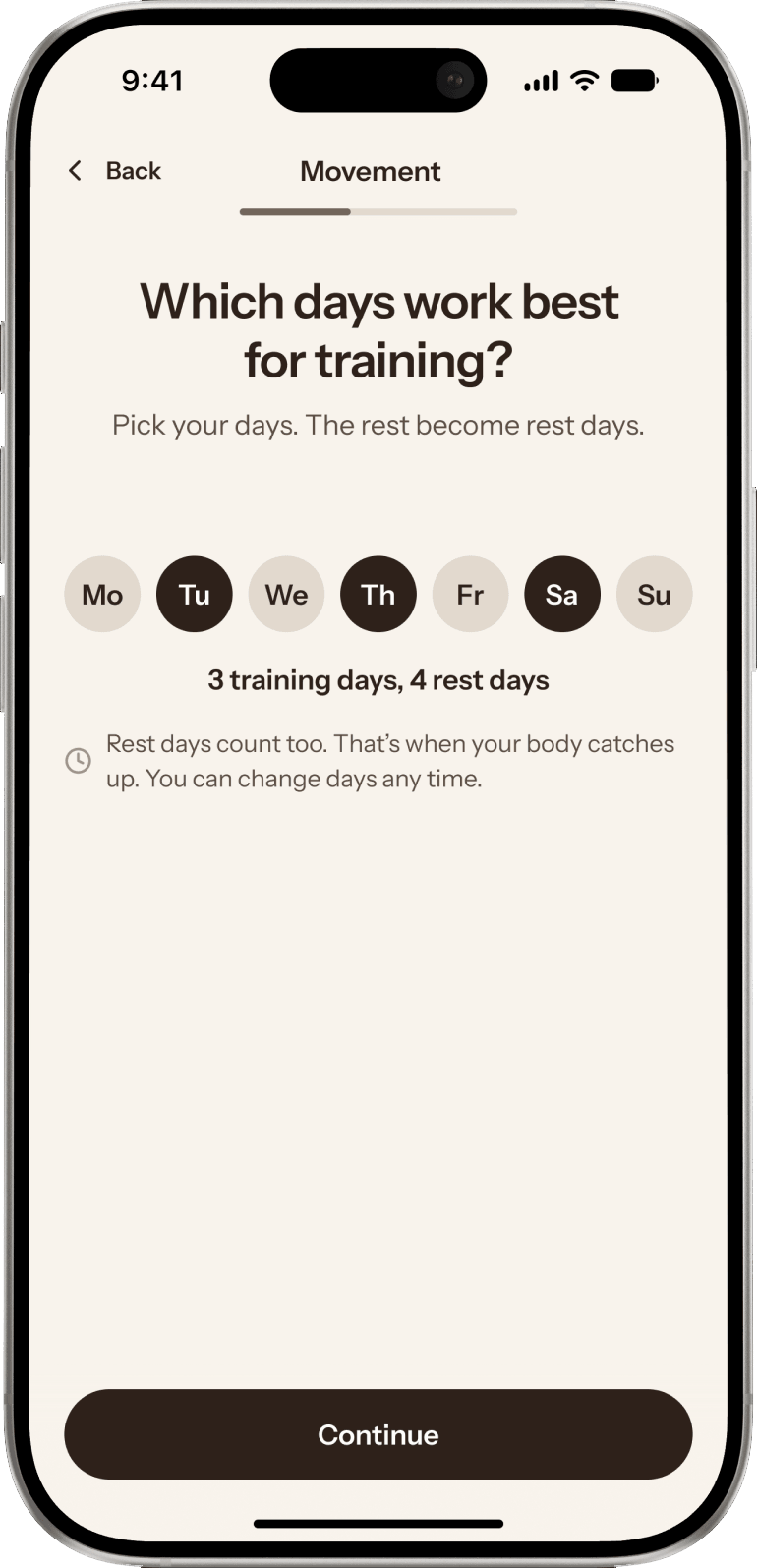
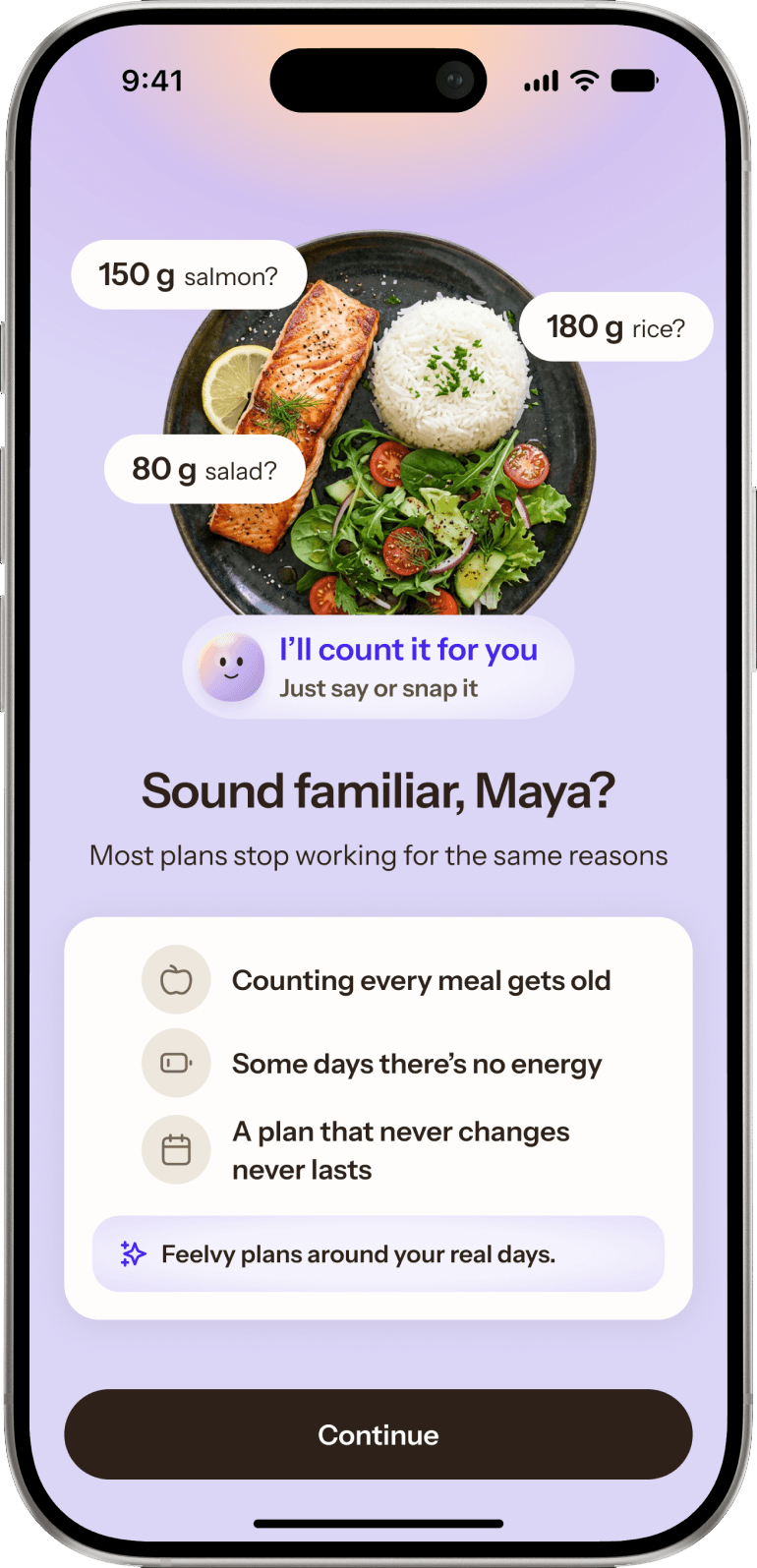
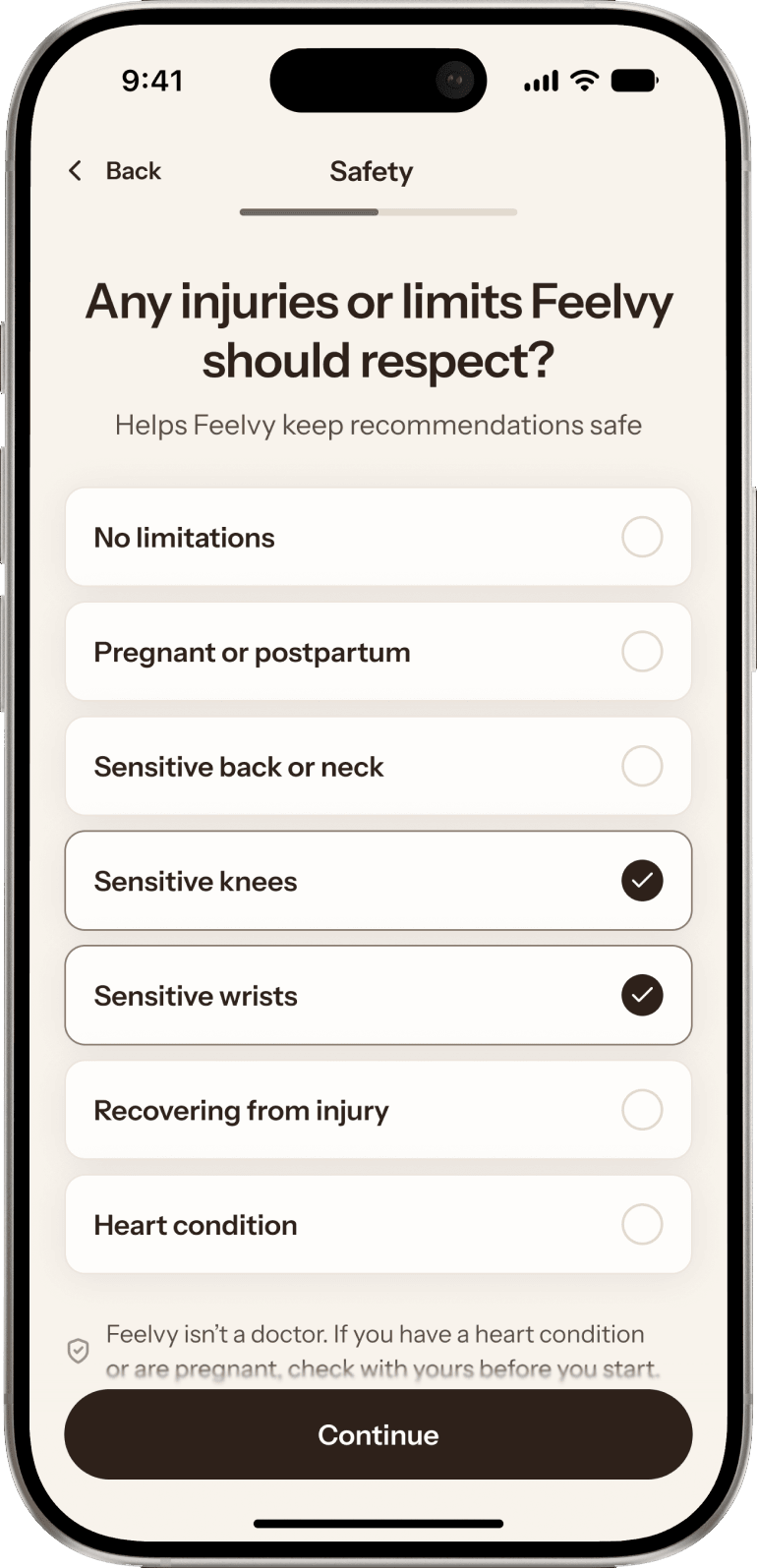
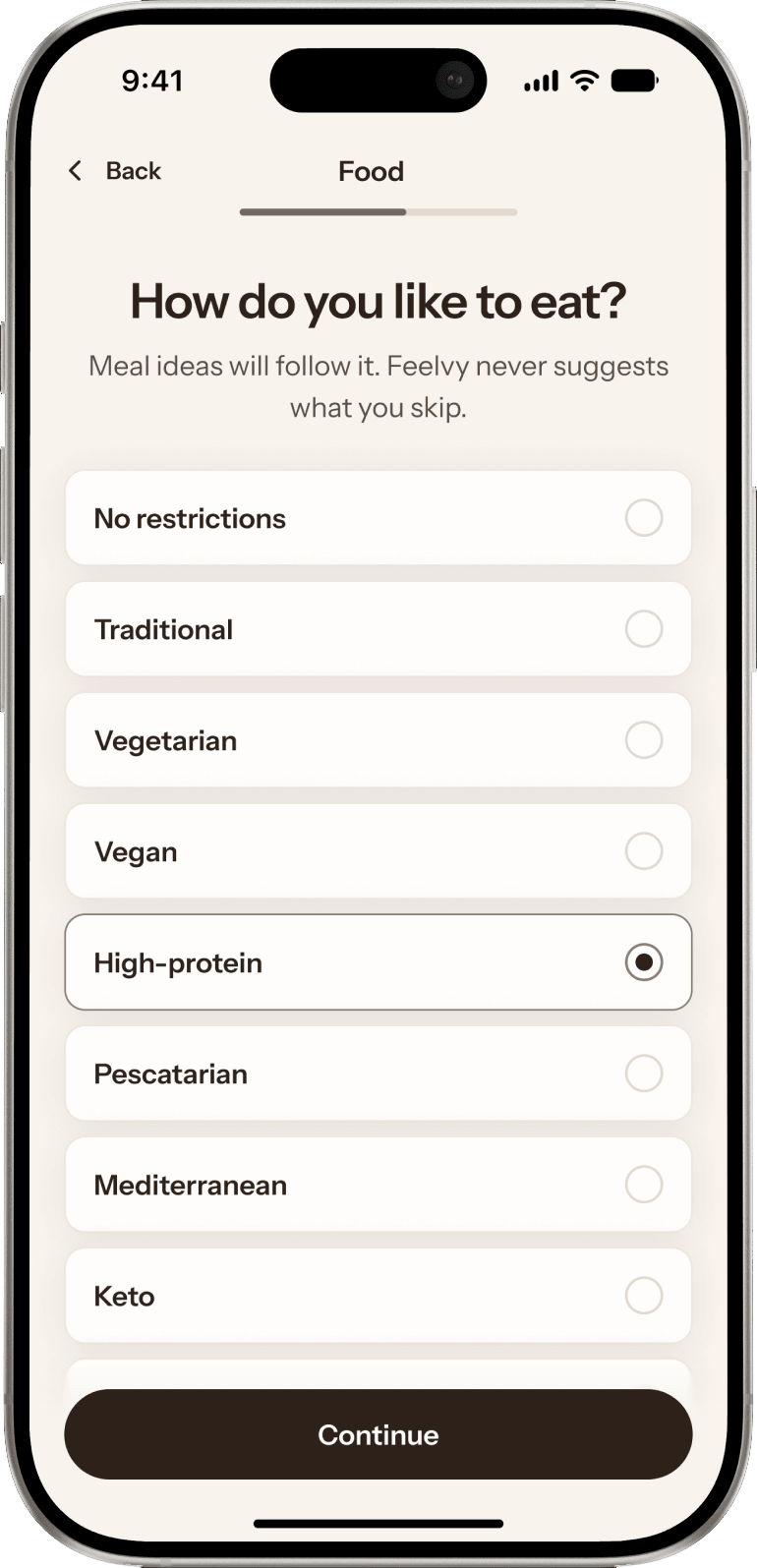
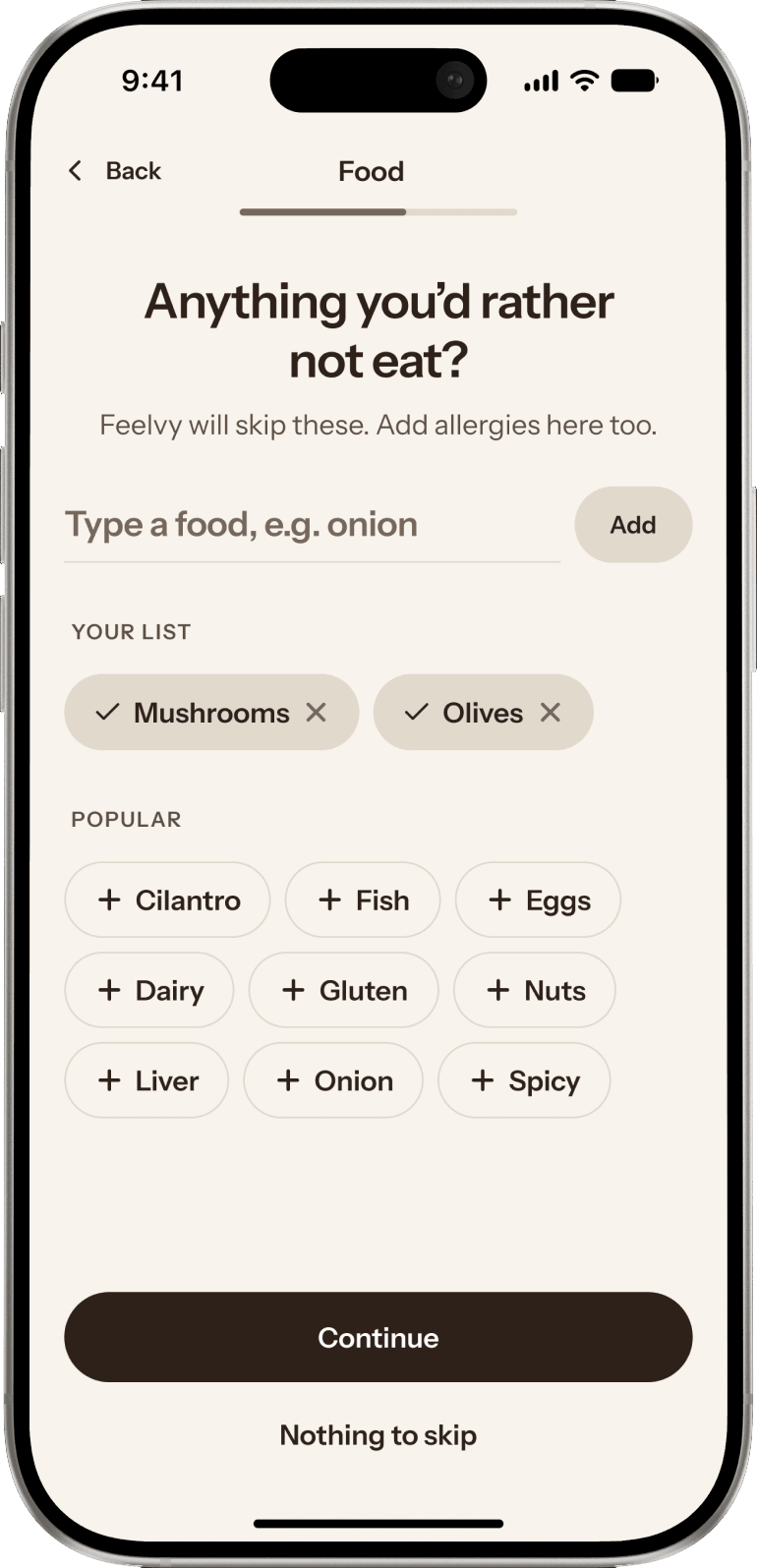
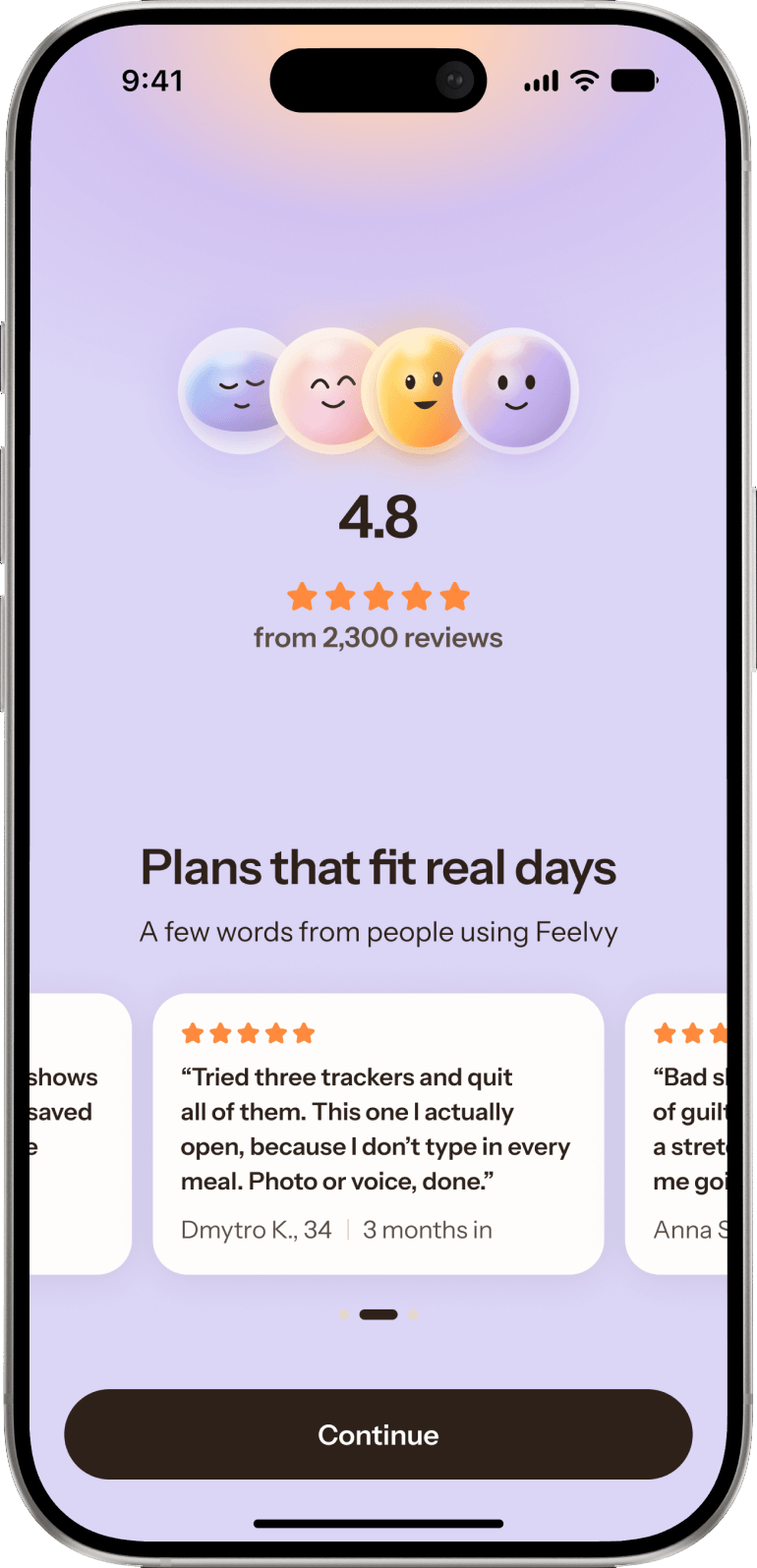
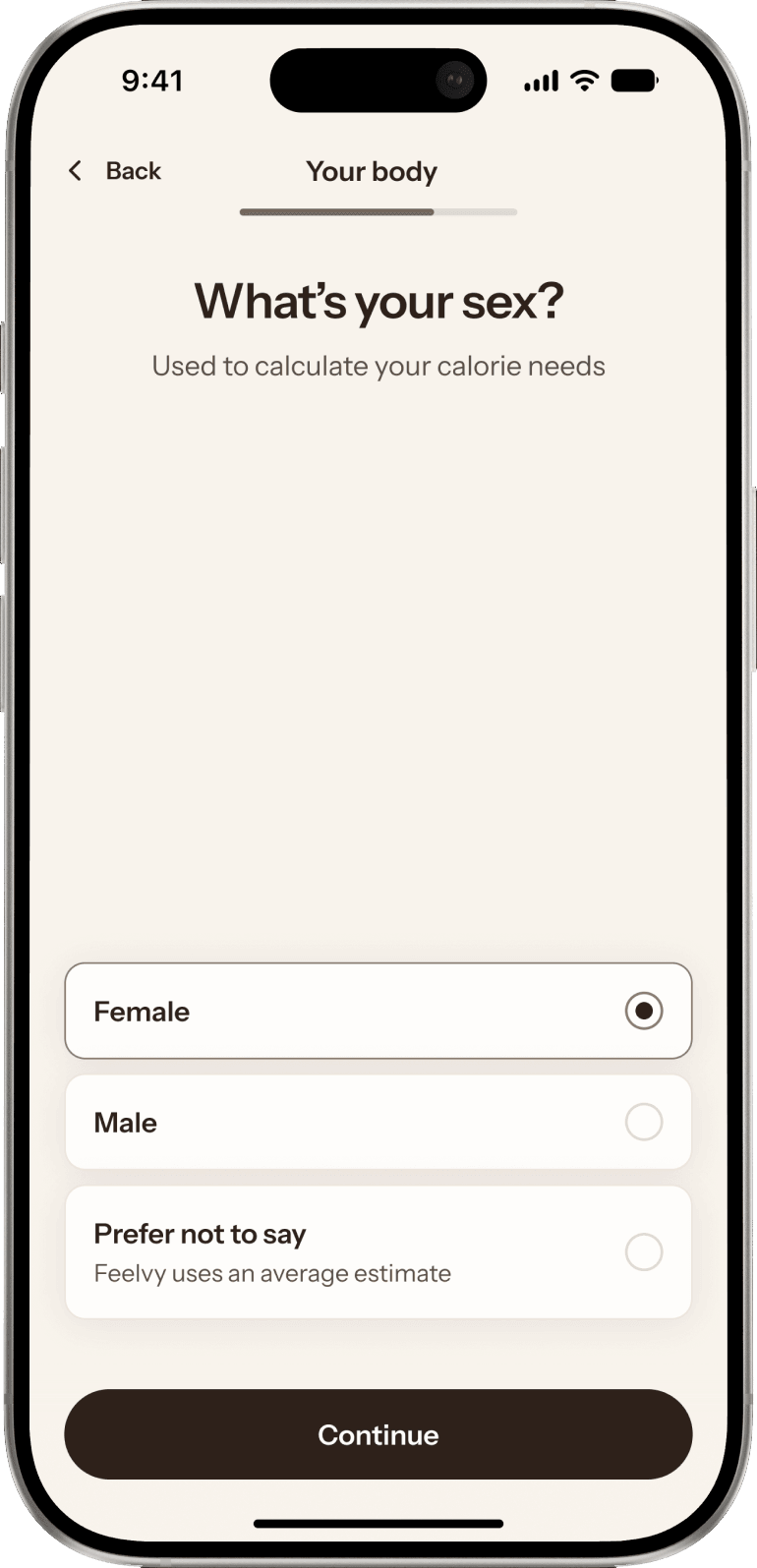
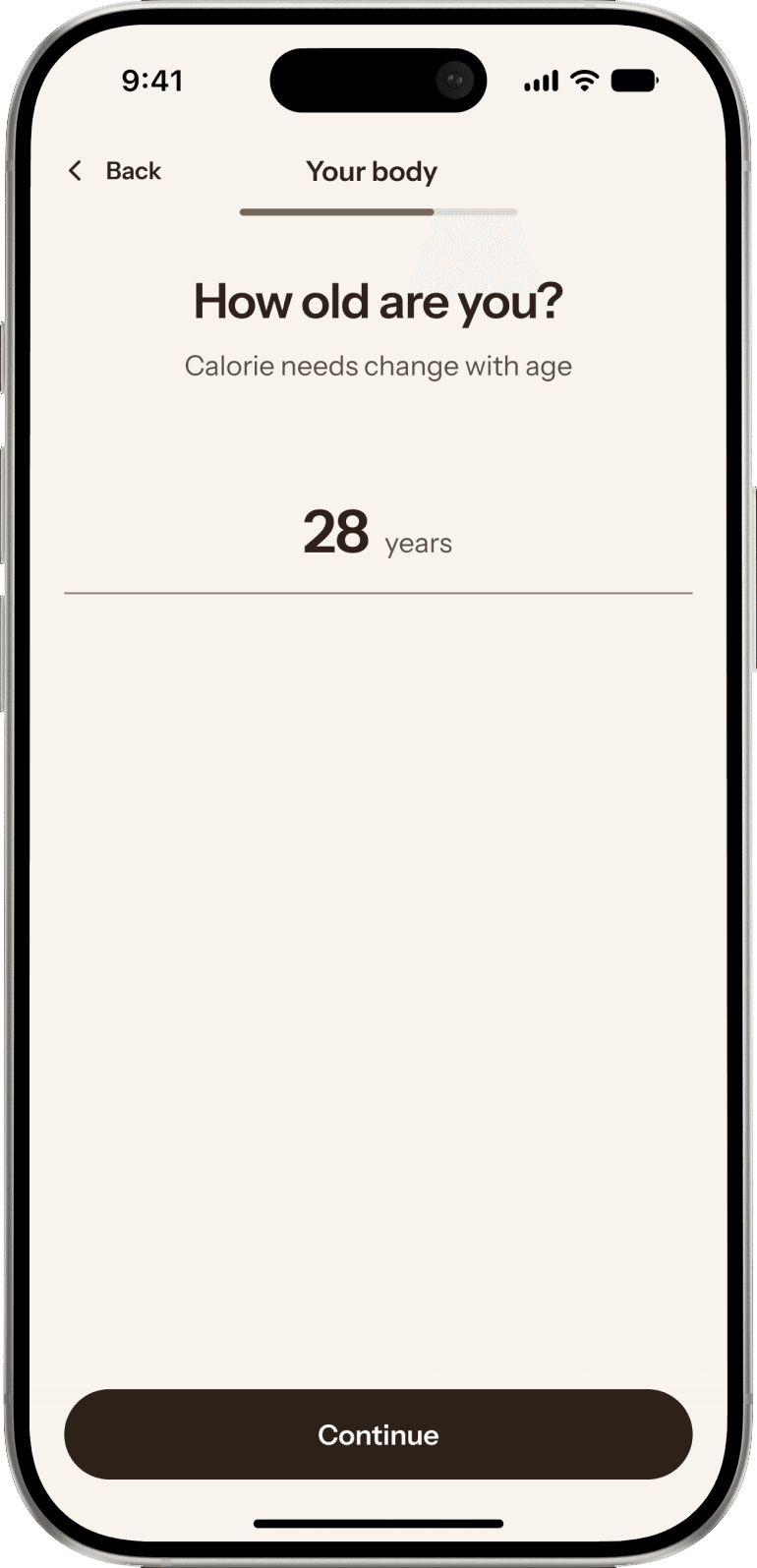
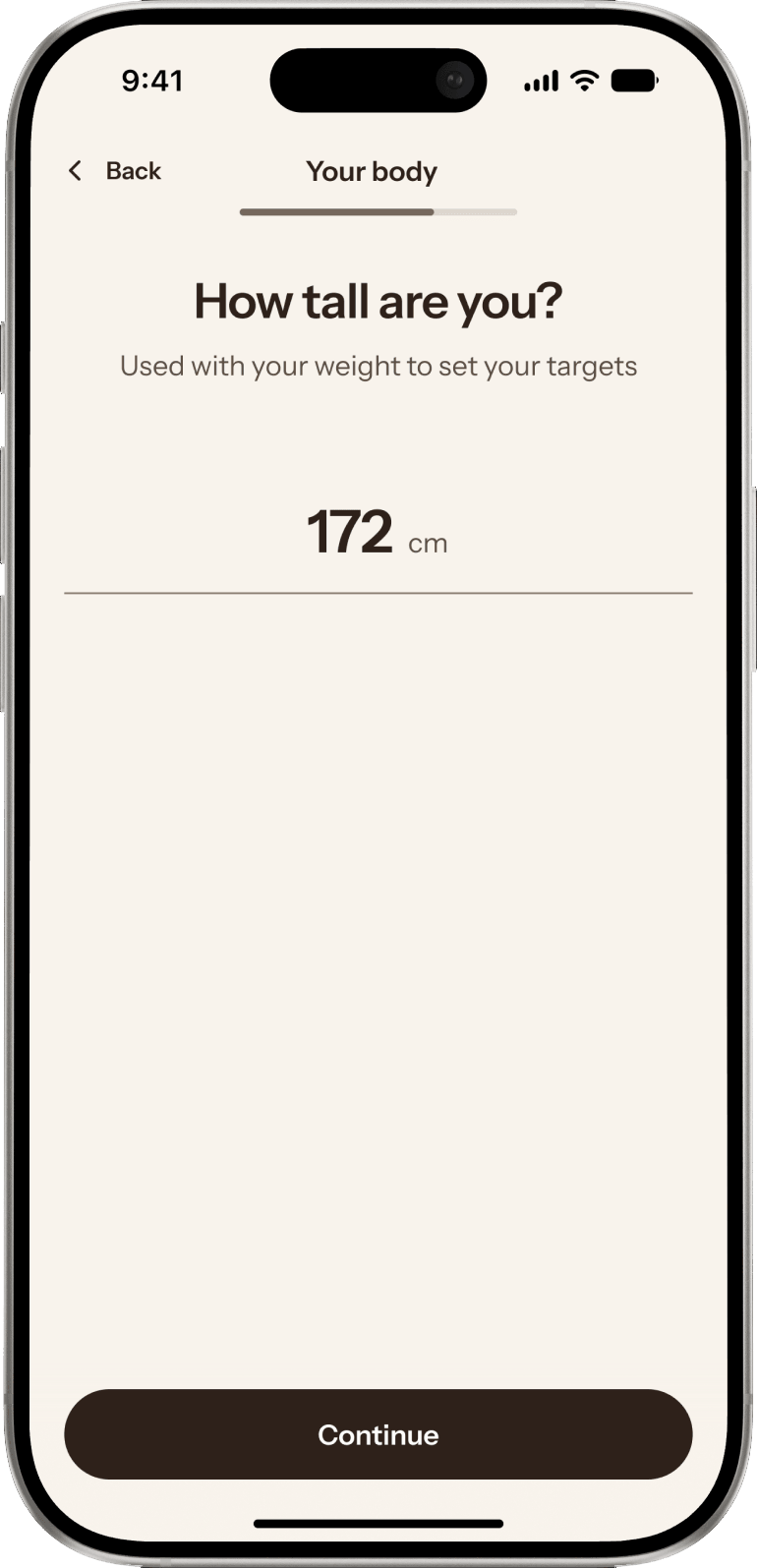
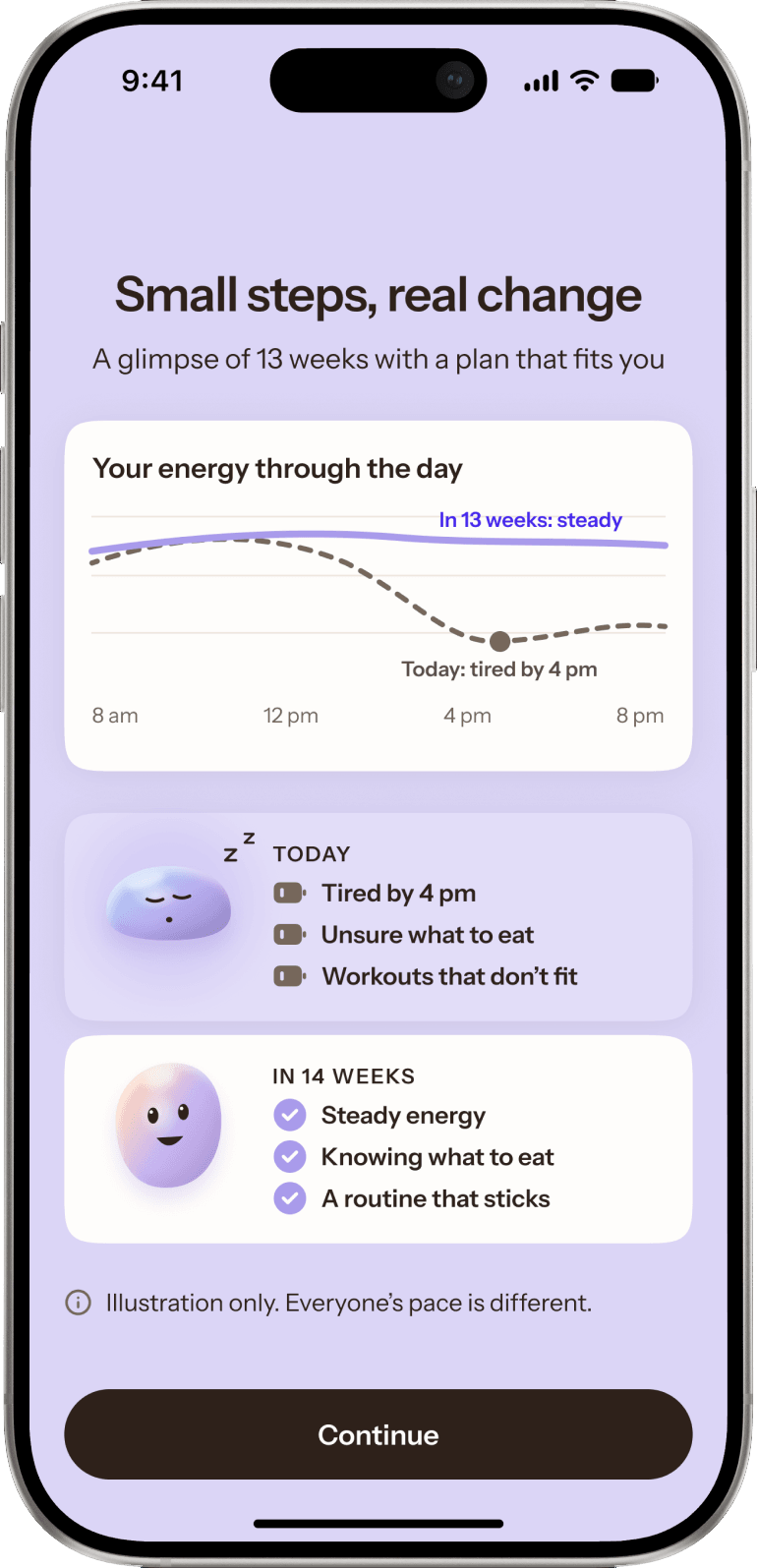
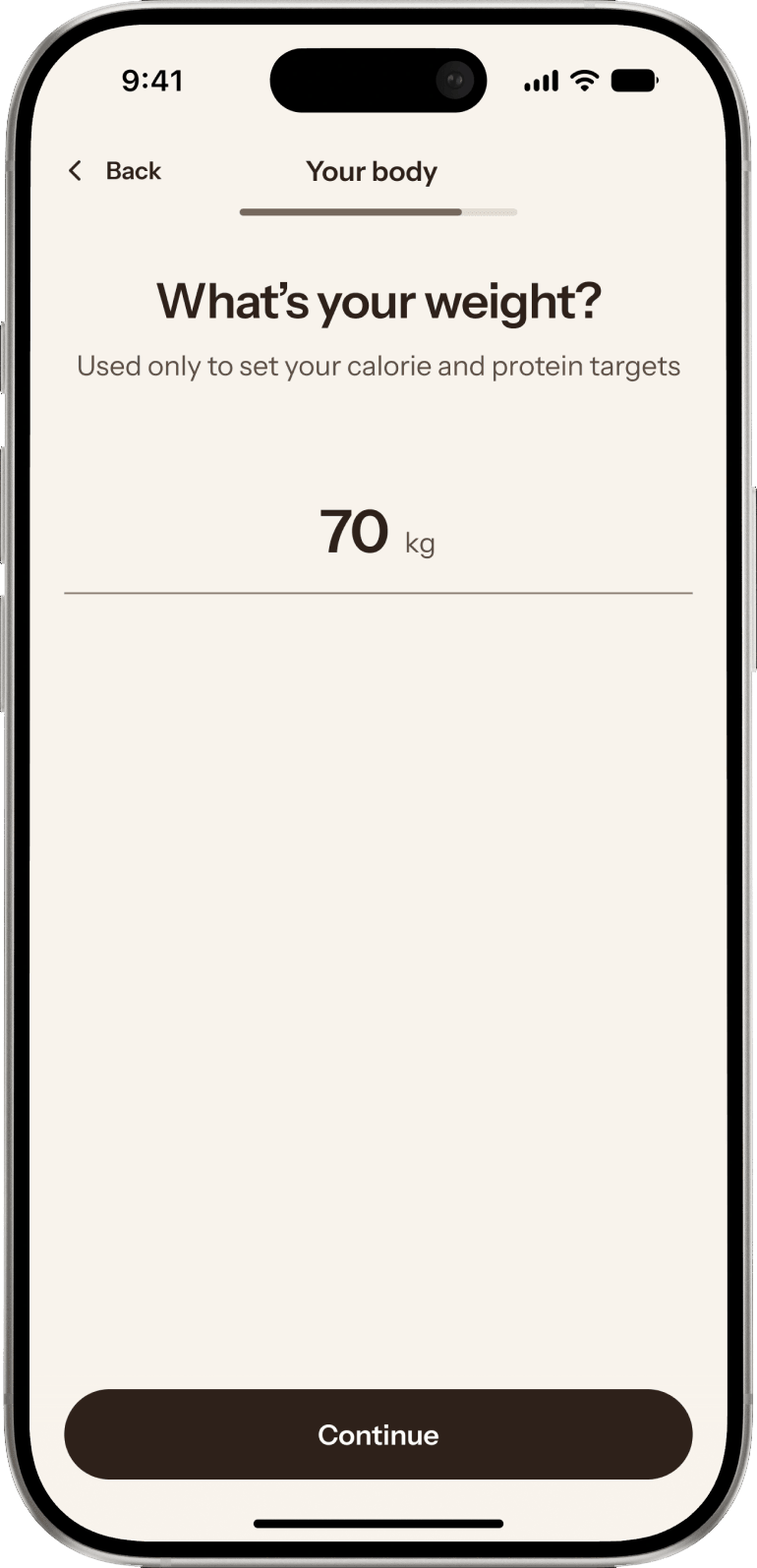
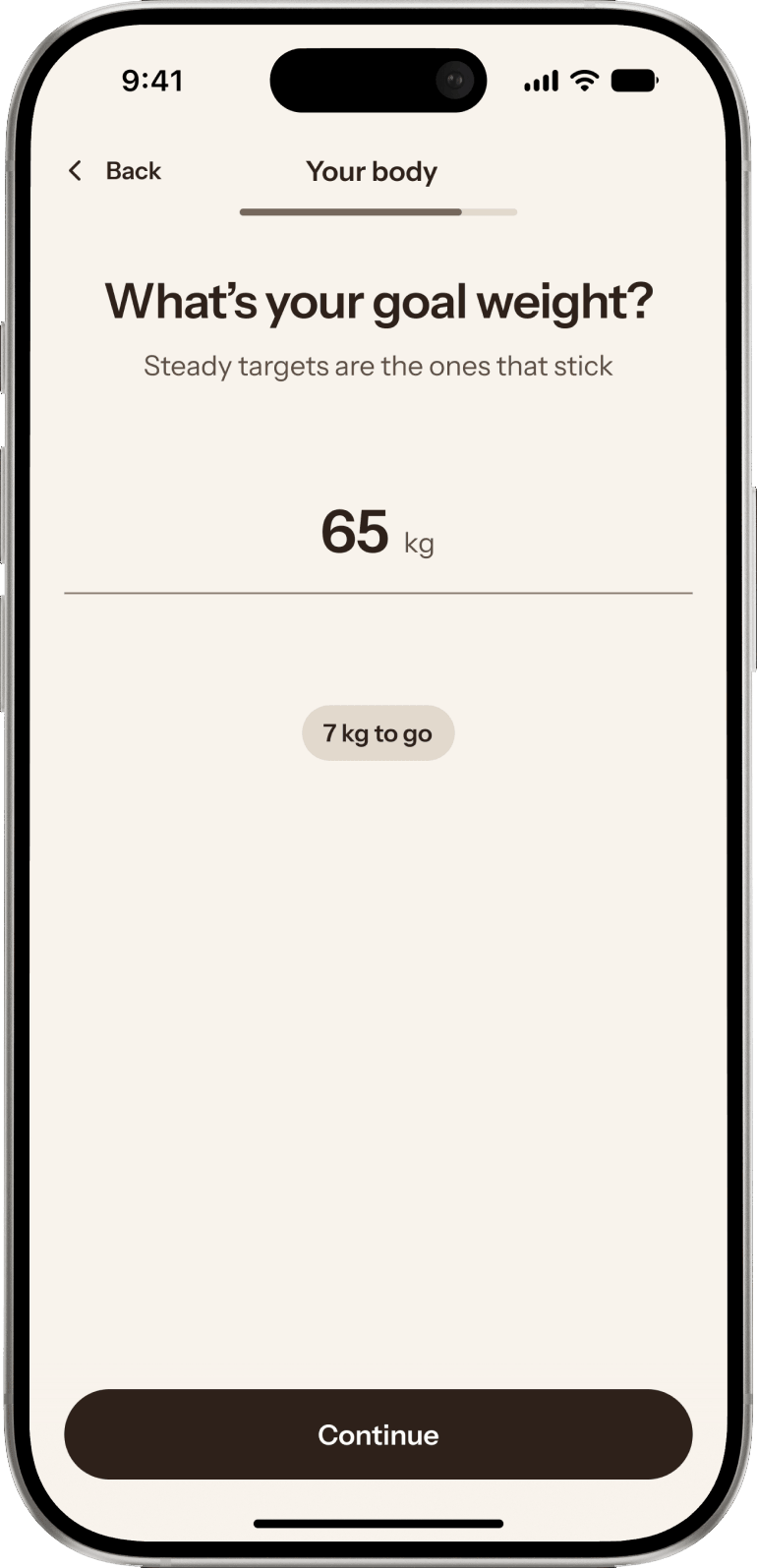
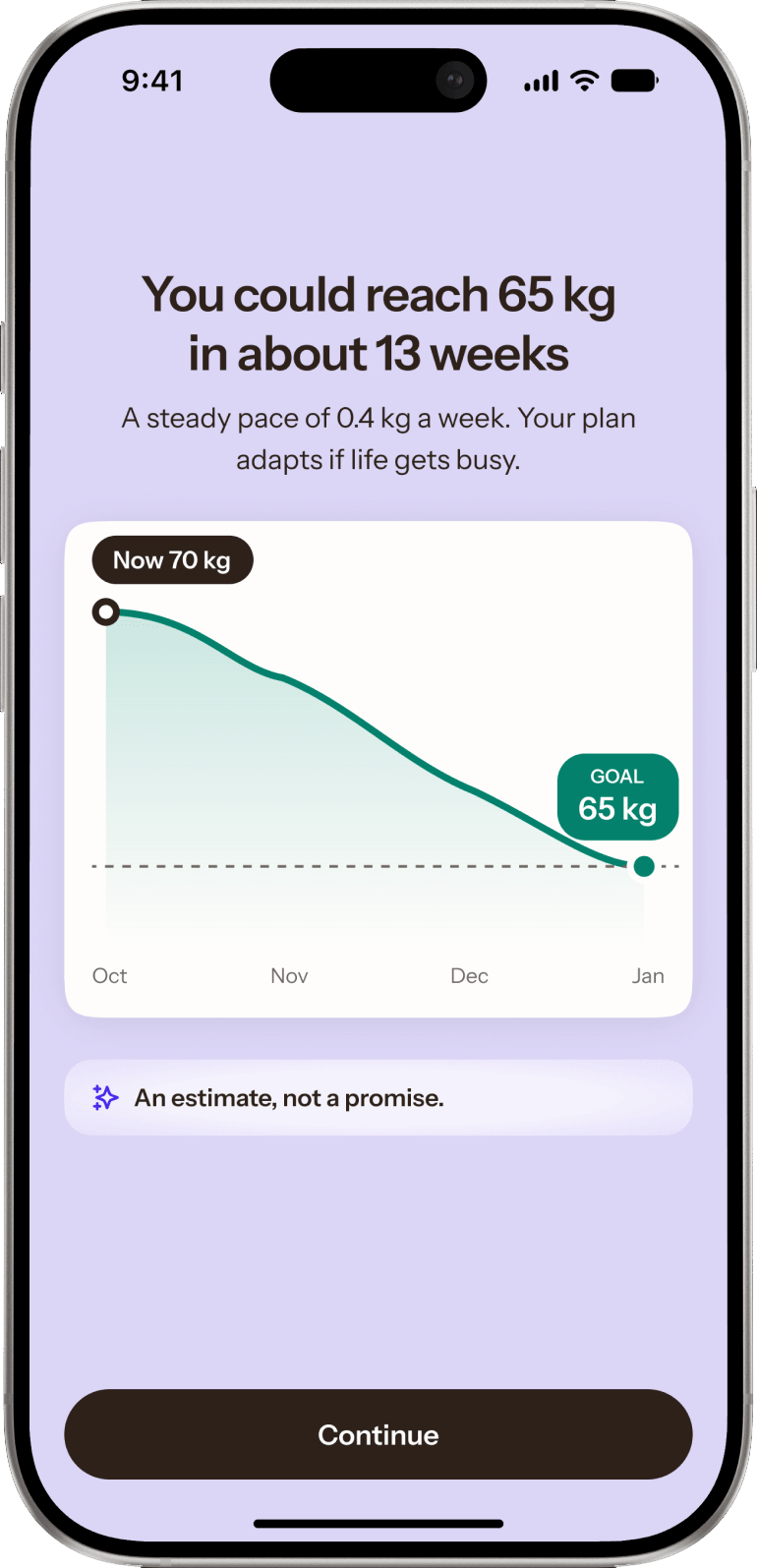
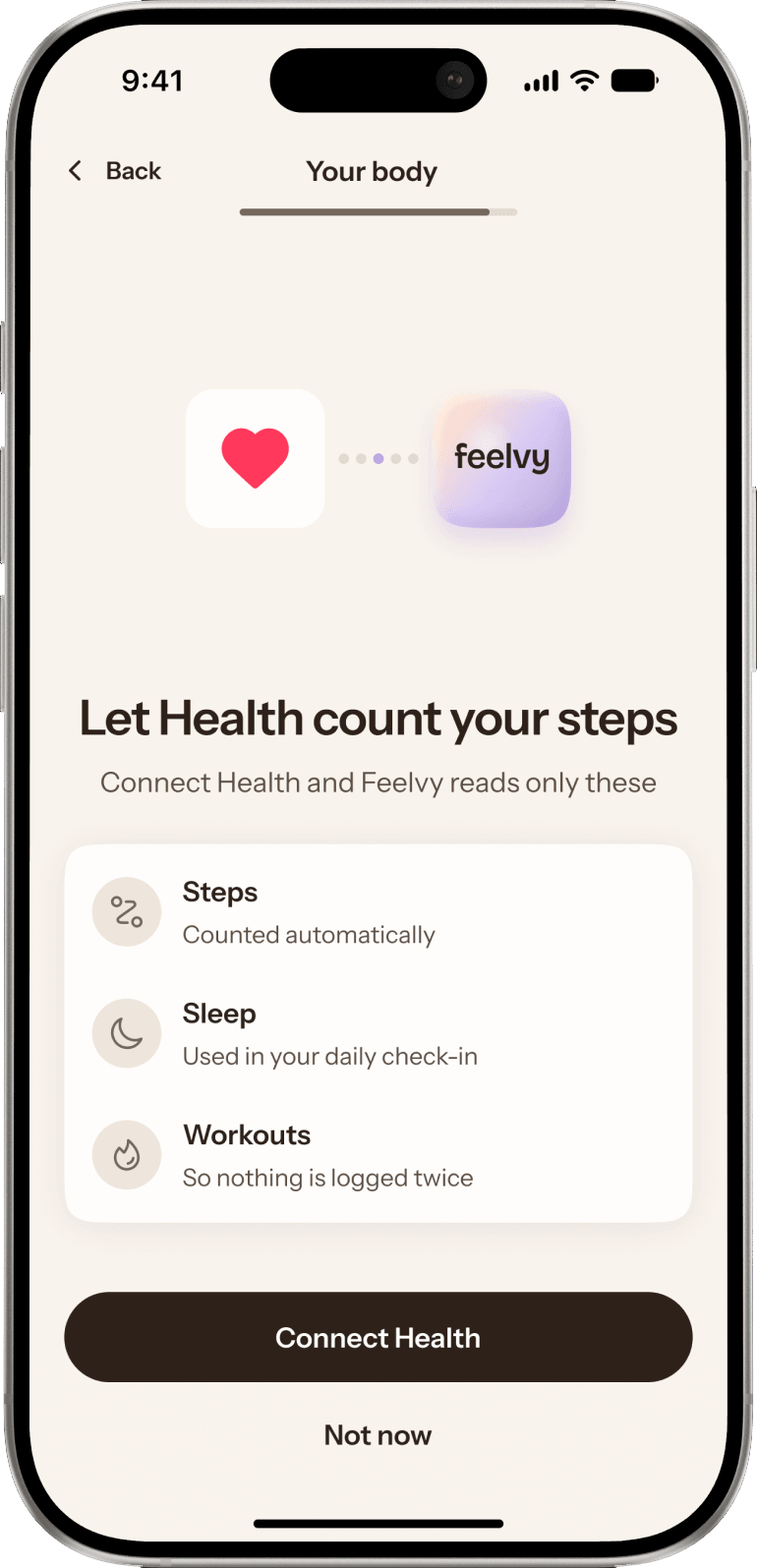
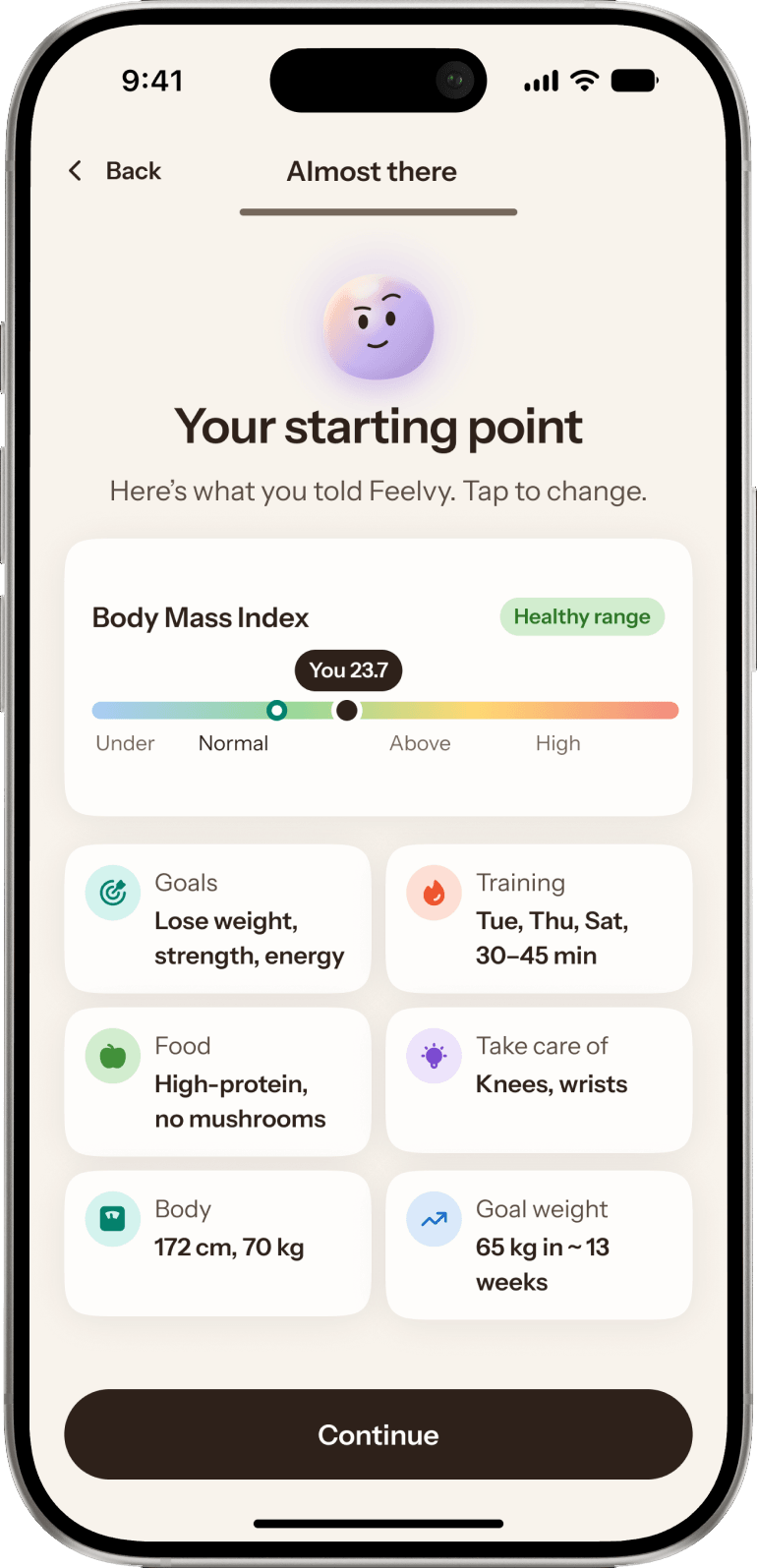
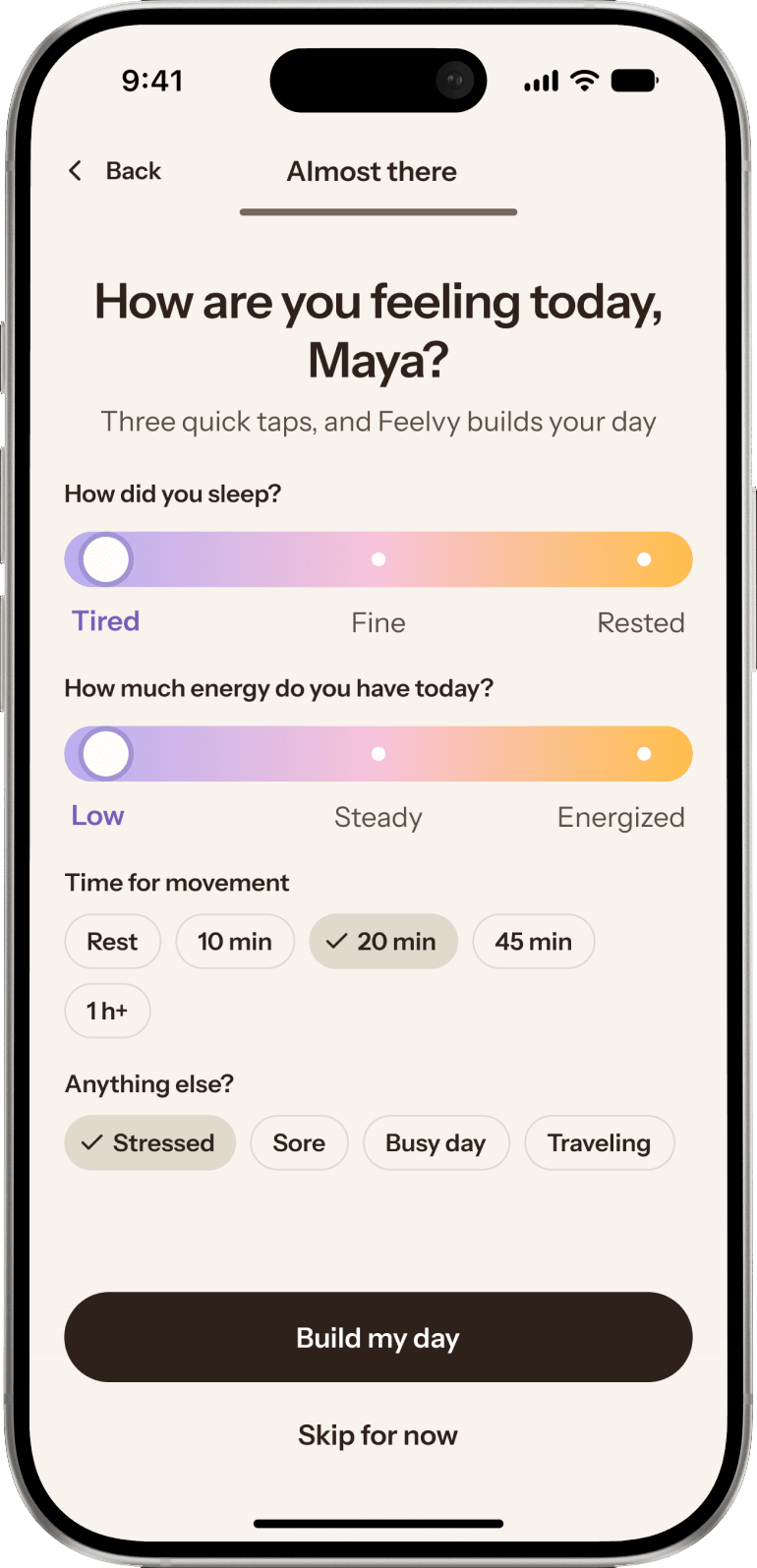
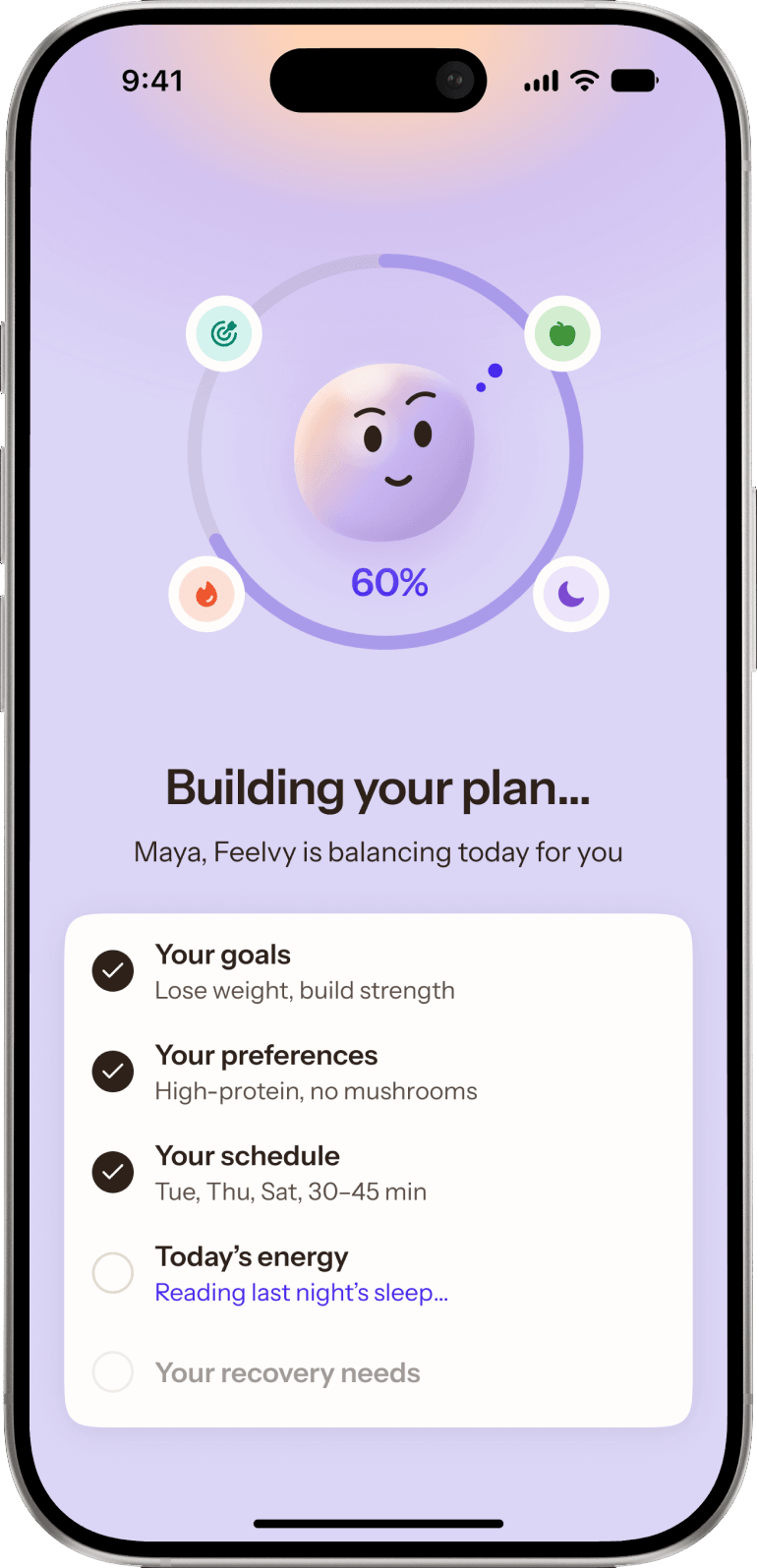
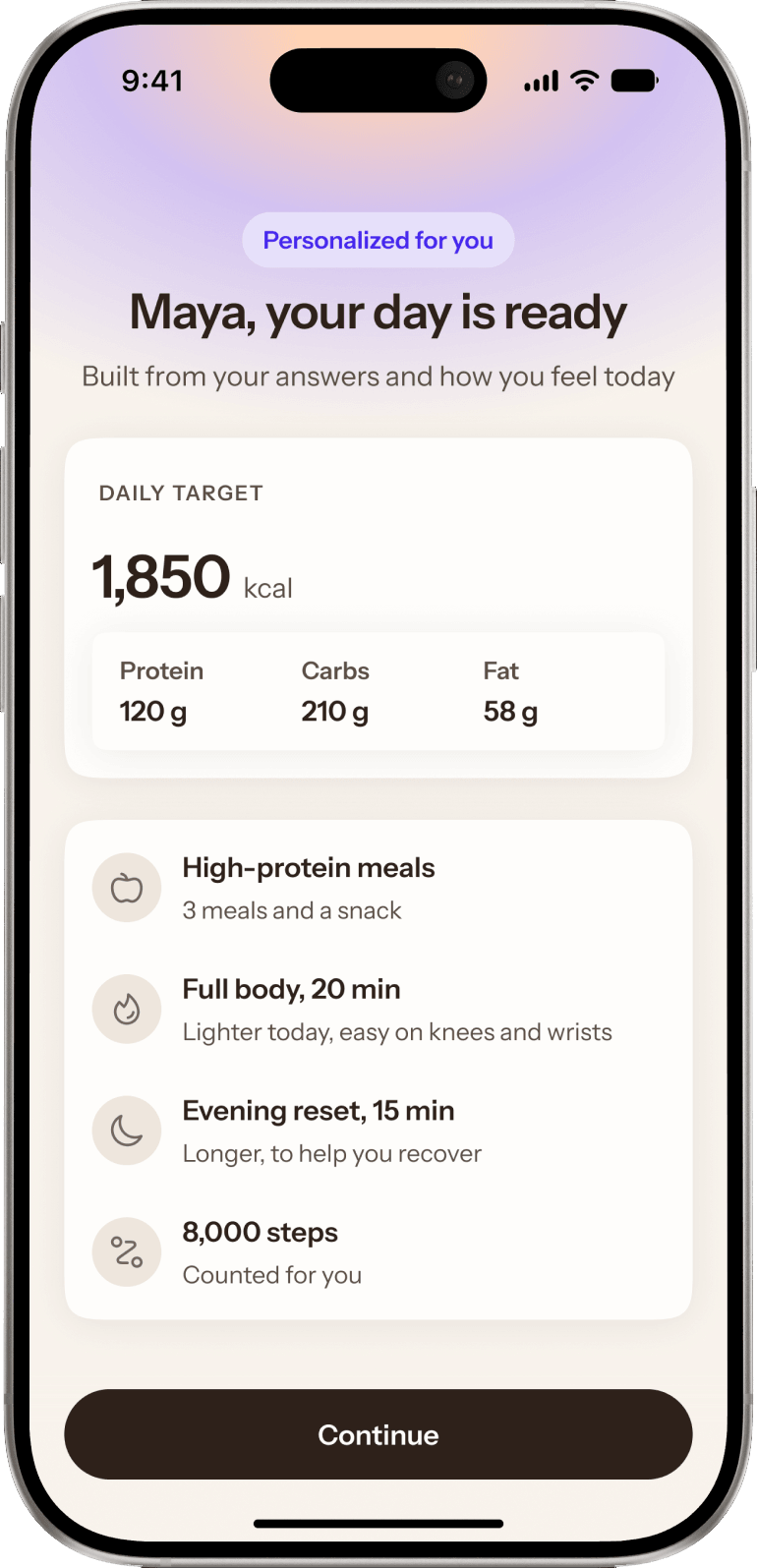
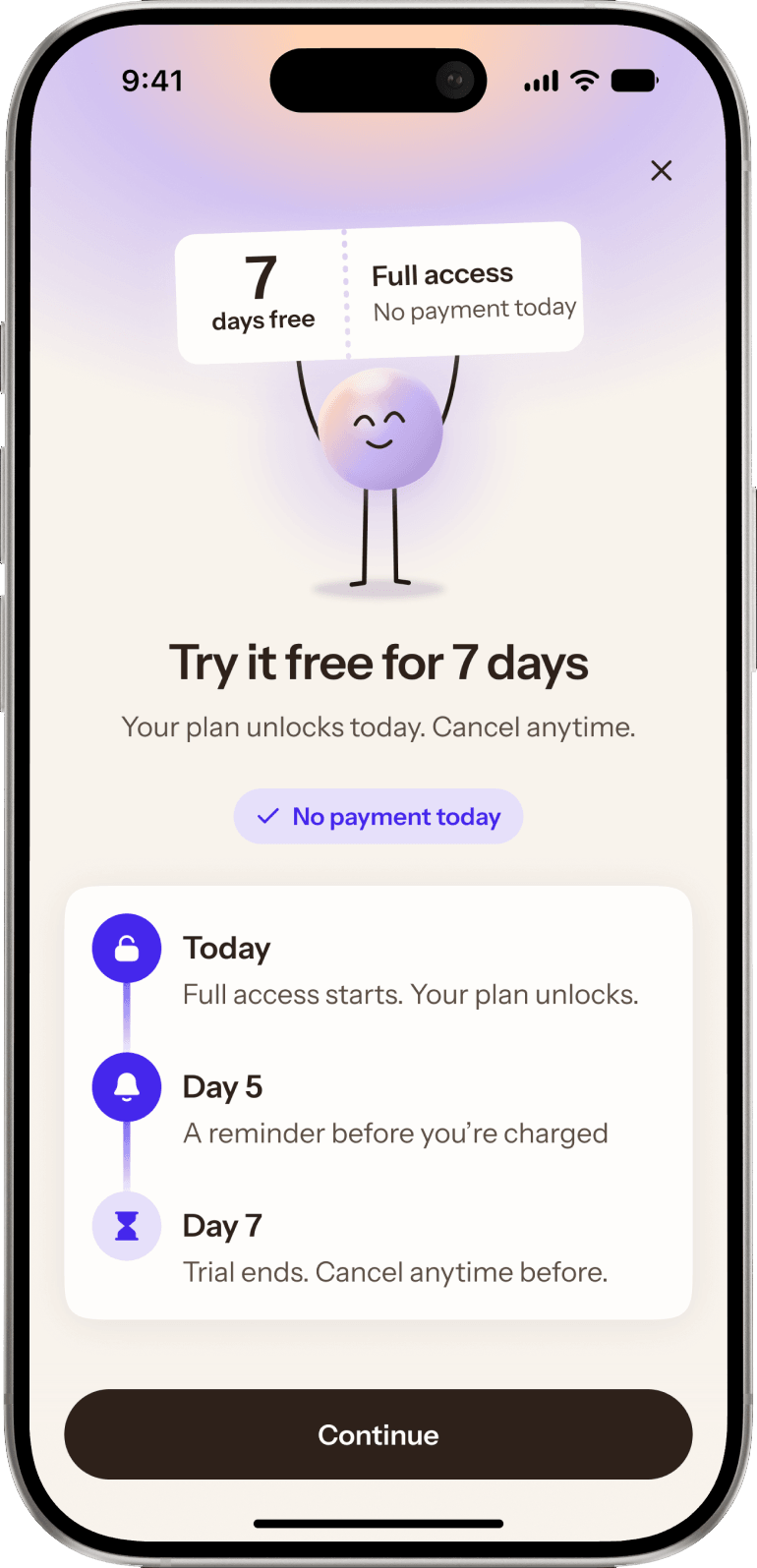
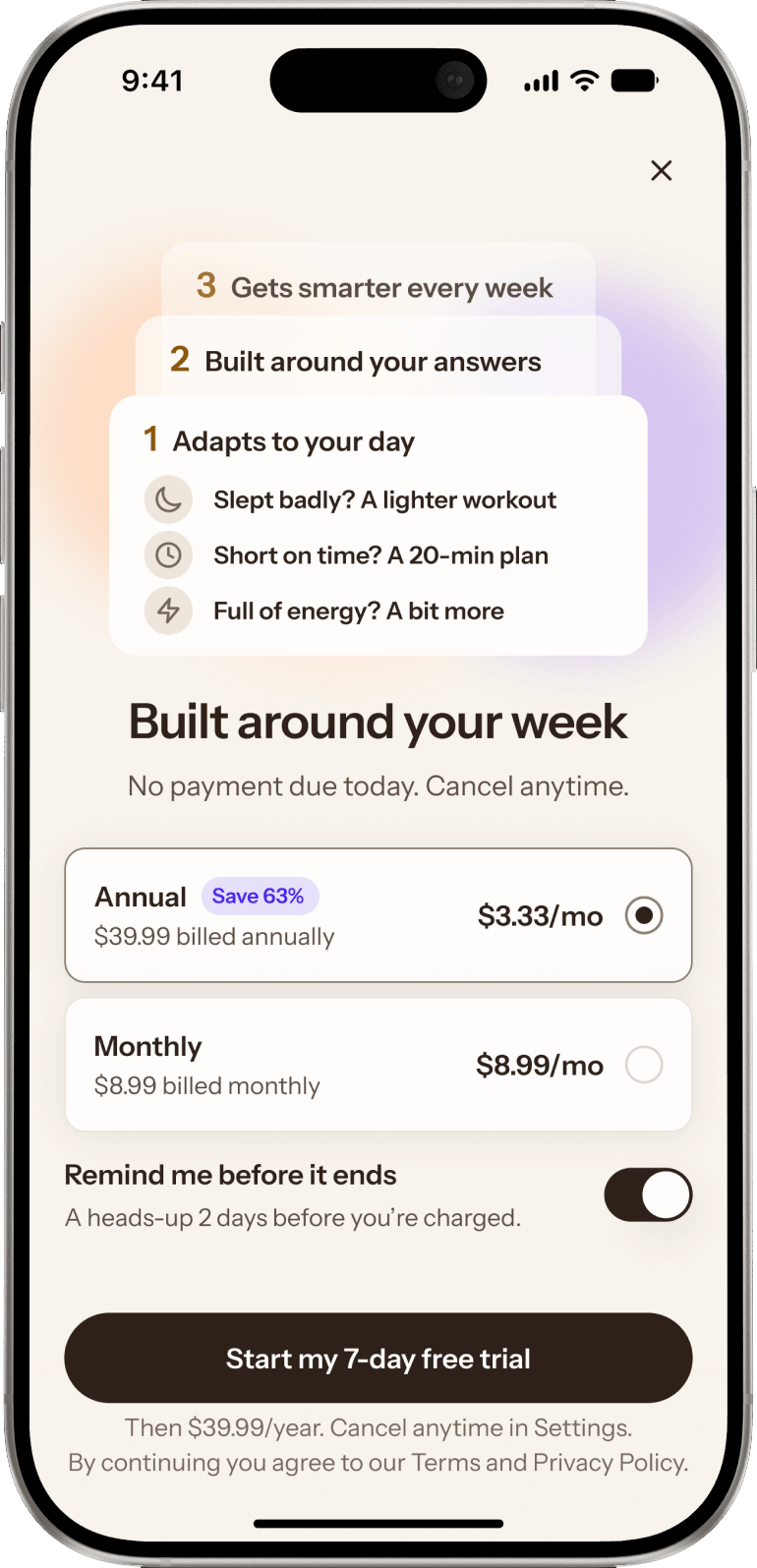
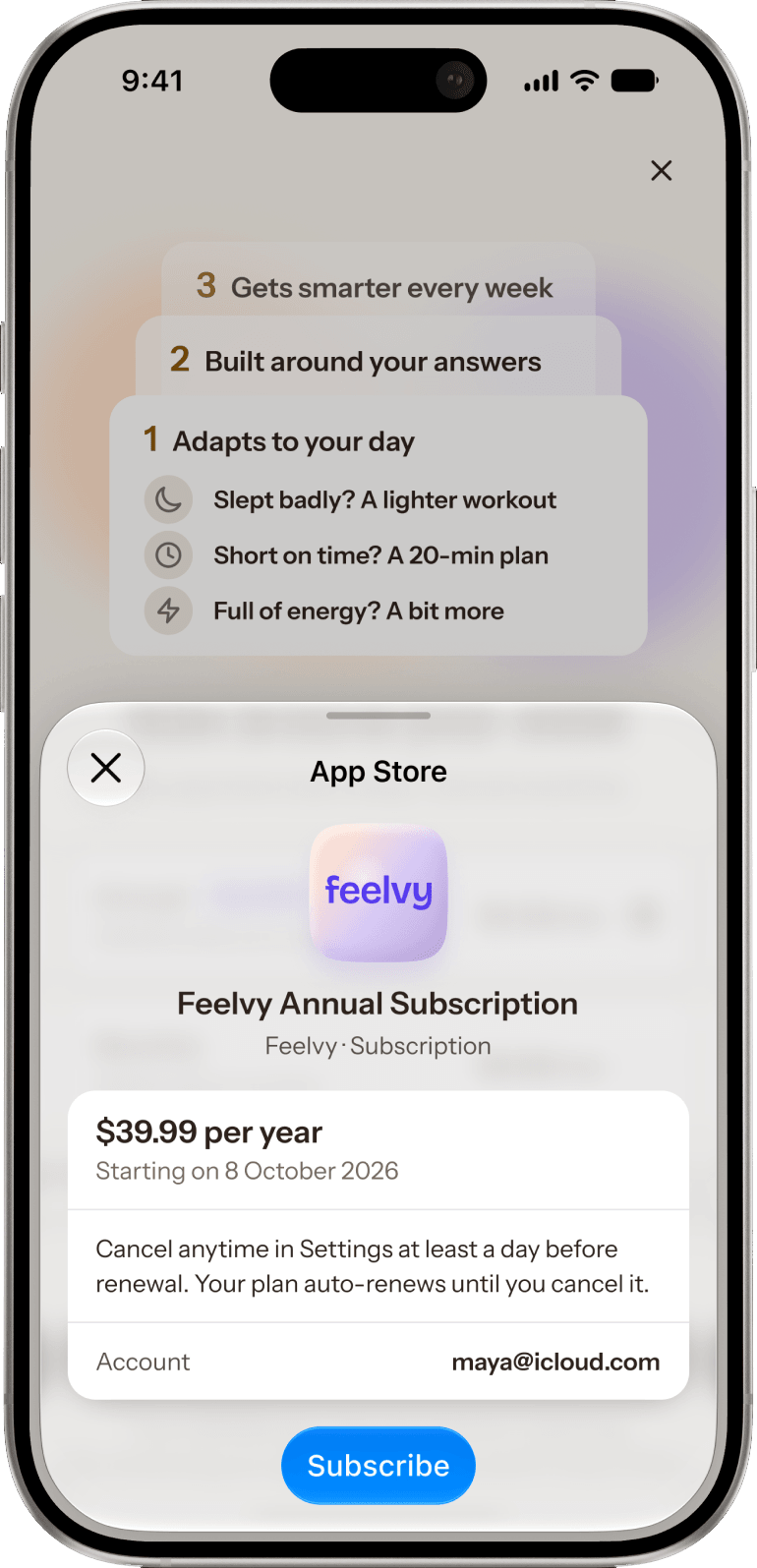
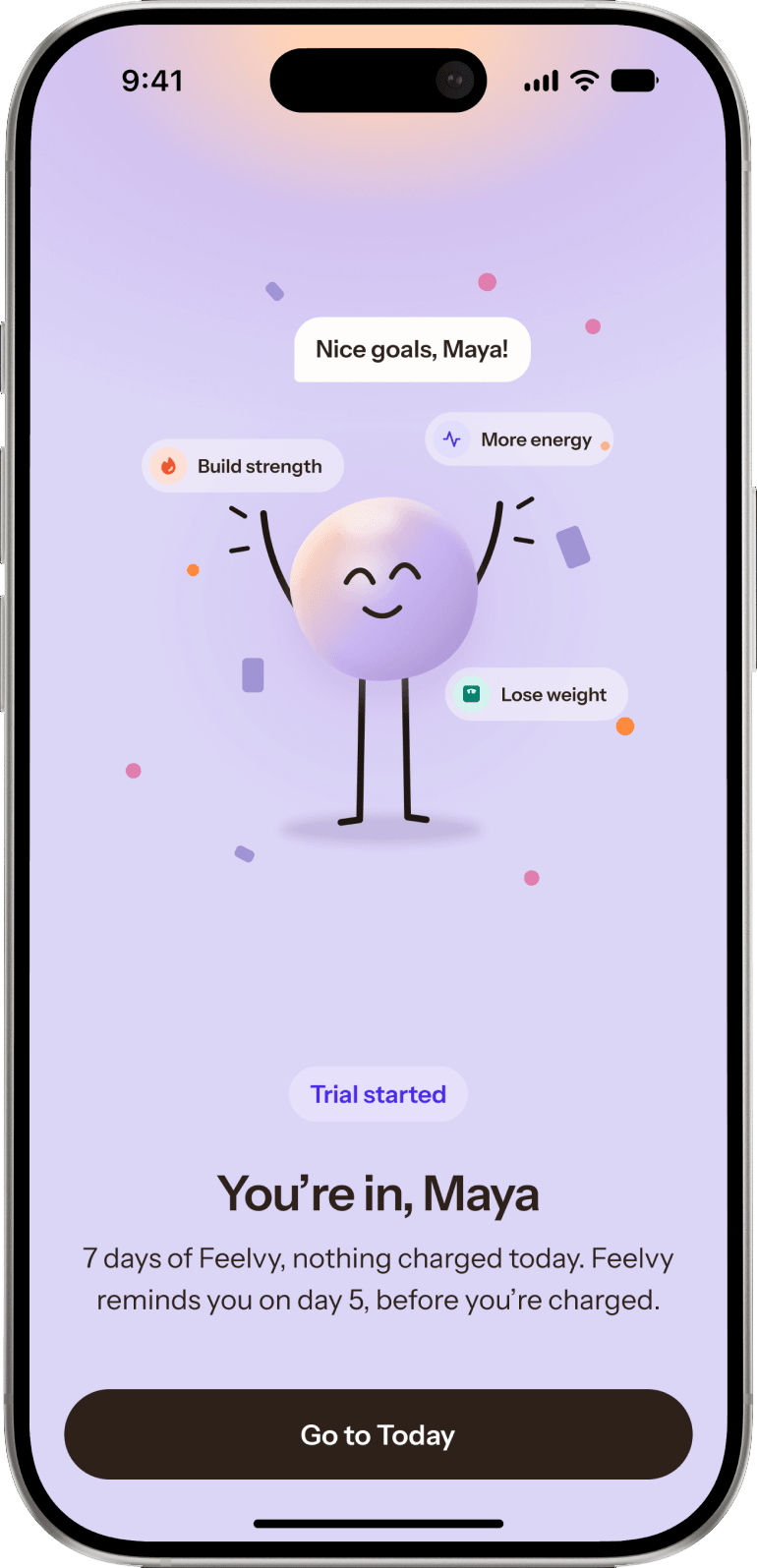
Before Feelvy suggests anything, it learns what matters: goals, routine, time, food rules, and health limits. 38 screens in seven short chapters, with breaks that keep the pace light.
[ Key Design Decisions ]
Less energy shouldn't mean no workout
The insight
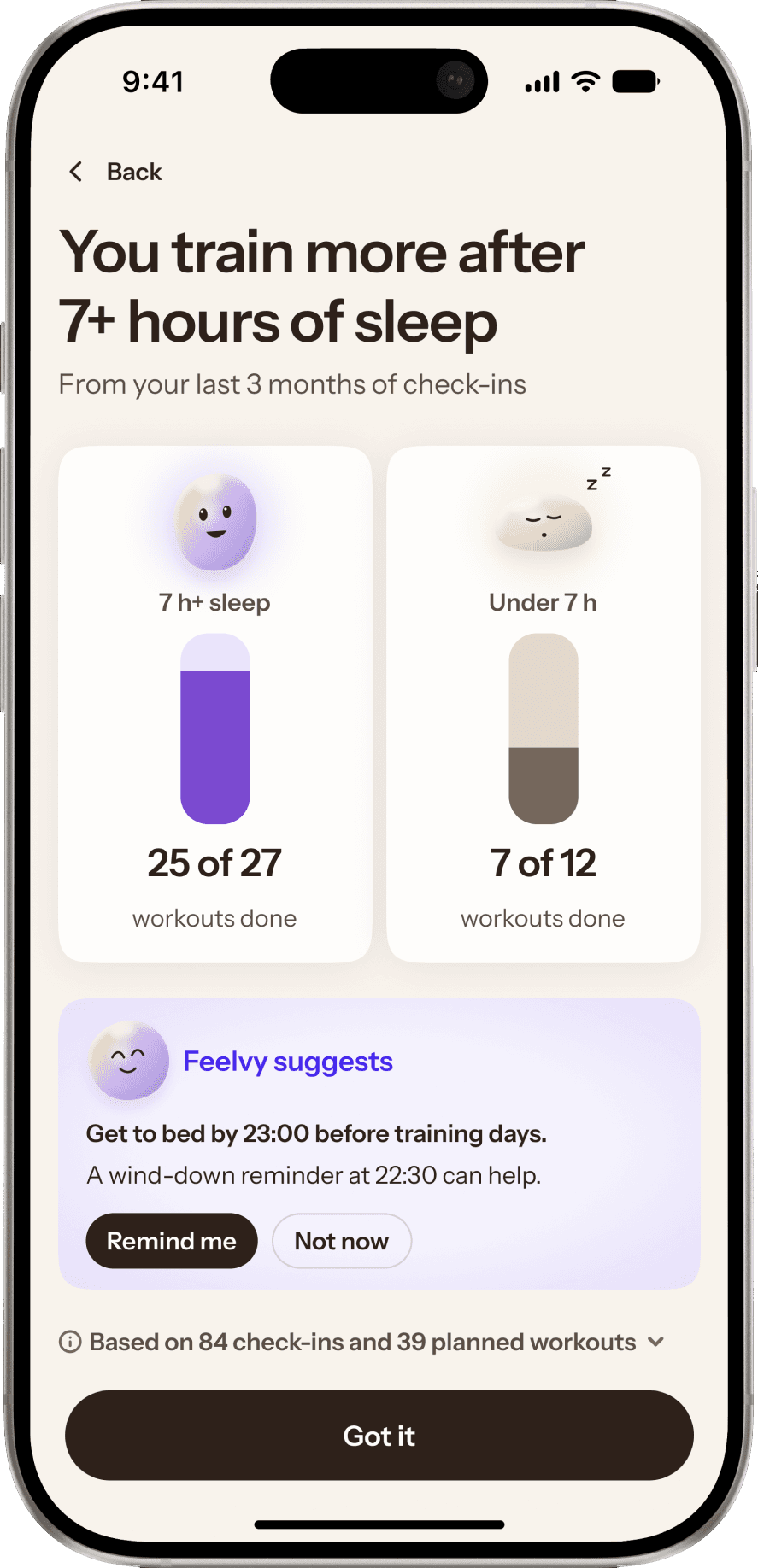
On a low-energy day, people didn’t want to skip. Four of five adjusted on their own: a shorter session, lighter weights, stretching, or a walk. A fixed plan offers no lighter option, so the workout often gets skipped.
If I wake up late, I put off the workout. But later in the day I'll go for a walk, get my steps in, balance it out somehow.
PolinaSometimes I want to move, but I don't have the energy. So I might replace my workout with stretching.
JuliaIf I haven't slept well, I might cancel my workout or even skip my dance class.
JuliaEven a light workout can be better for recovery than skipping exercise altogether.
VeronikaI made it smaller, used lighter weights, cut it a bit shorter, and then just walked more.
VeronikaIf I have less energy, I don't train at full weight.
Oksana
The decision
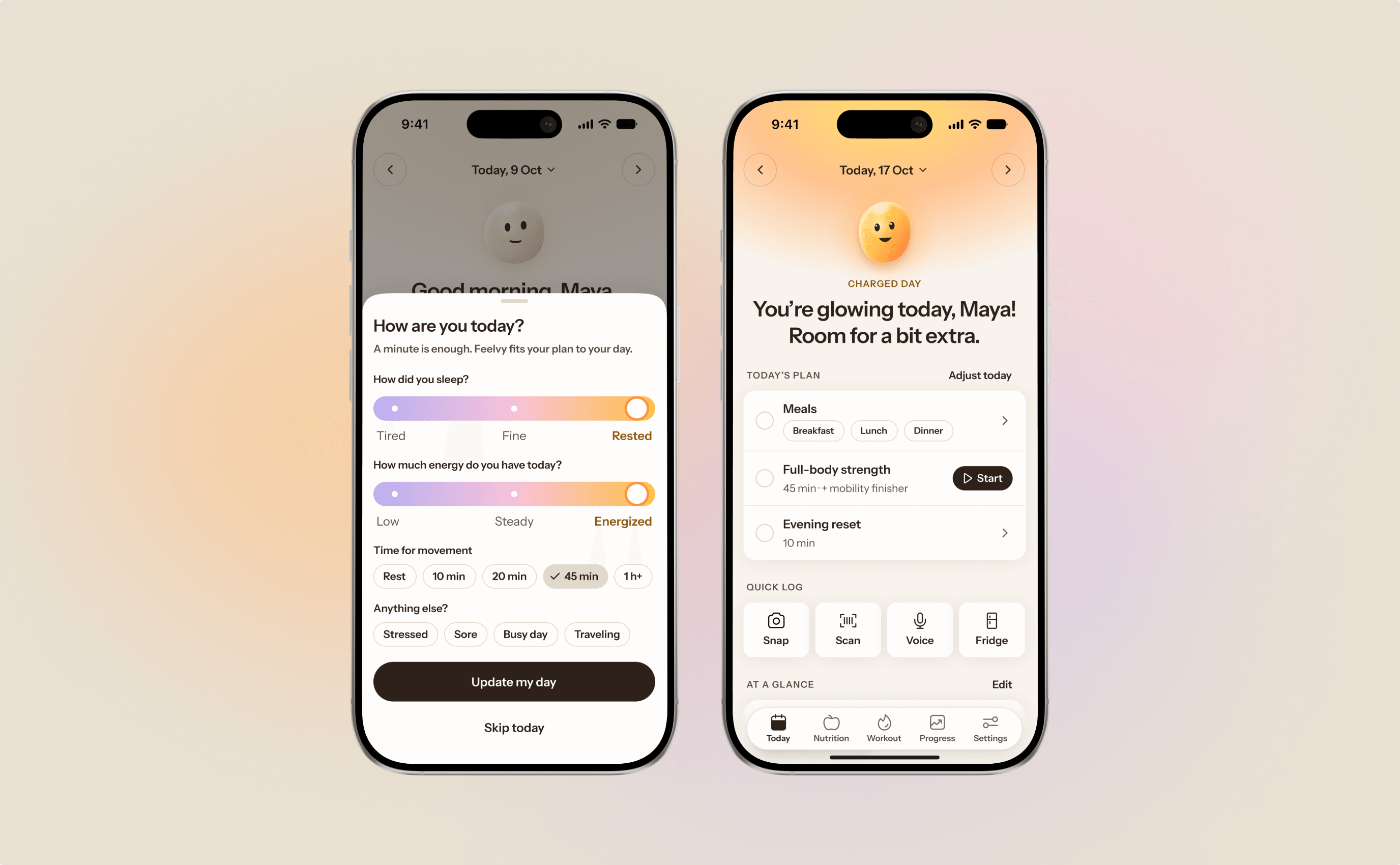
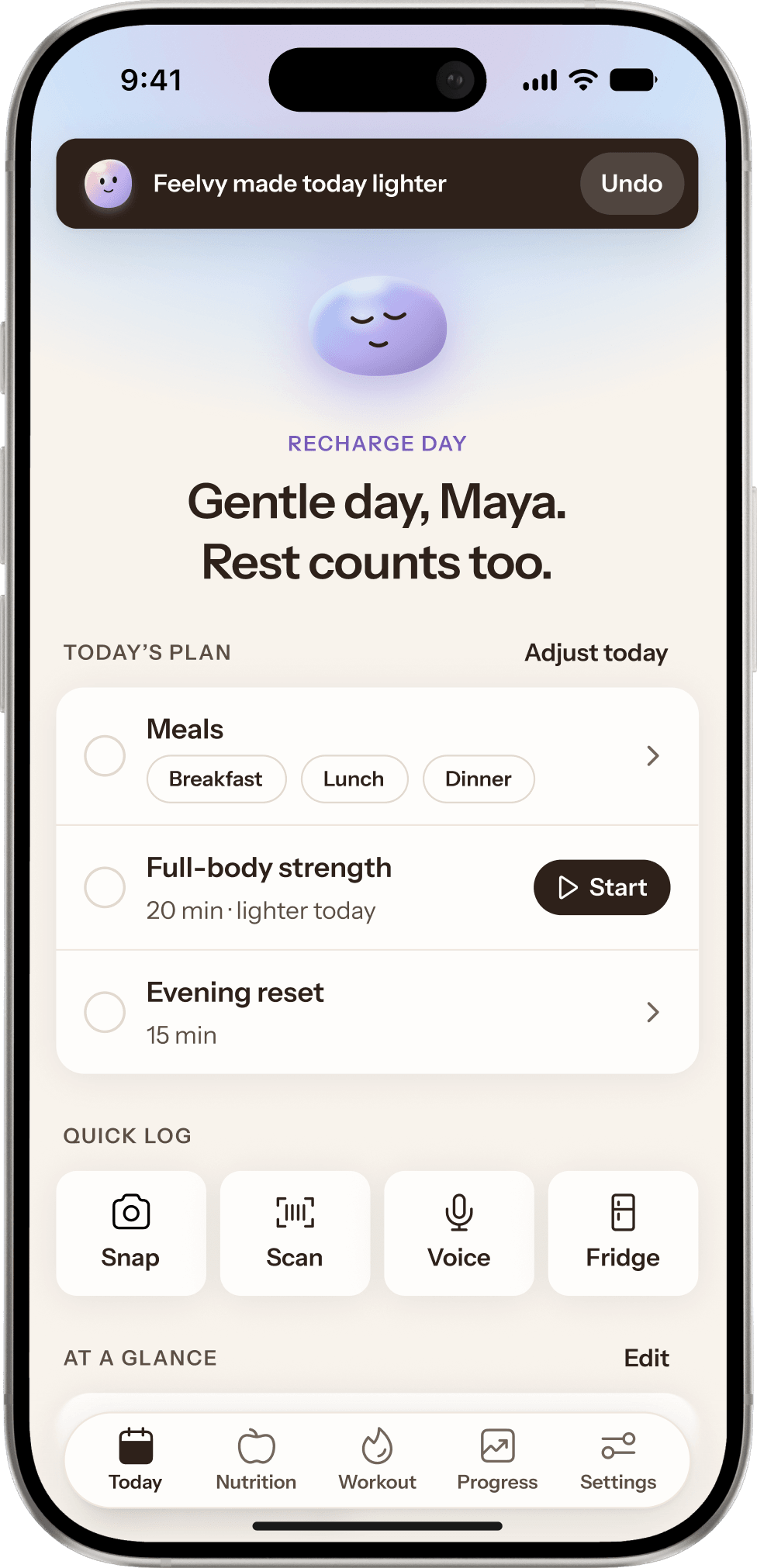
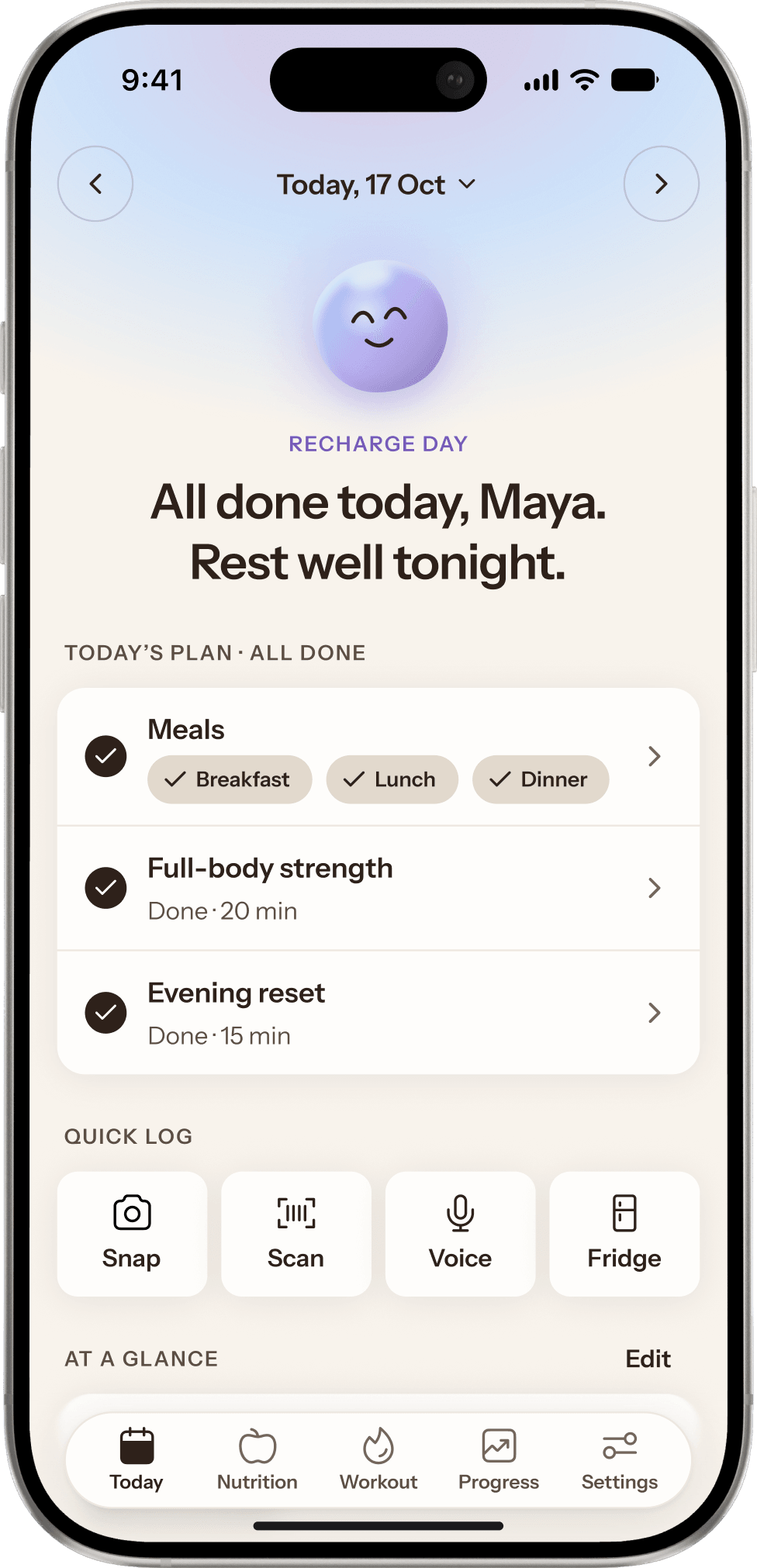
A short daily check-in captures sleep, energy, and available time. After a poor night, Feelvy suggests a lighter plan. Users see what changed and why, and decide.
On a low-energy day, the plan gets lighter, not cancelled.
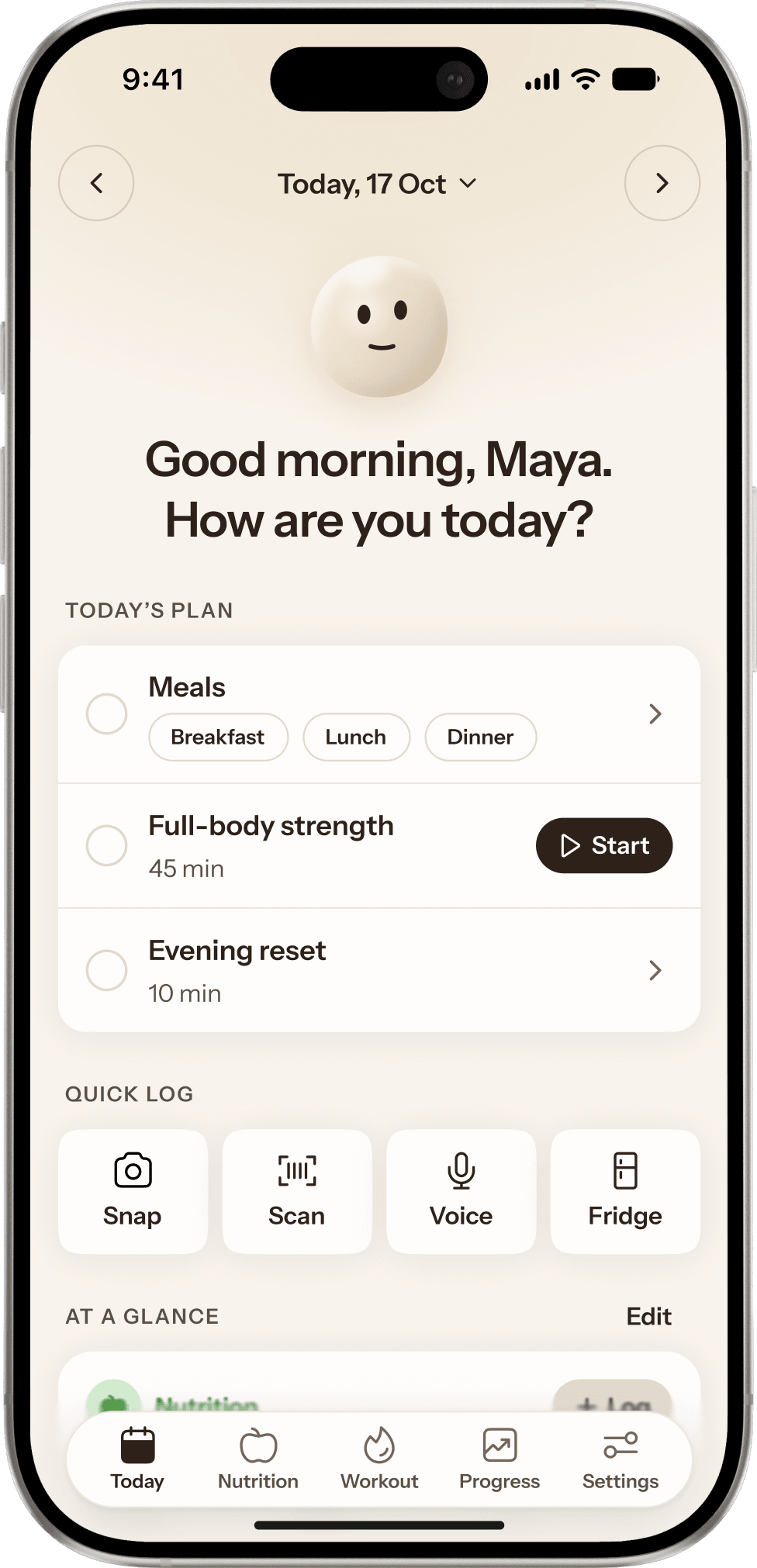
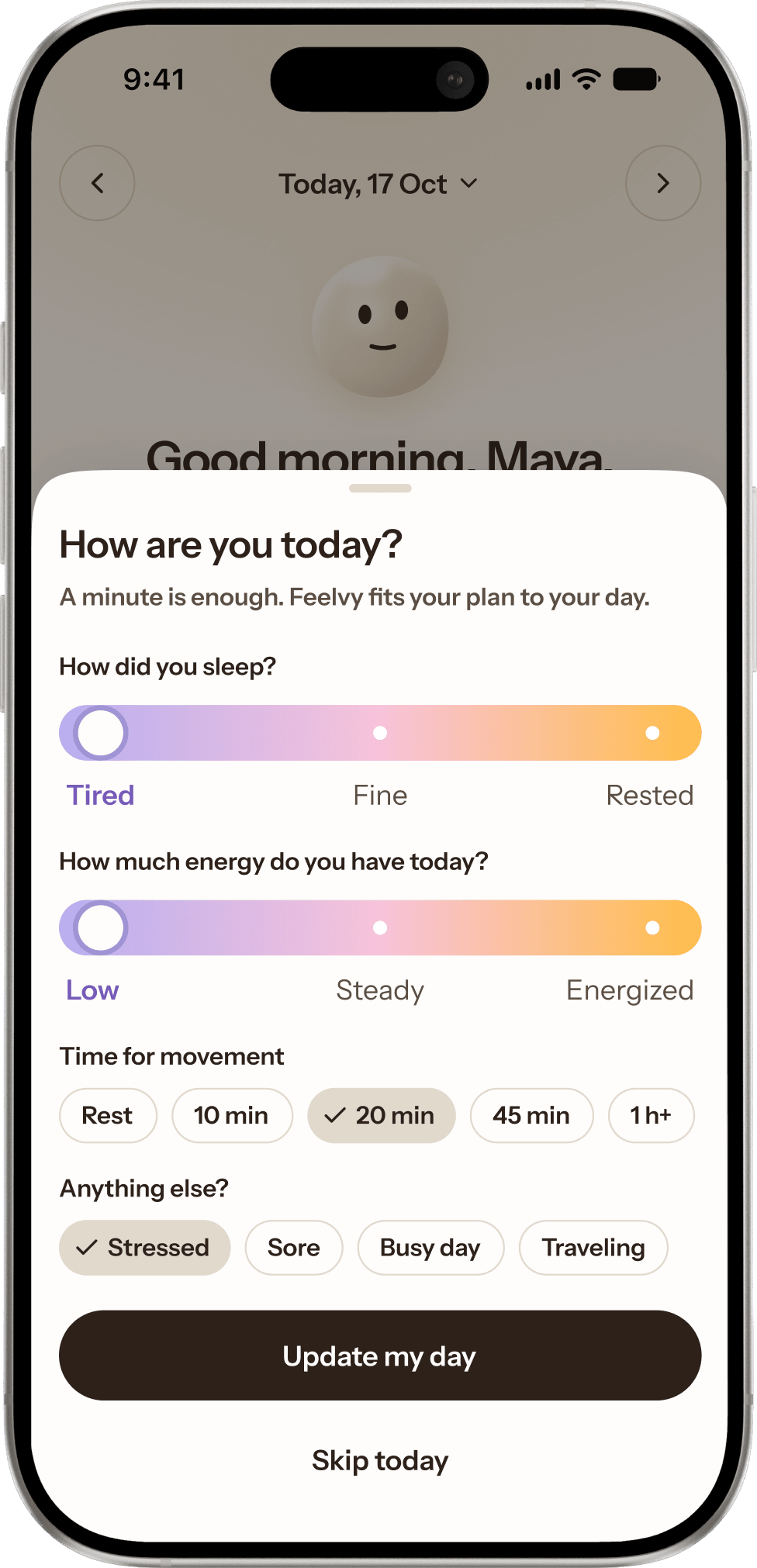
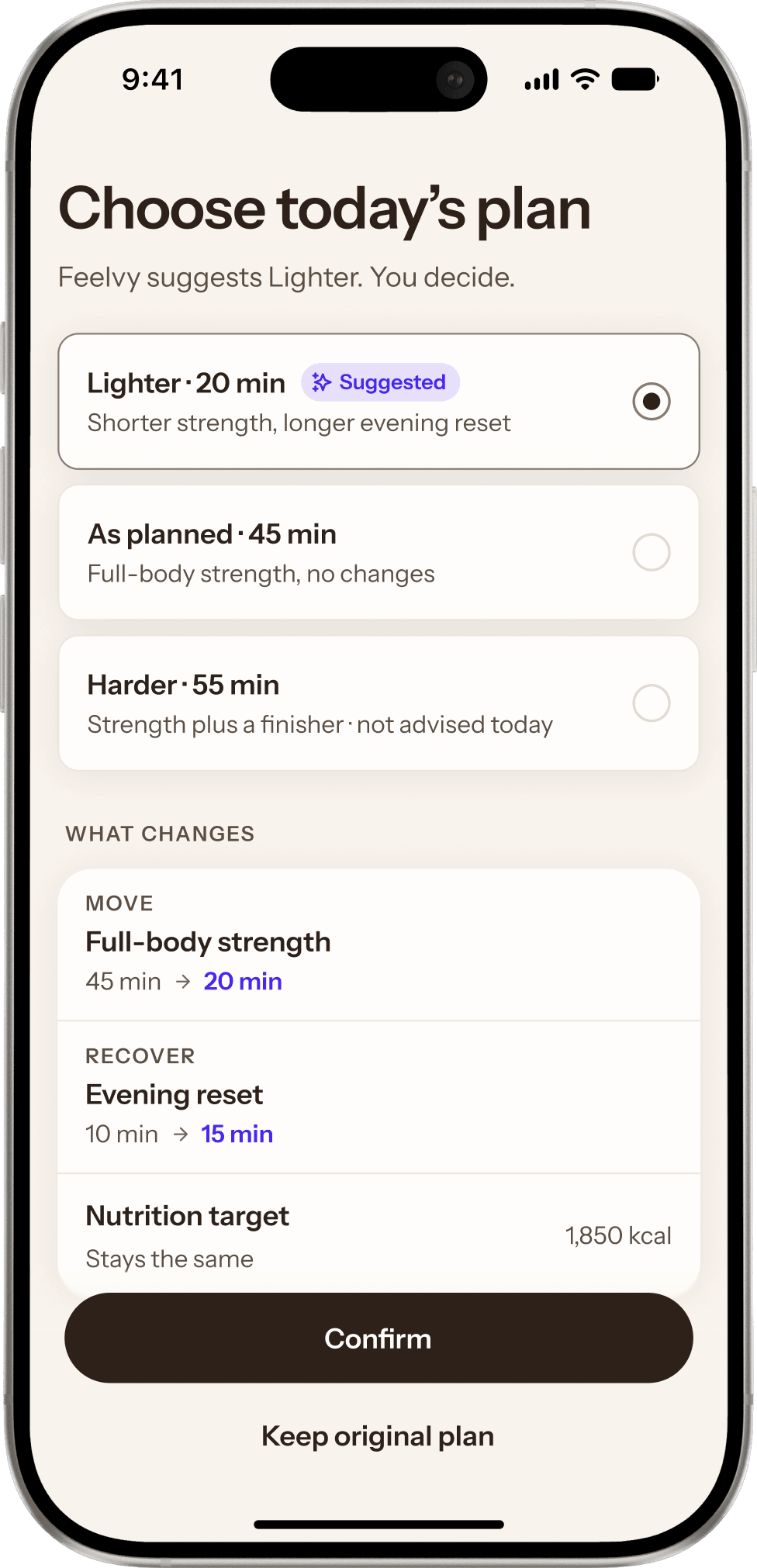
Daily adaptation flow
Each morning a one-minute check-in tells Feelvy how Maya feels. The plan adapts, and she decides what changes.
01Check-in appears
Feelvy looks neutral: it doesn’t know how Maya feels yet. The workout is 45 min, as she chose in onboarding.
Tracking food shouldn't be a workout
The insight
All five found manual food tracking tiring, and several gave up on trackers because of it. Meanwhile, some were already sending meal photos to ChatGPT instead of typing everything in.
You have to enter it all again every time, even if I cooked the same thing. That's probably why I kept giving up.
PolinaIt takes a really long time to enter every ingredient.
PolinaWeighing dry buckwheat, cooking it, then weighing it again. That's definitely not for me.
JuliaEverything has to be entered manually. There's no automatic input.
OksanaThen you type in oil. There are ten different kinds. I have no idea which oil it is.
MishaSay there's a casserole. I don't know how to weigh it. There's so much in it, and I have no idea what's in my 100 grams.
Polina
The decision
Log food without typing everything. Meals can be logged with a photo, by voice, or by scanning a barcode. Feelvy estimates calories and macros, and users check the ingredients and portions before saving.
AI does the typing. People check the result.
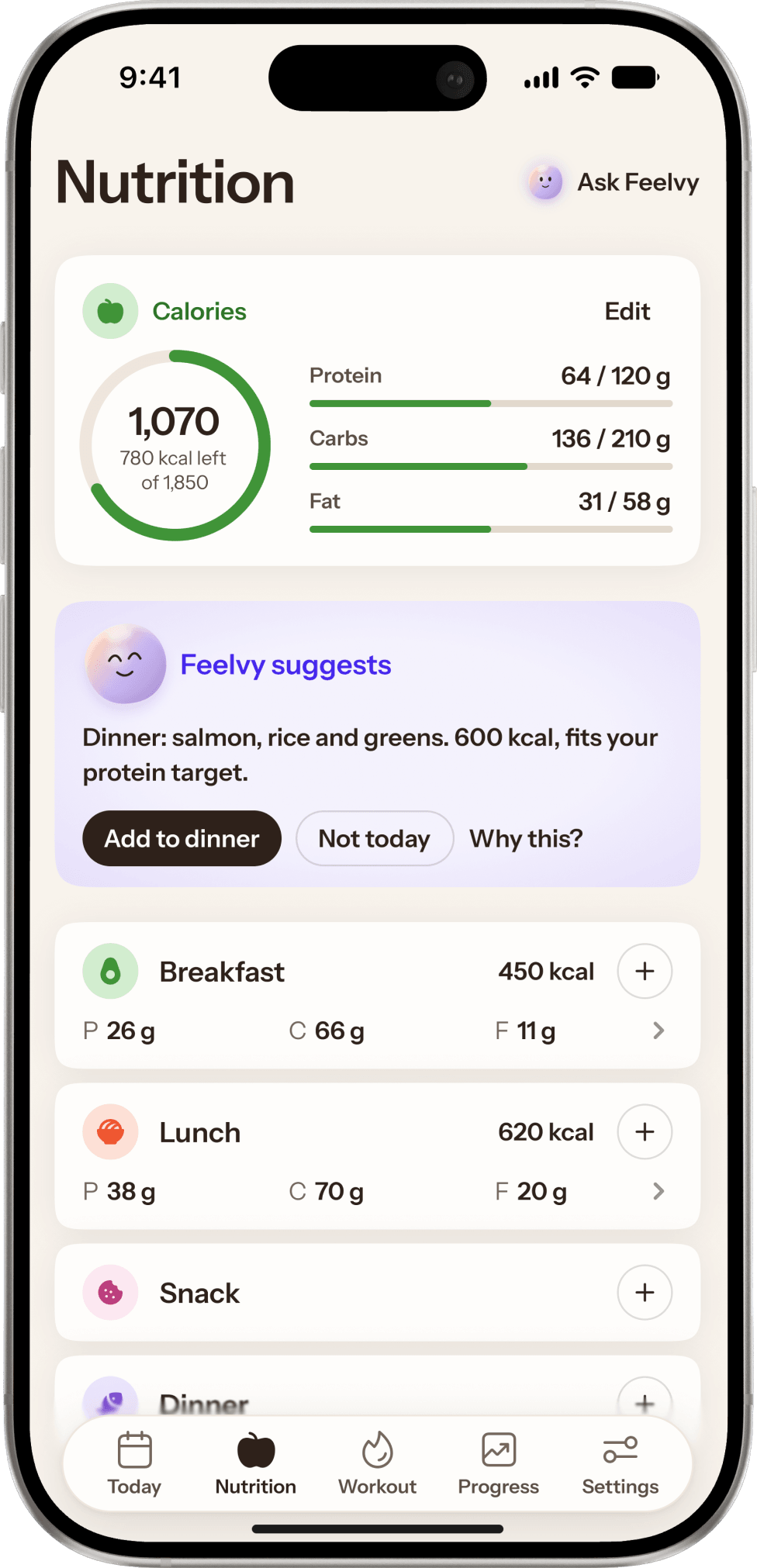
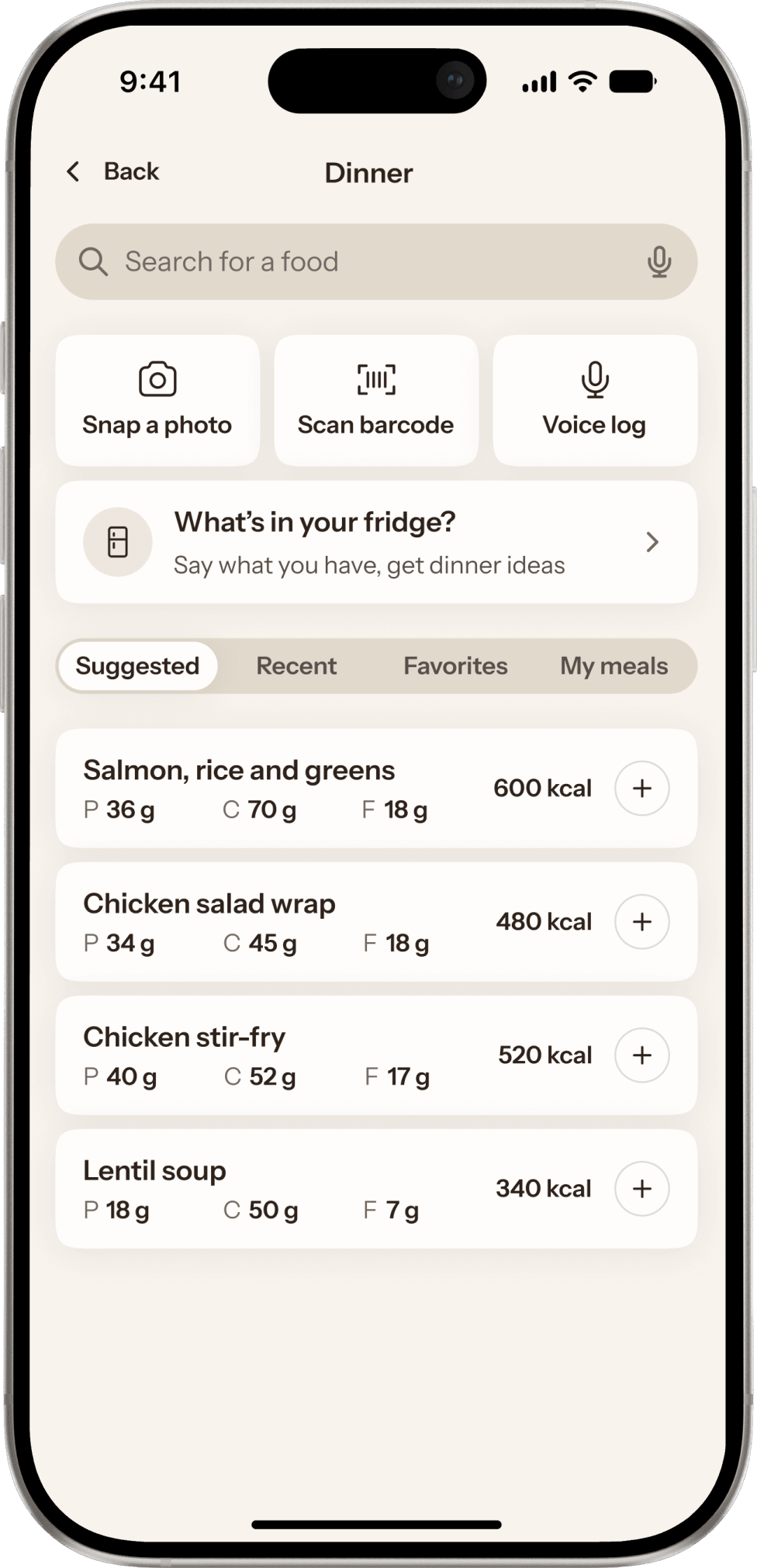
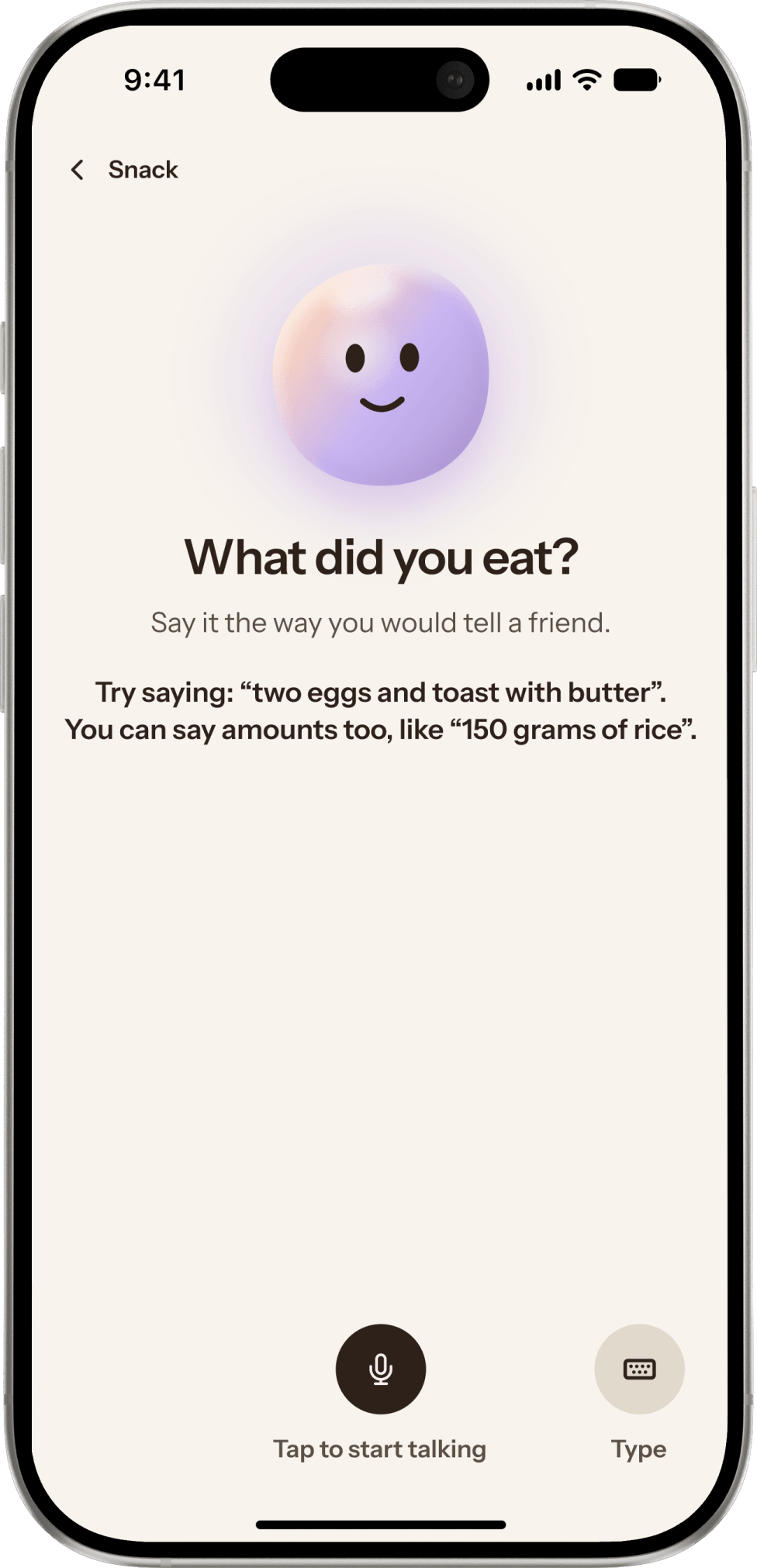
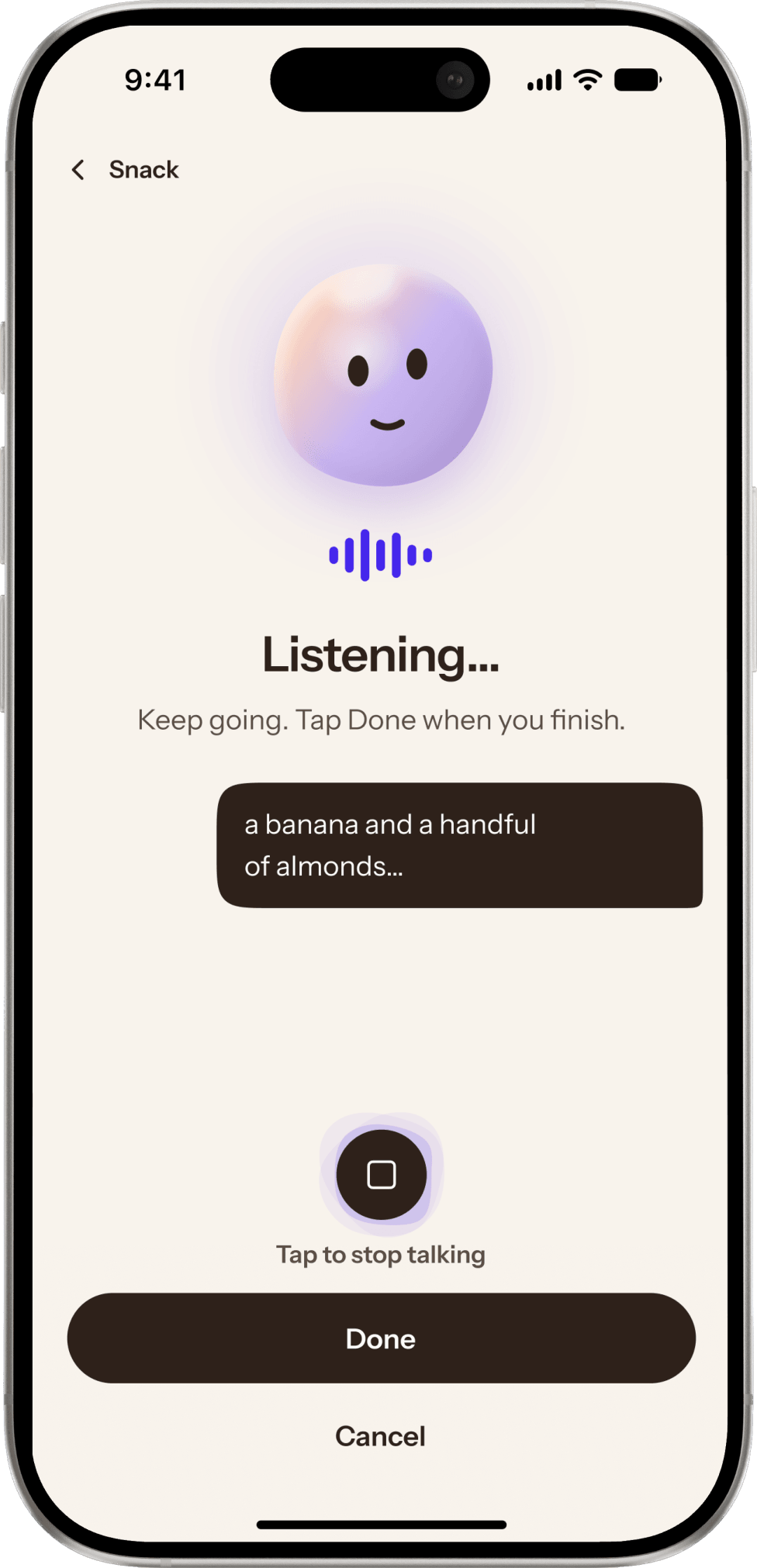
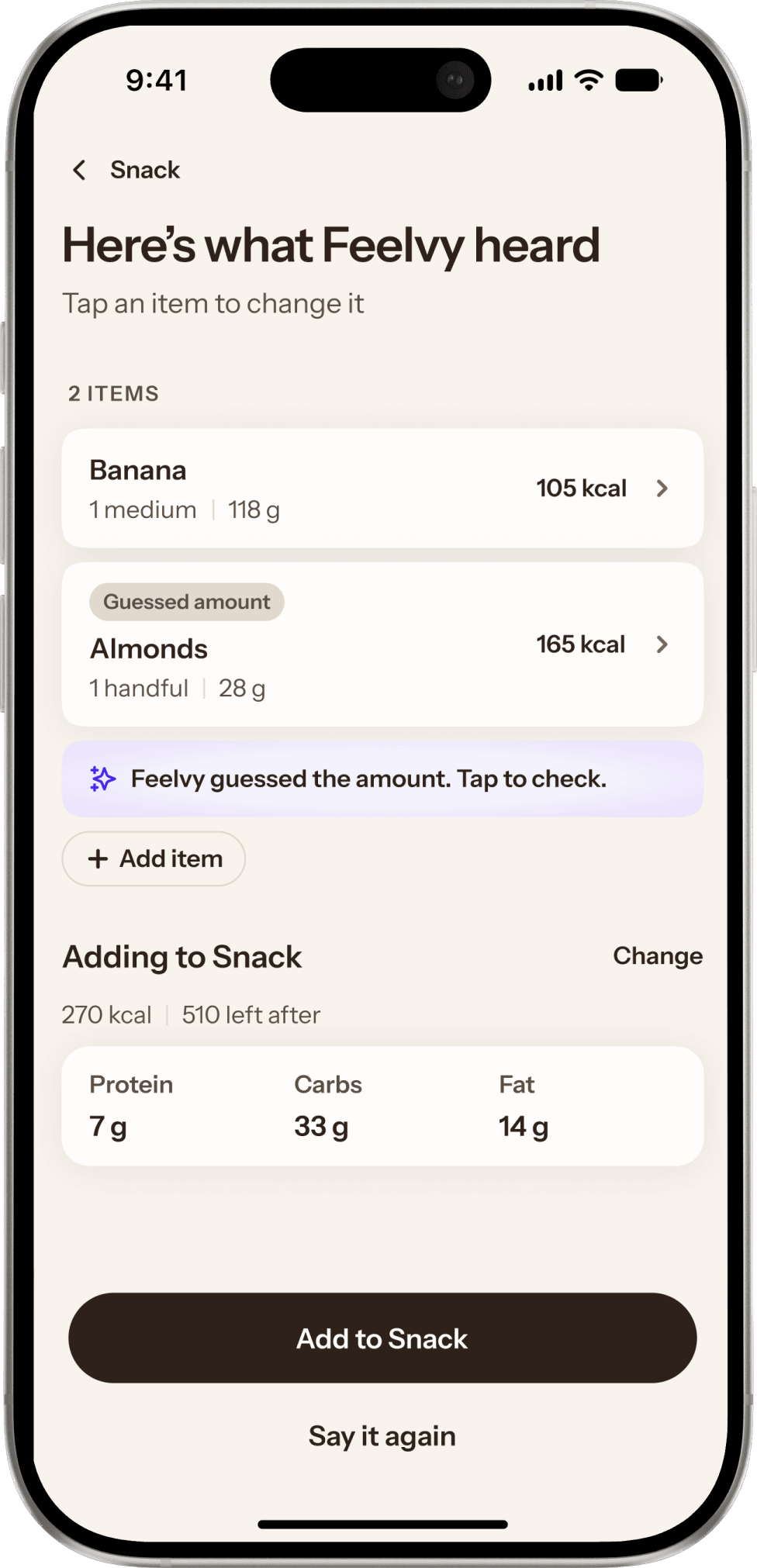
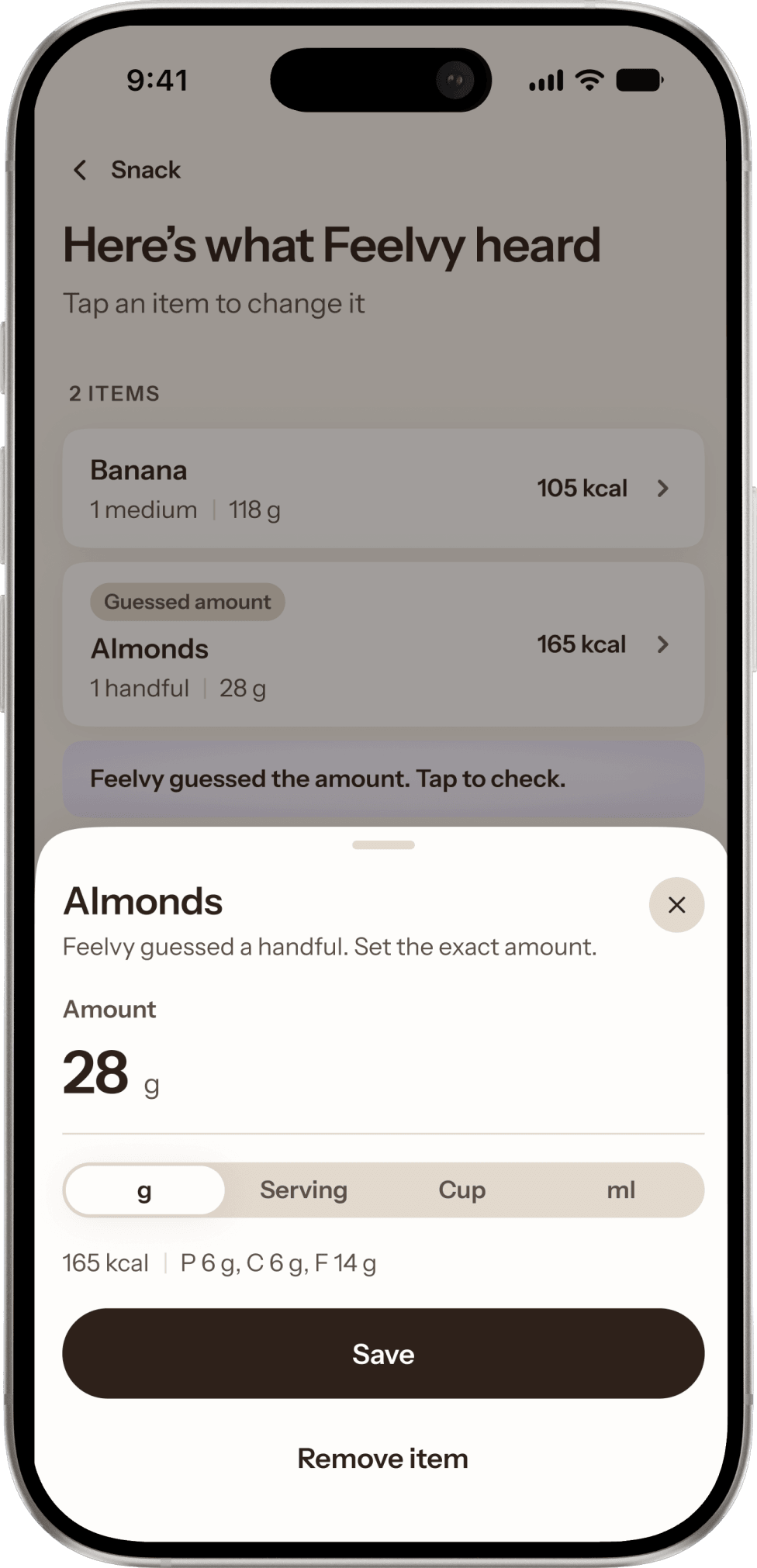
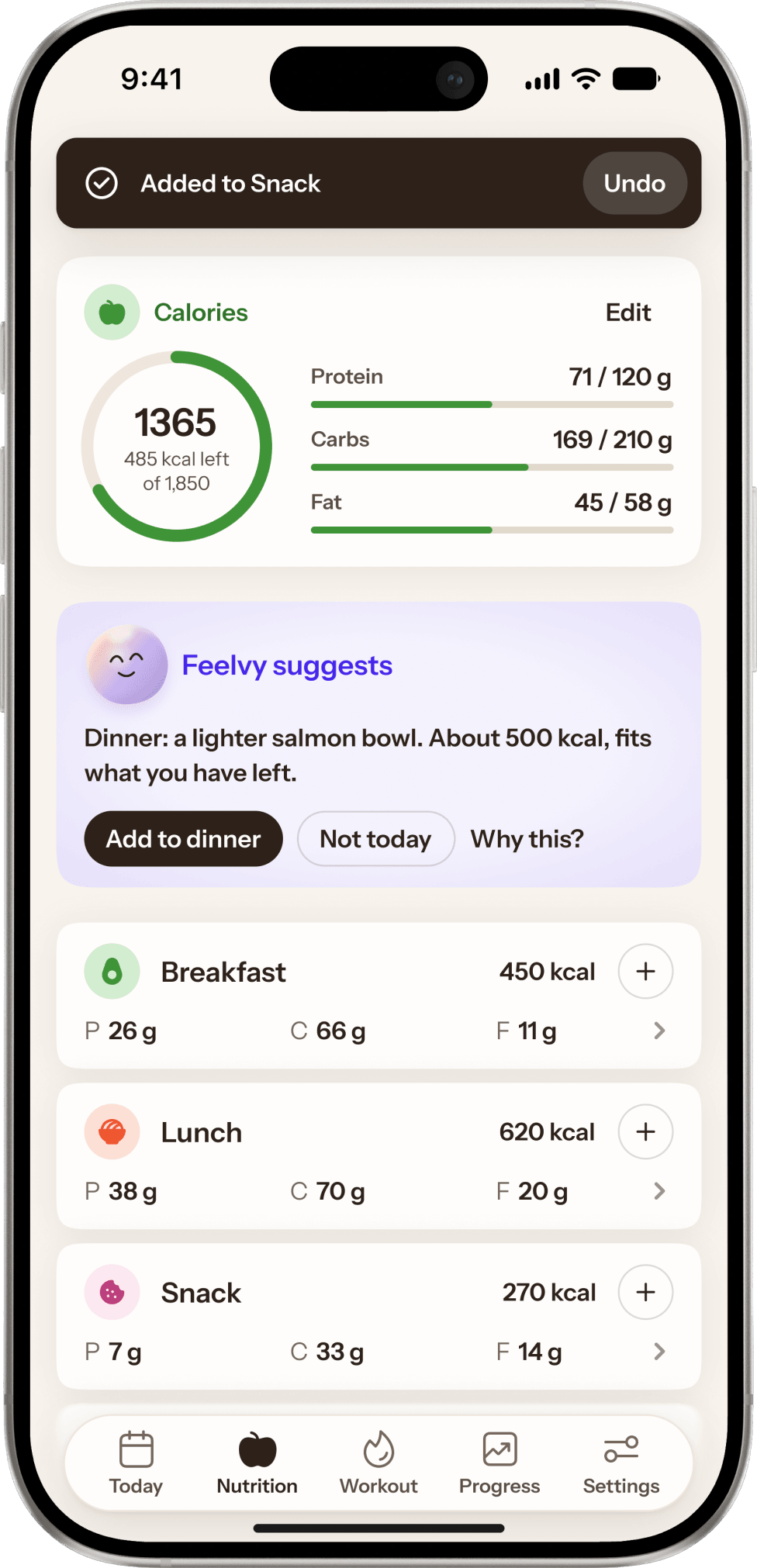
Logging a snack by voice
From the Nutrition screen to a logged snack in under a minute. Maya talks, Feelvy fills in the details, and she checks before saving.
01A quick look at the day
Maya has 780 kcal left, and Feelvy already suggests a dinner that fits. She just ate a snack, so she taps “+”.
From what's in the fridge to what's for dinner
The insight
Logging was only half the effort. All five also struggled to decide what to eat or got tired of the same meals, and three were already asking ChatGPT what to cook with what they had at home.
I'm constantly eating chicken for lunch. I'm so tired of it.
JuliaI'm tired of eating eggs. Fried, boiled, all of them. But I still know I need protein.
JuliaI can't make lunch or dinner varied and still keep it within the diet I need.
MishaFood itself took most of my energy. First, you have to figure out what to eat.
OksanaI didn't like having to combine things and think about what to add, what to eat less of, what to eat more of.
Veronika
The decision
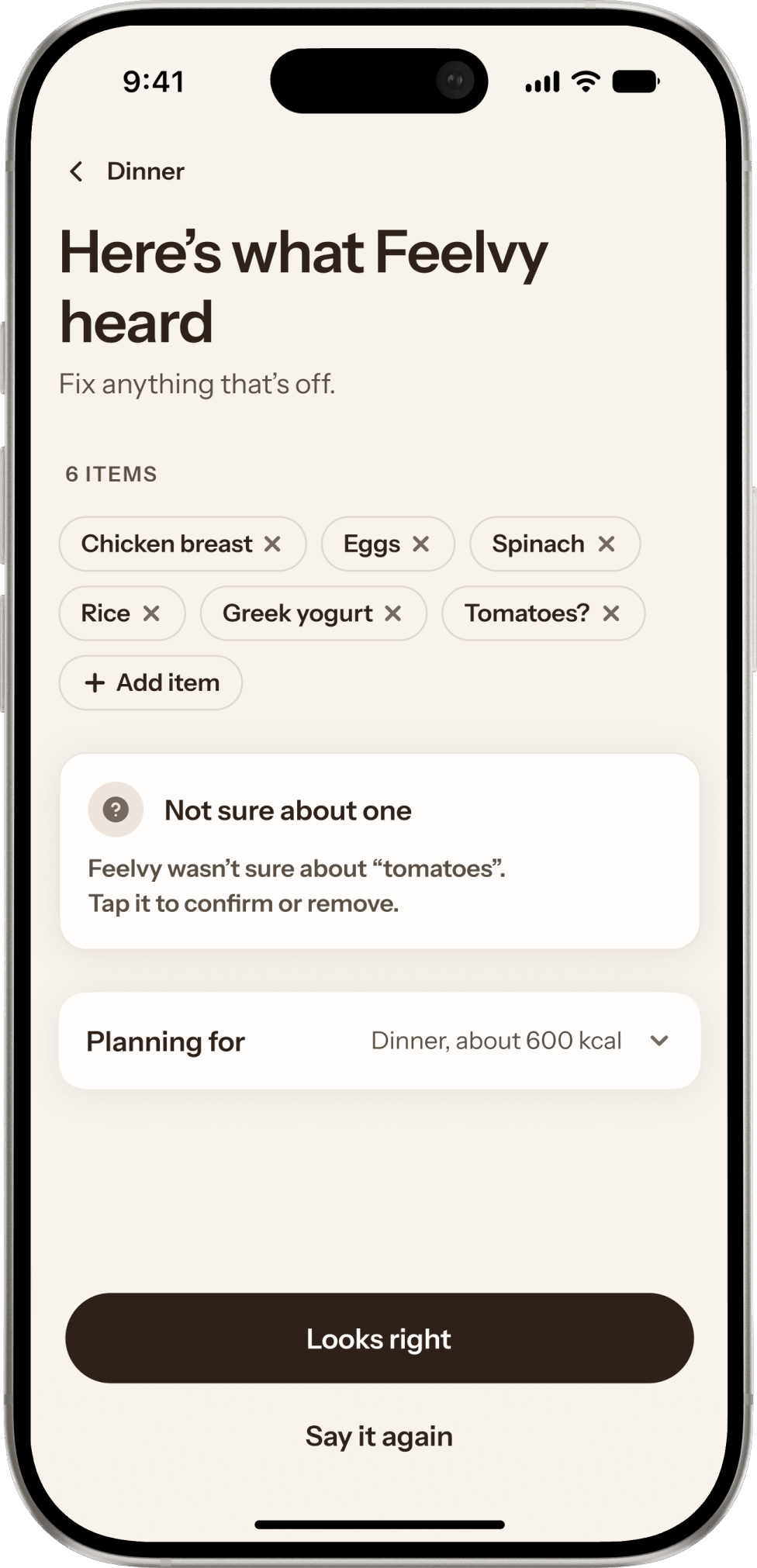
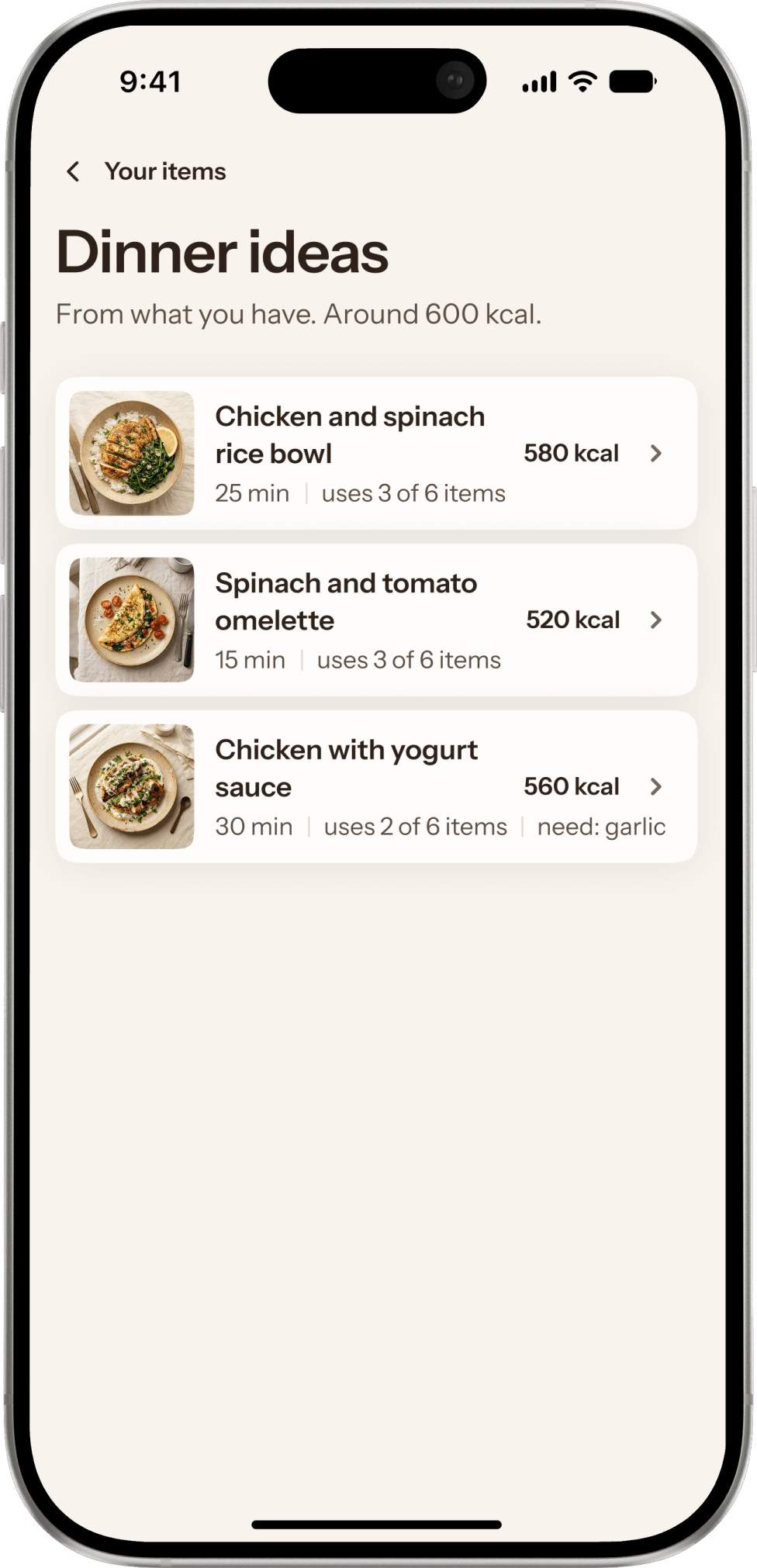
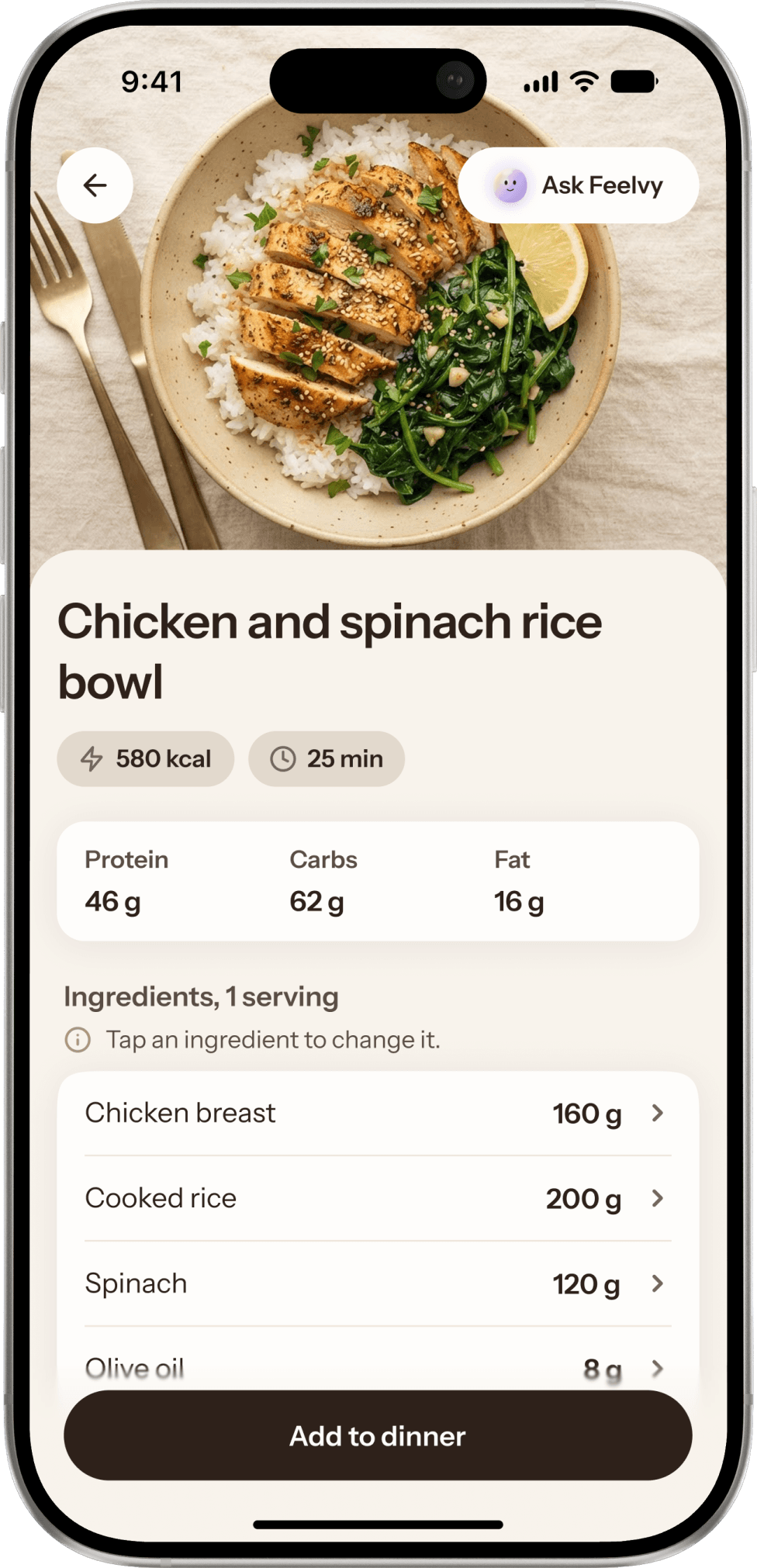
Fridge brings that into Feelvy. Users add what’s in their kitchen by photo or list, and get meal ideas that fit their nutrition targets and food preferences.
Start from what’s at home, not from a blank meal plan.
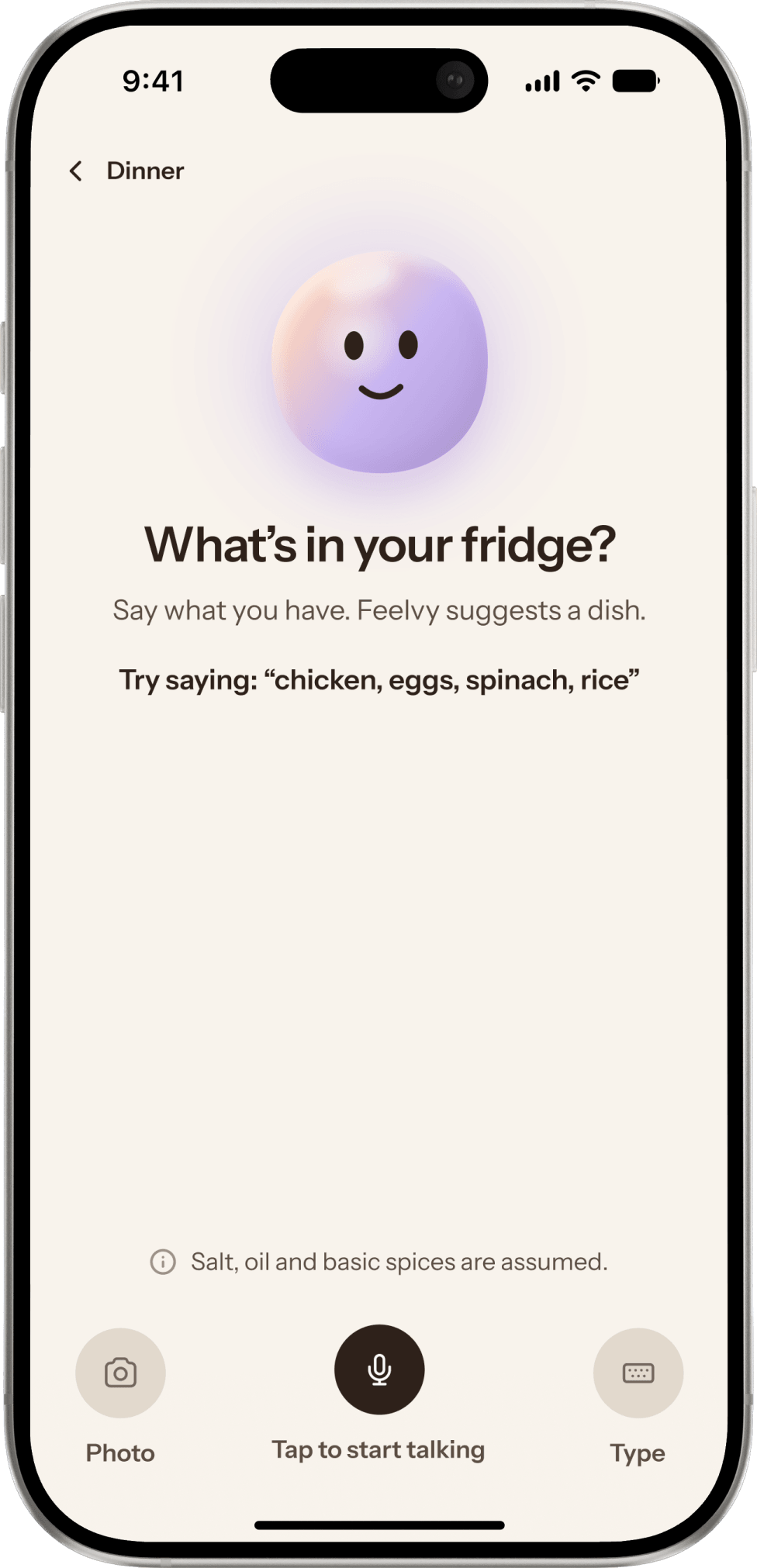
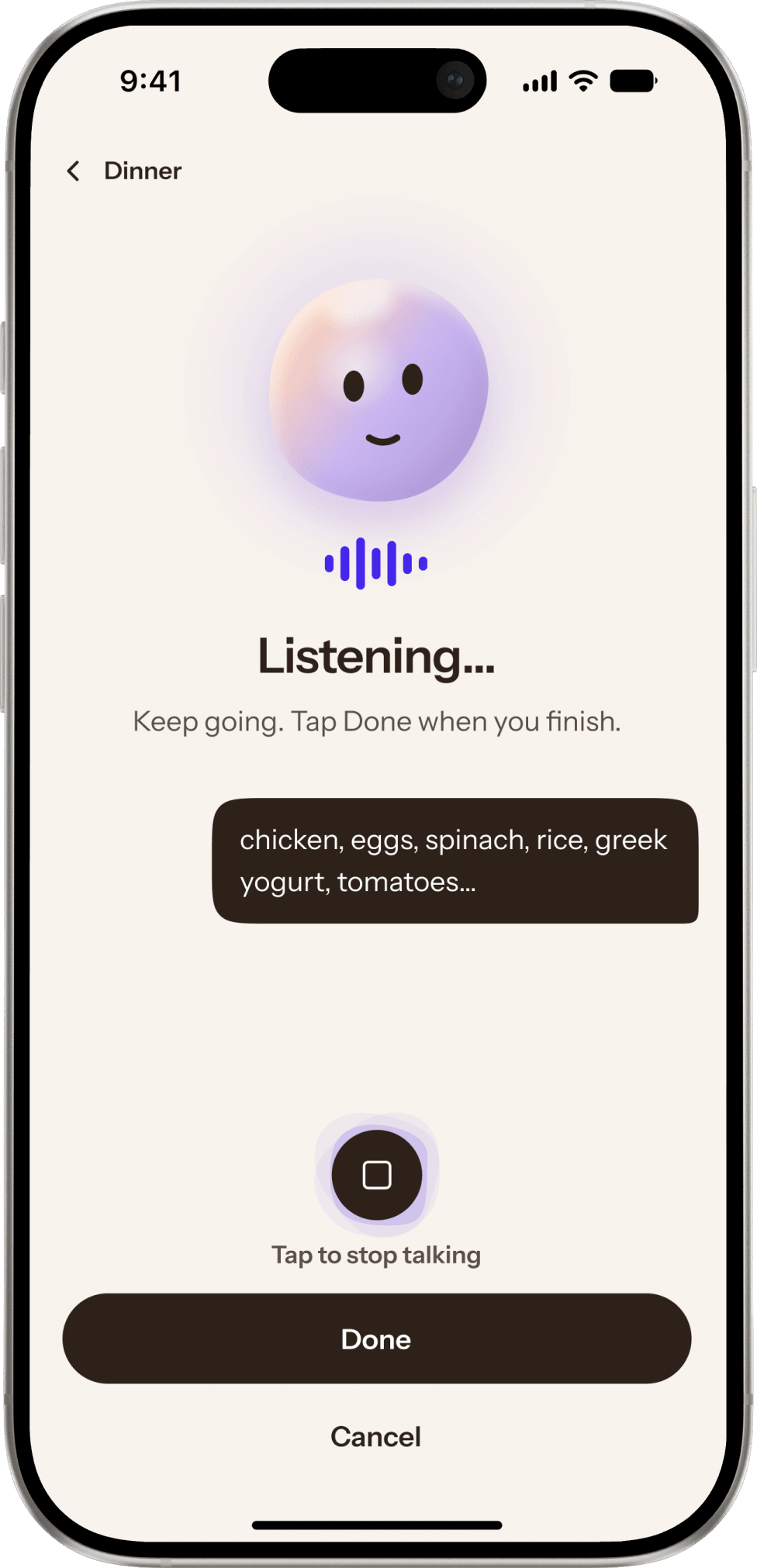
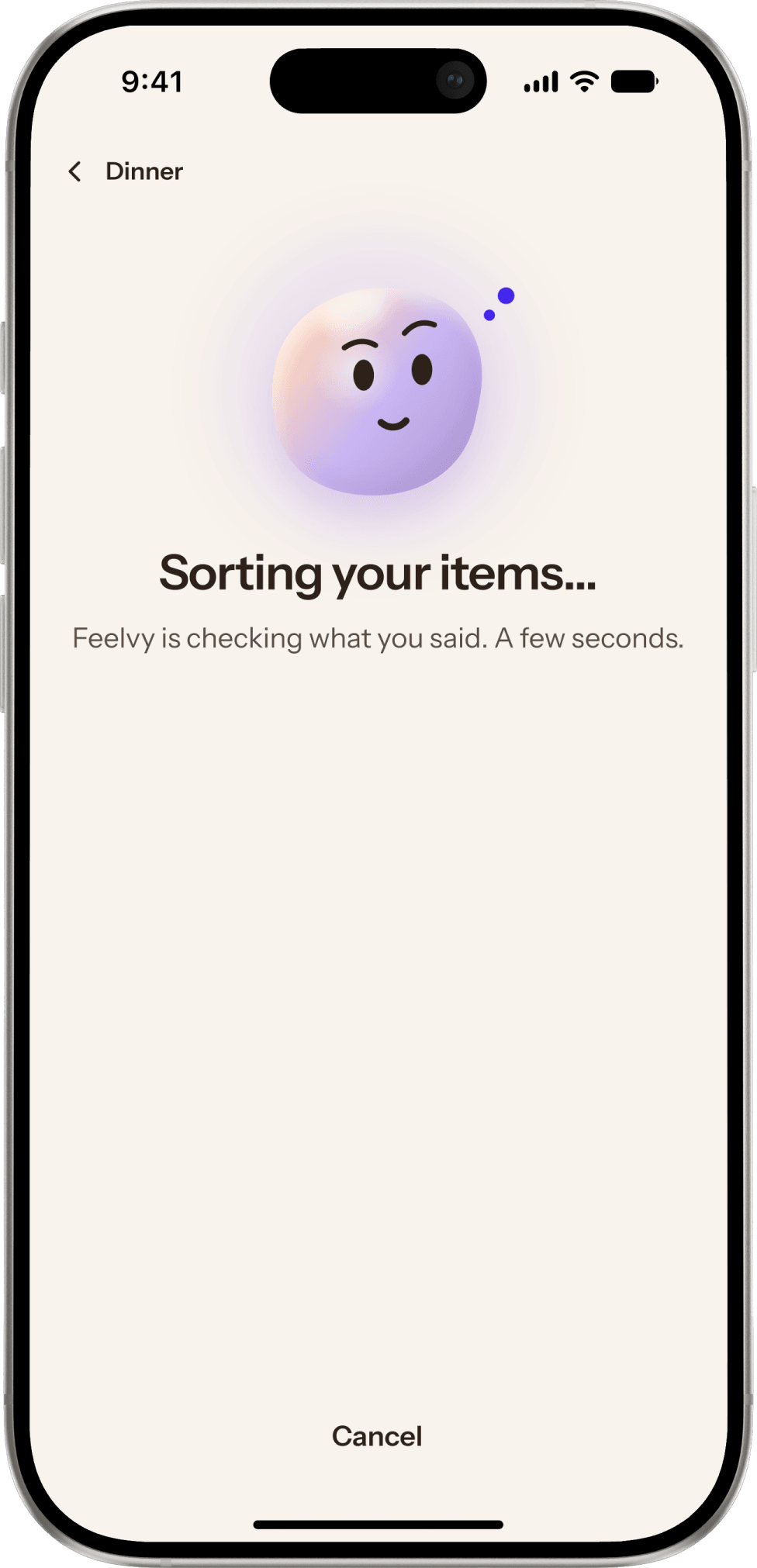
Dinner from the fridge
Maya doesn’t know what to cook. She lists what she has at home, and Feelvy turns it into dinners that fit her day.
01What’s in your fridge?
Maya wants dinner but has no plan. She opens Fridge and can snap a photo, say or type what she has at home.
AI should suggest, not decide
The insight
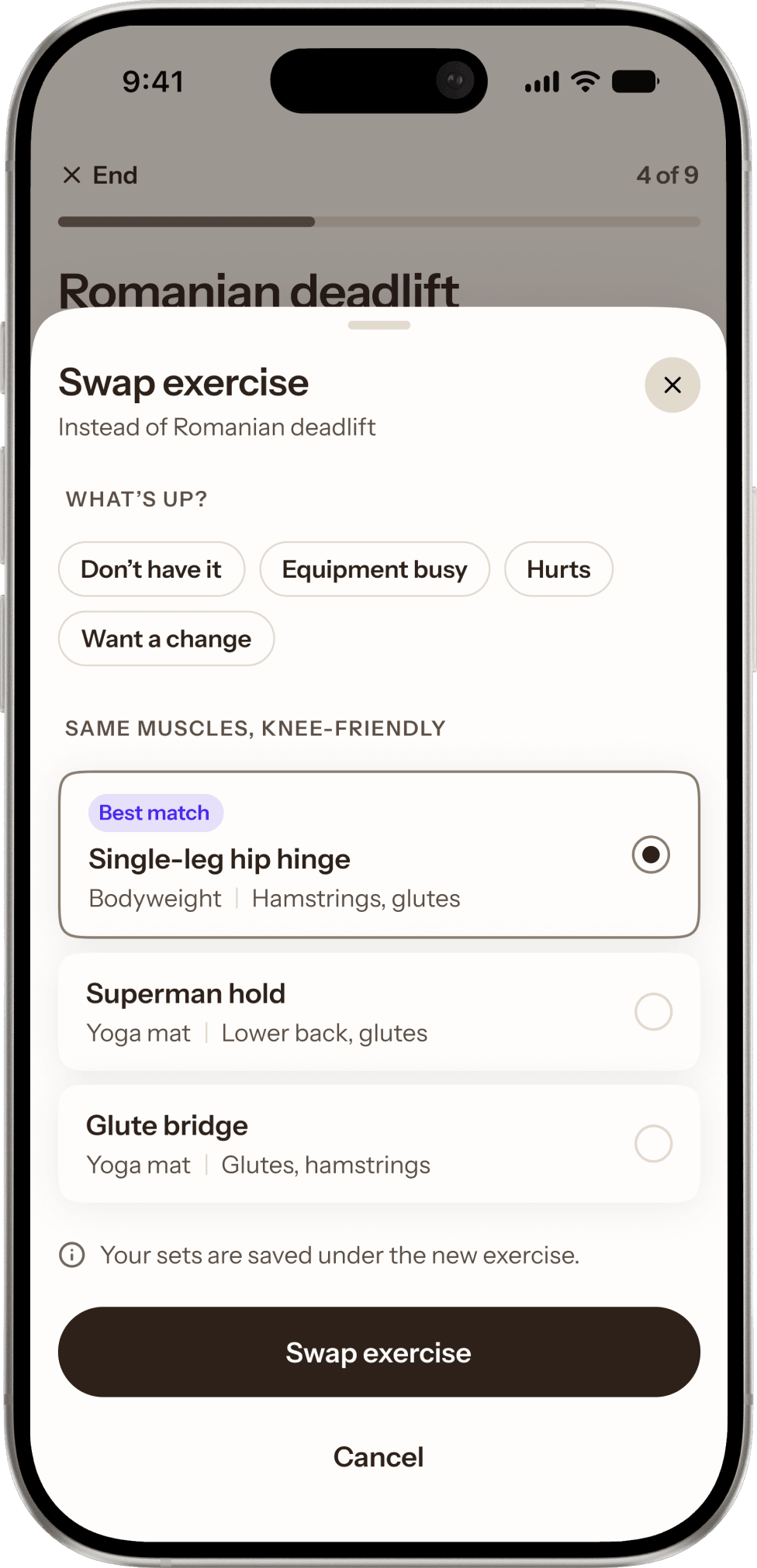
All five participants needed to understand why something was suggested before trusting it. Four of five wanted to swap or change a recommendation: an ingredient, a recipe, or an exercise.
I like having alternatives.
VeronikaIf there's an explanation and I can see that it makes sense, I'd agree with it.
JuliaI'd ask it what alternatives there were. Can I have this instead? Or this?
VeronikaMy lower back and knees didn't feel good. Maybe the exercise is great, but it's uncomfortable for me right now. So I just replaced it.
OksanaIf it told me to eat 1,000 calories a day, two eggs for breakfast and a spoon of rice for lunch, I'd delete it right away.
JuliaI wouldn't trust it if it gives average statistics instead of data based on my own body.
OksanaExplain it to me like a child: what should I do?
Misha
The decision
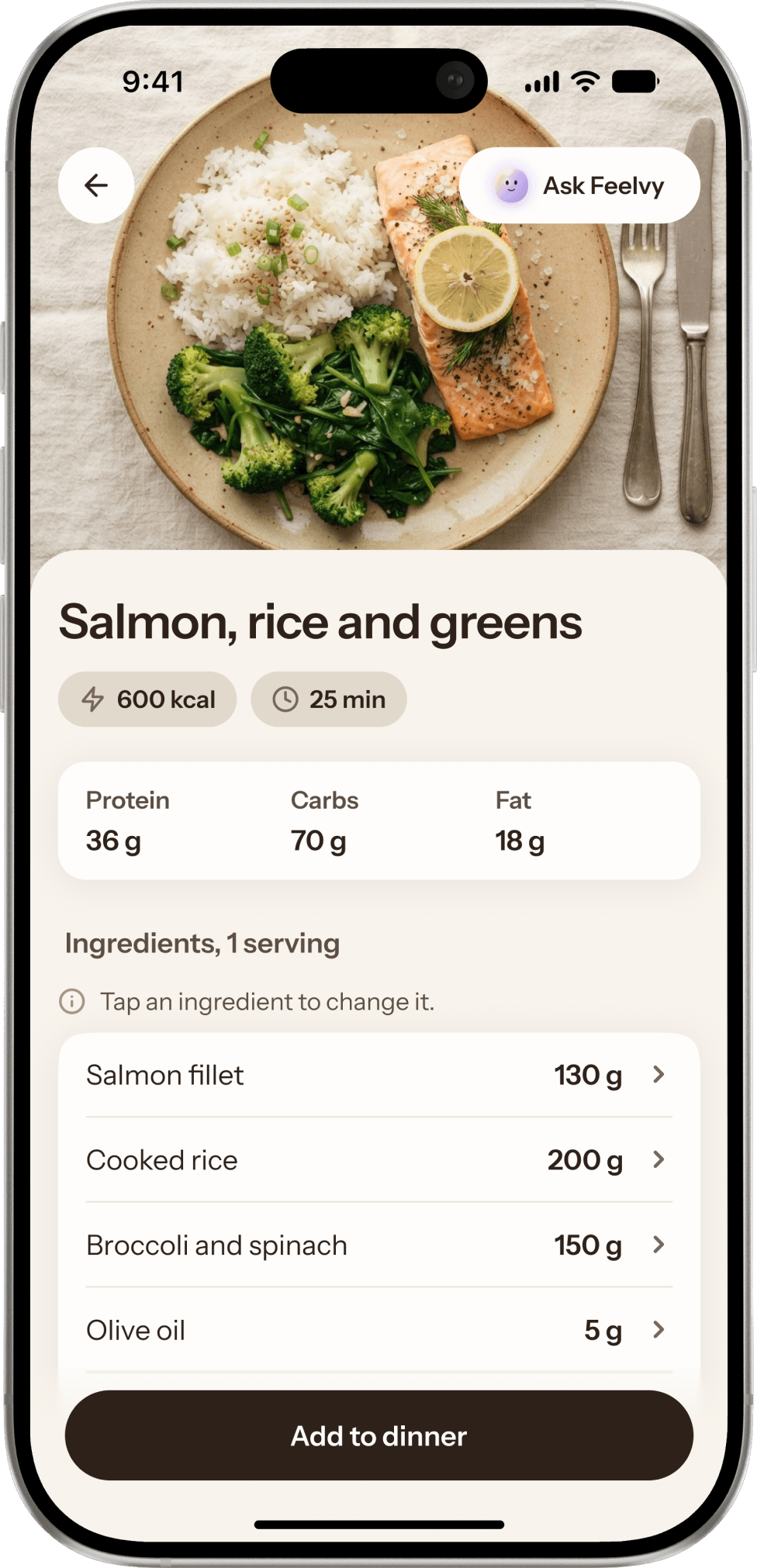
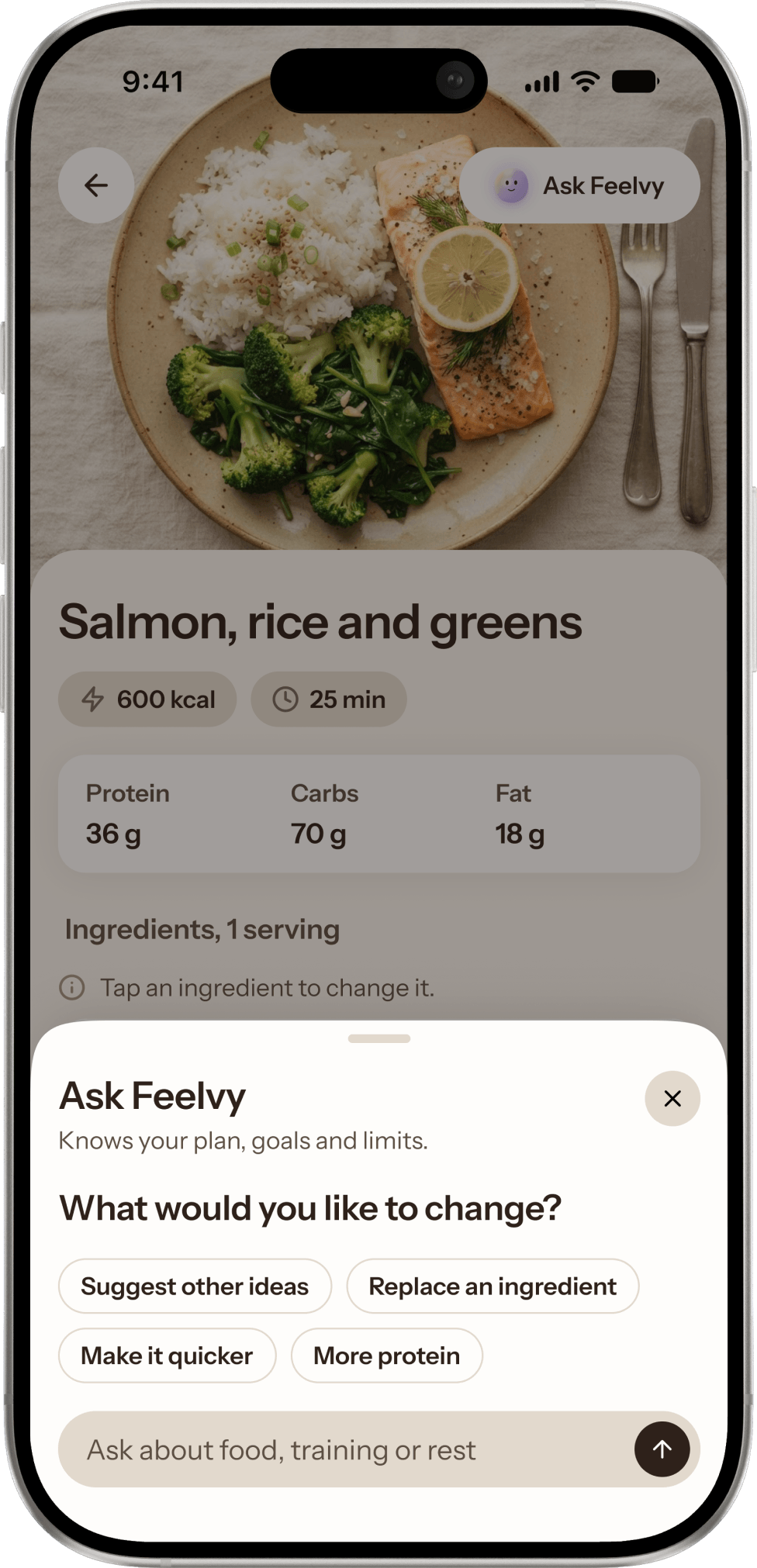
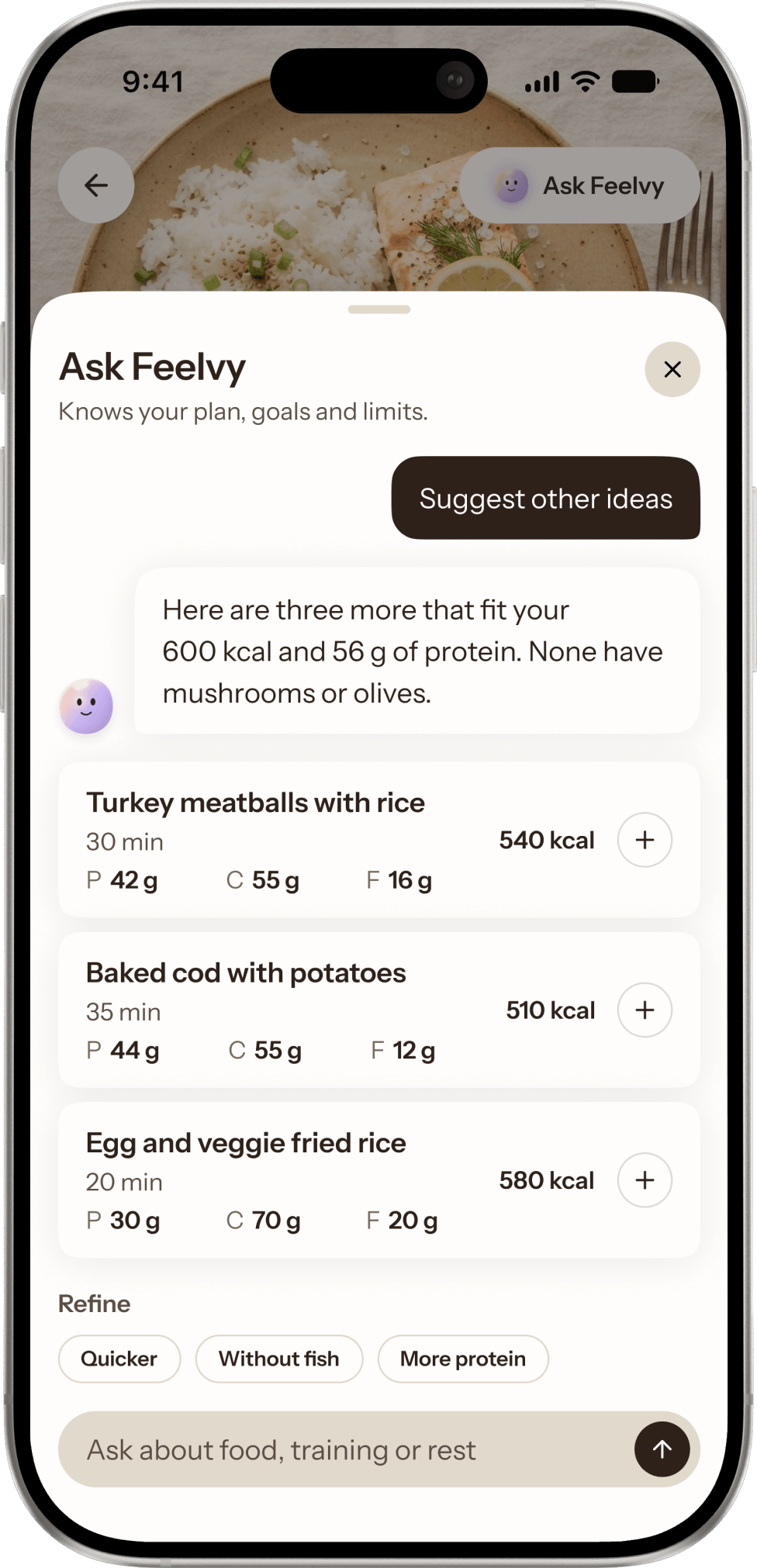
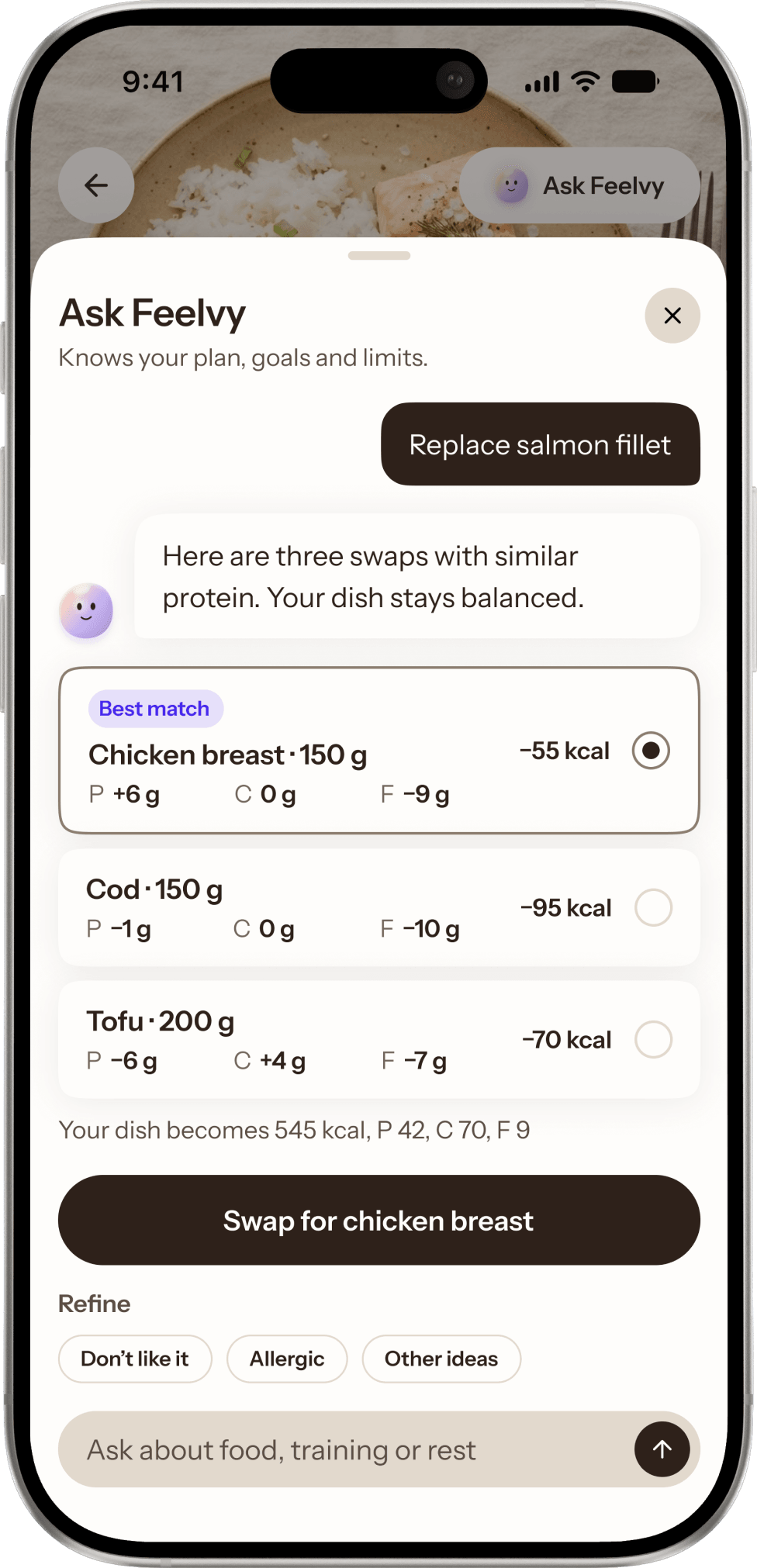
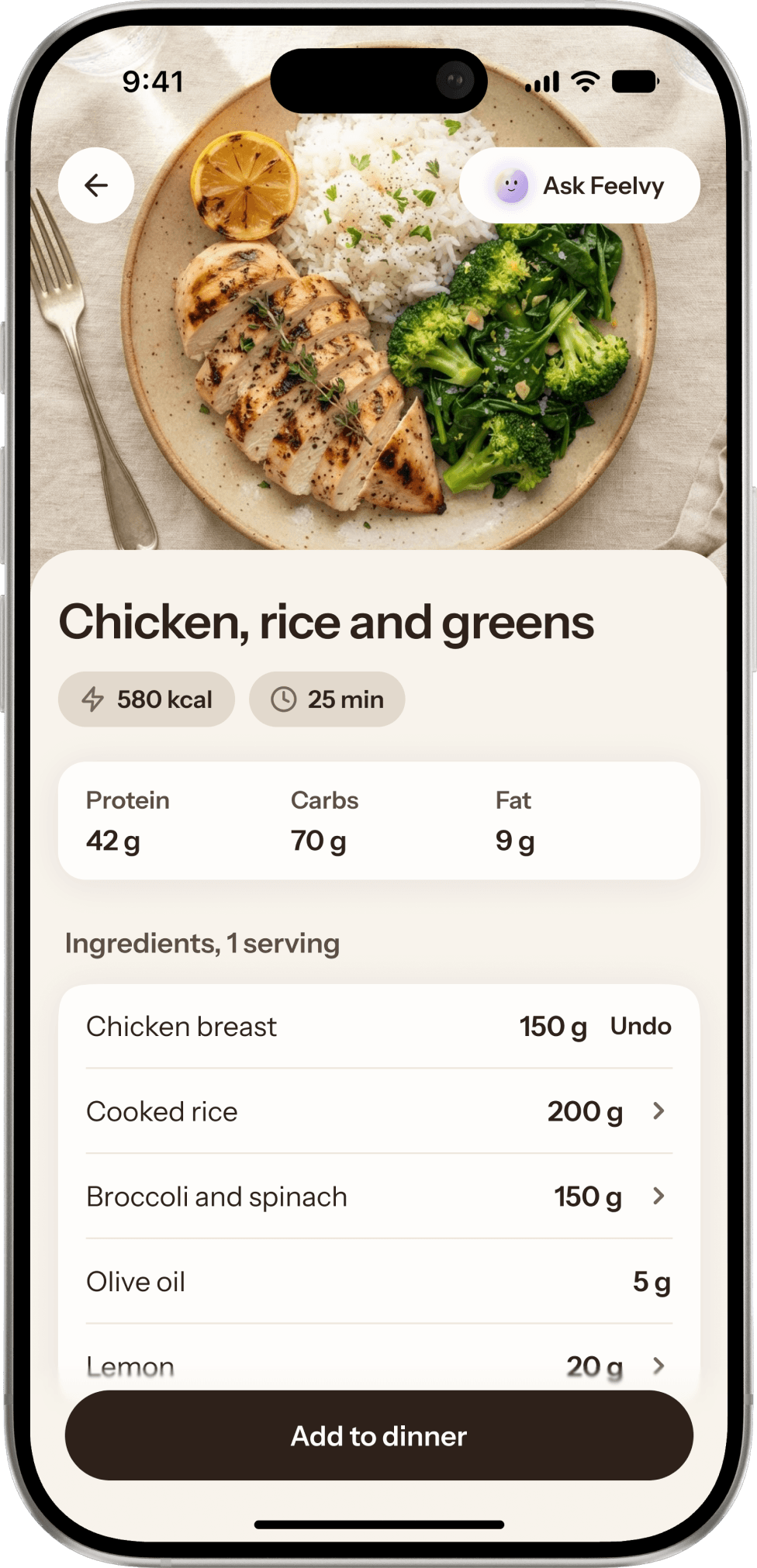
Ask Feelvy lives inside meals and workouts, so people can change something without leaving the screen or explaining again. Every swap shows the reason and the new numbers before saving.
AI proposes. People decide.
Swapping an ingredient
Maya likes her dinner but not the salmon. She asks Feelvy right from the recipe and sees what changes before saving.
01A dinner to adjust
Feelvy suggests salmon, rice and greens: 600 kcal, 25 min. Maya wants to change something, so she taps Ask Feelvy.
[ Progress ]
A missed workout doesn't erase your progress
All five participants wanted to see how they were changing over time, compared with their own past results, not only whether they finished today’s plan.
I want simple statistics that compare me with myself, with my previous results.
MishaI tracked things, but I couldn't see how they changed. There were no graphs showing my progress.
OksanaIt showed right away whether my run was better or worse than last time. You're basically racing your own shadow.
MishaI'd start an exercise at 50 and finish at 75. It would be great to see that as a graph too.
Oksana
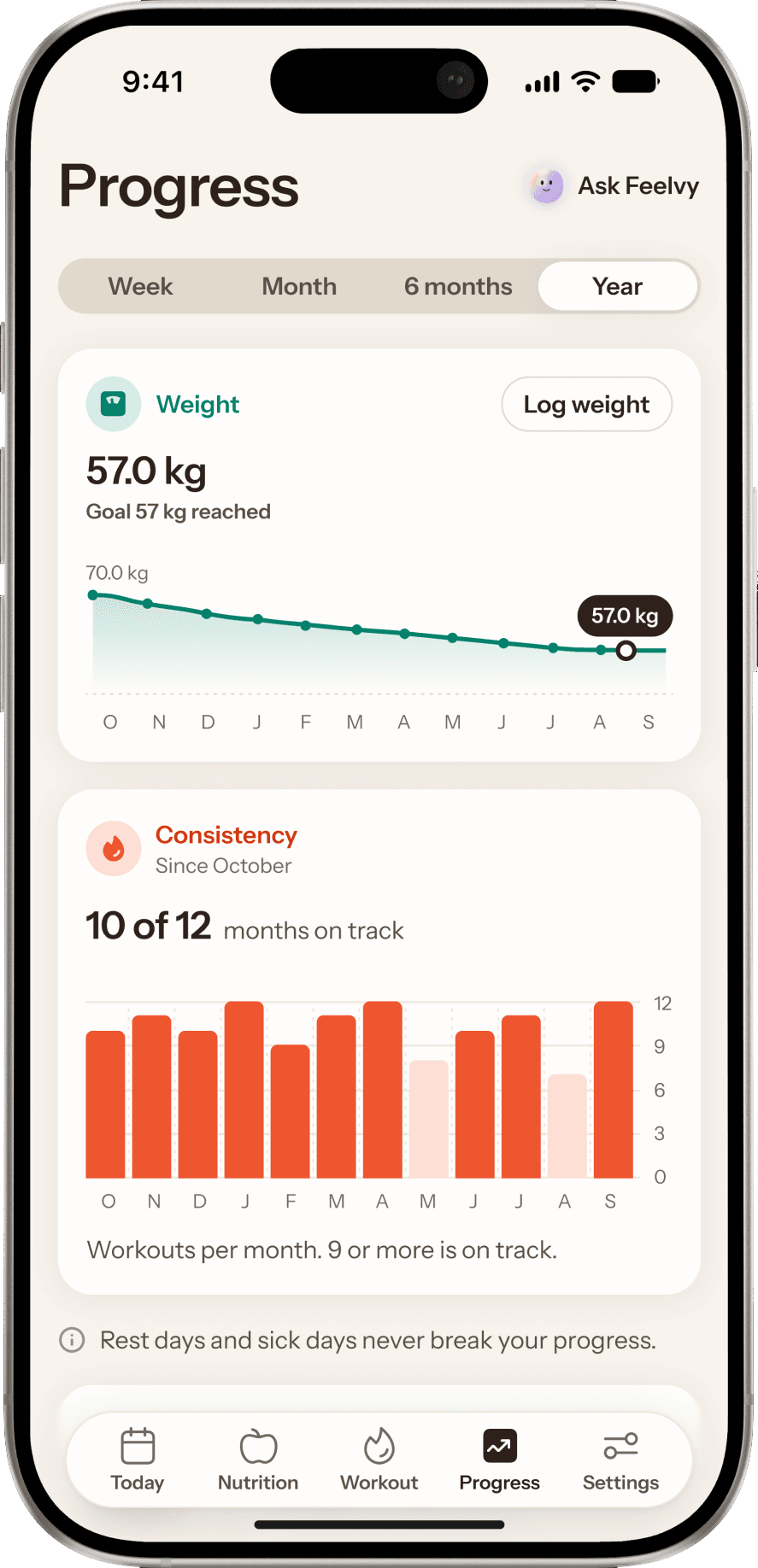
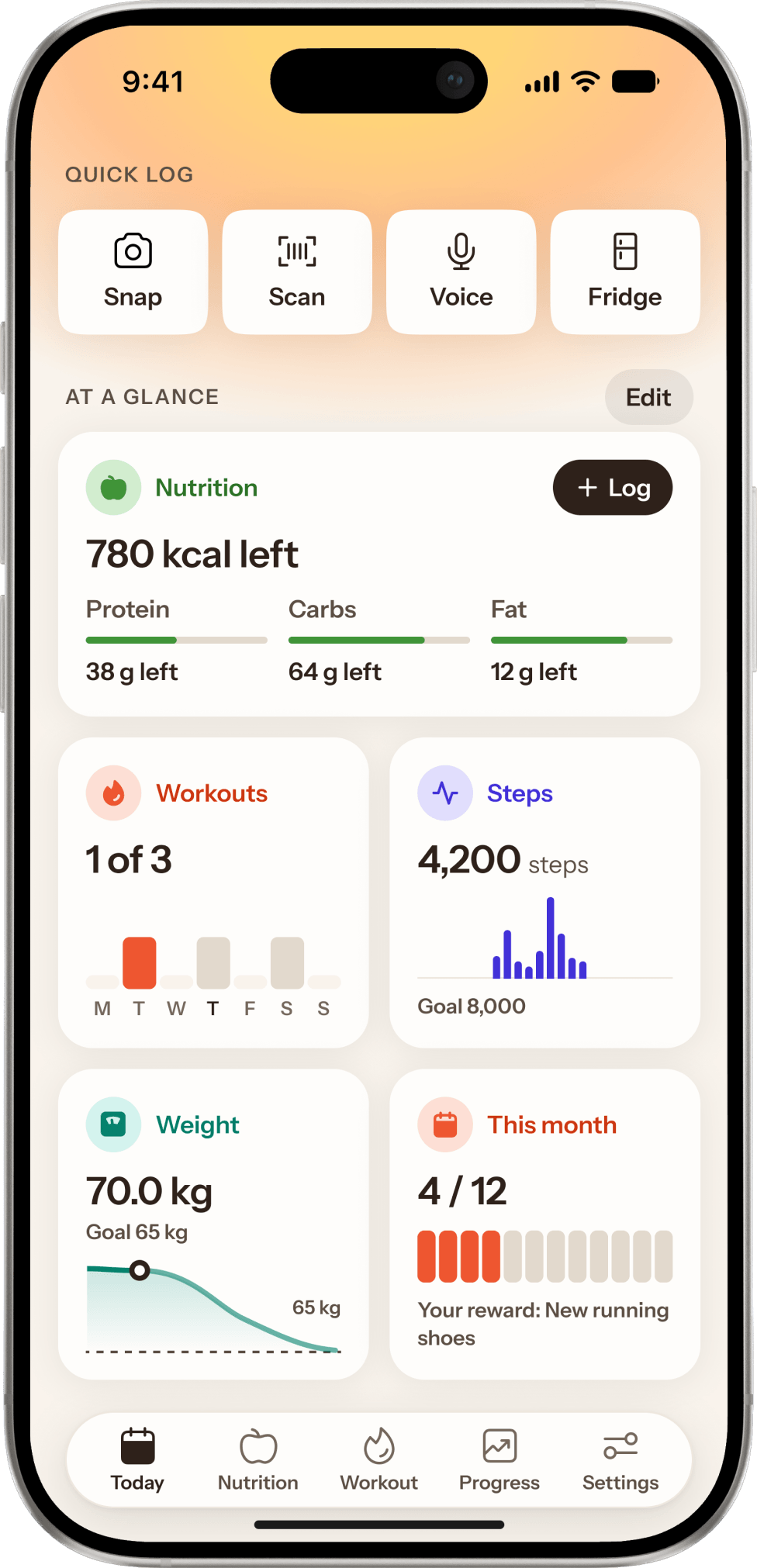
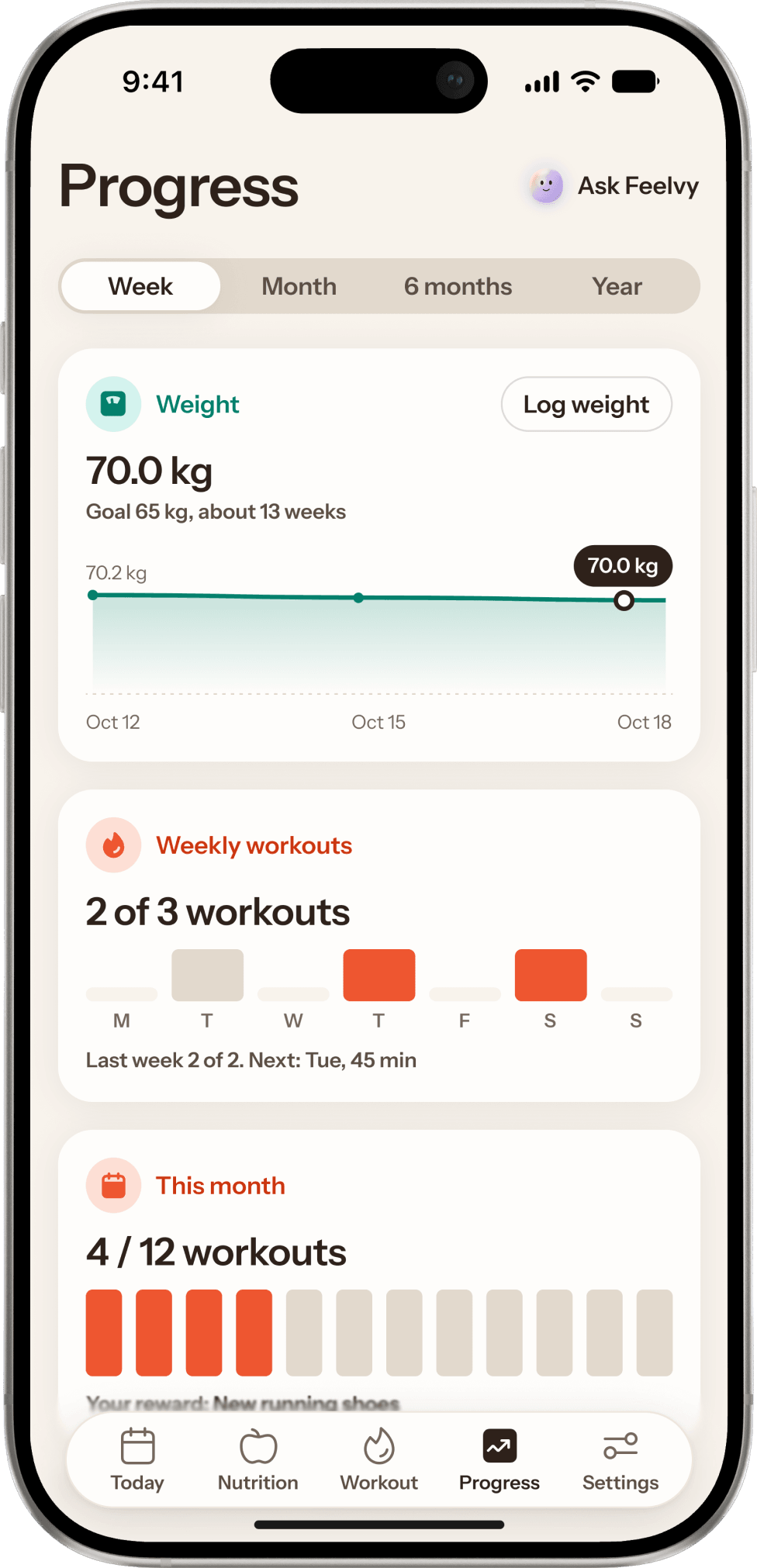
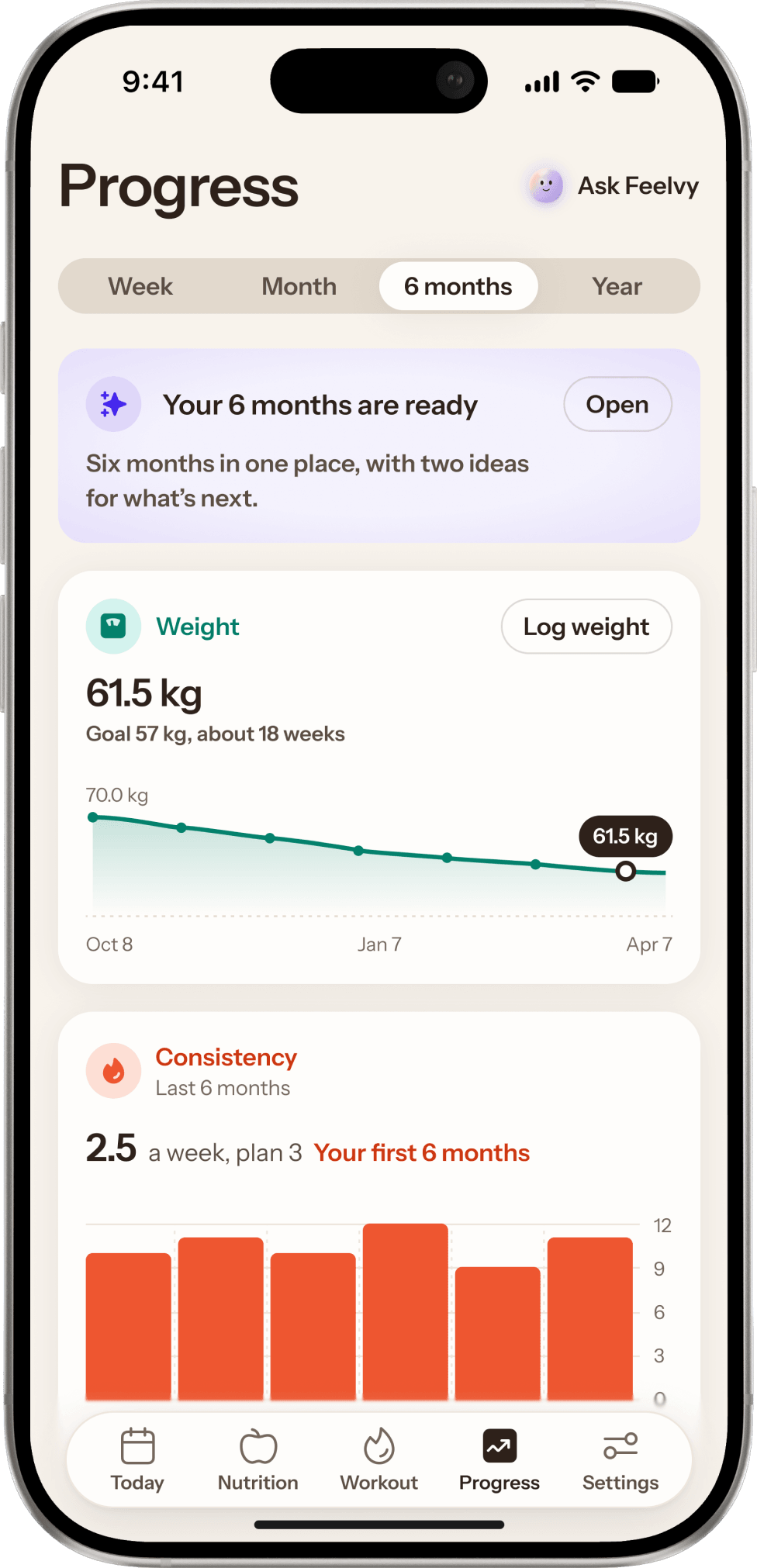
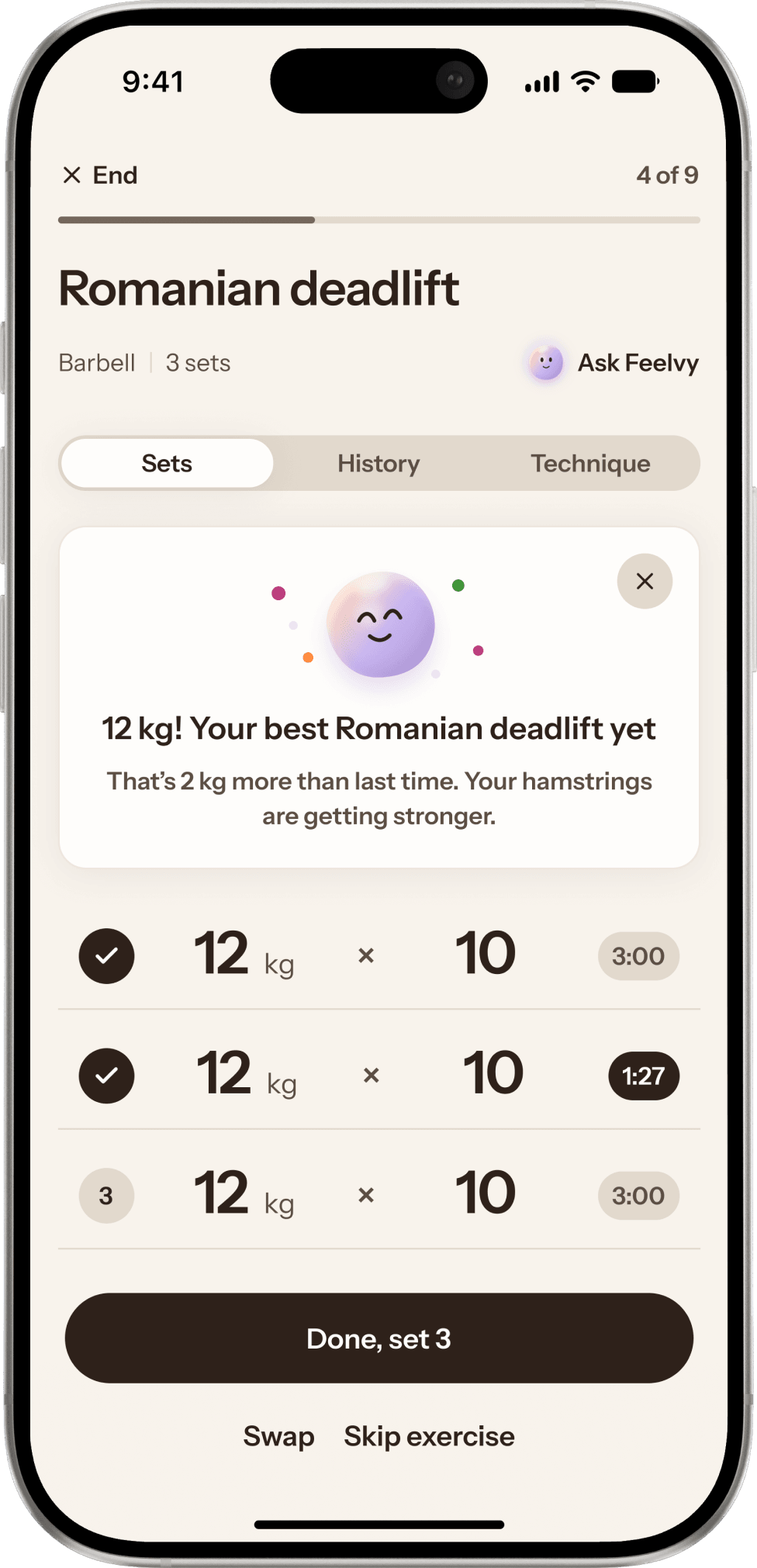
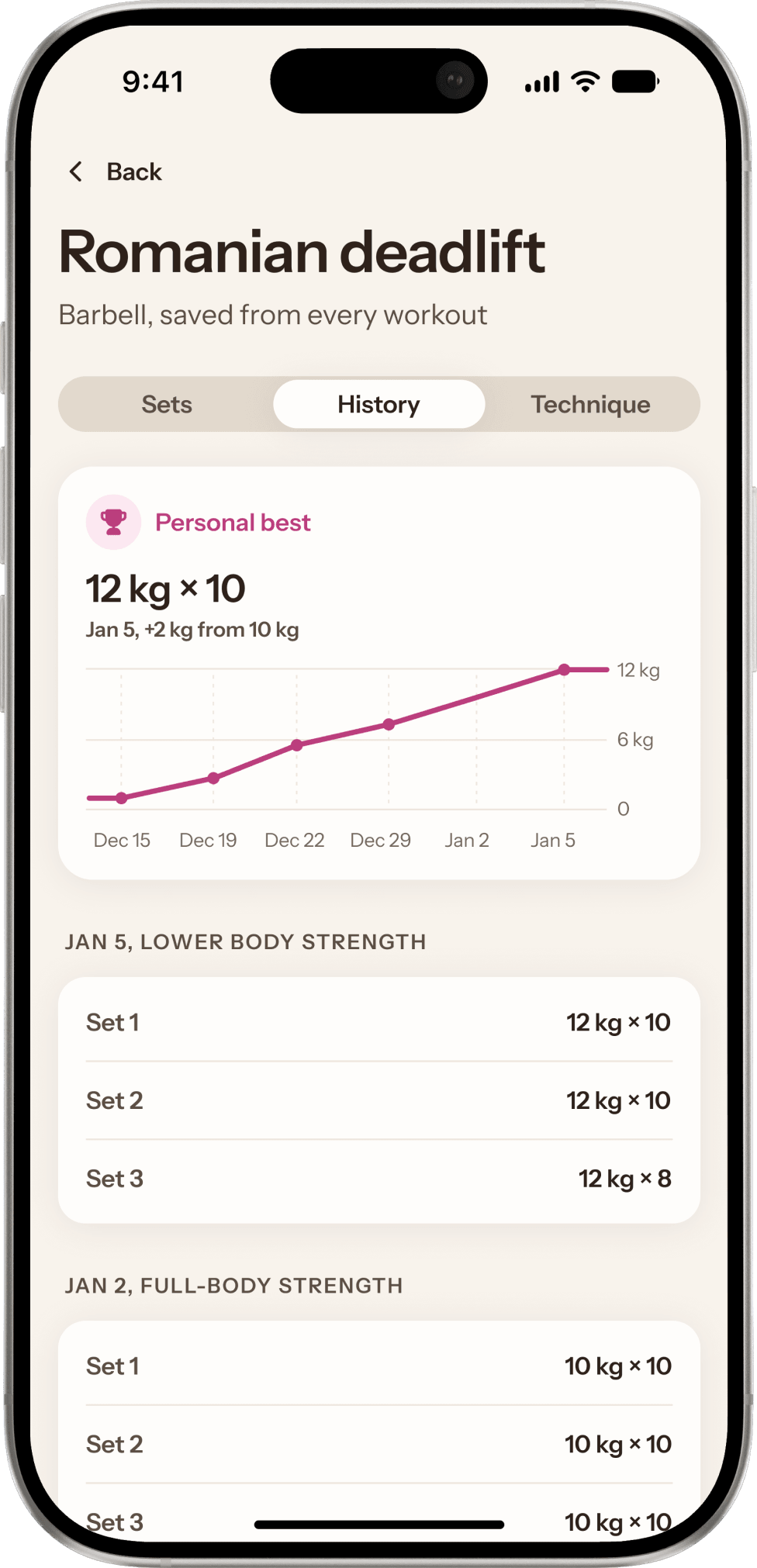
Progress brings workouts, strength, weight, sleep, and steps into weekly, monthly, and long-term views, with sets and weights tracked for every exercise. Instead of a daily streak, there’s a monthly goal of 12 workouts in four weeks, with a reward the user picks. A shortened Recharge session still counts.
Rest days never break your progress.
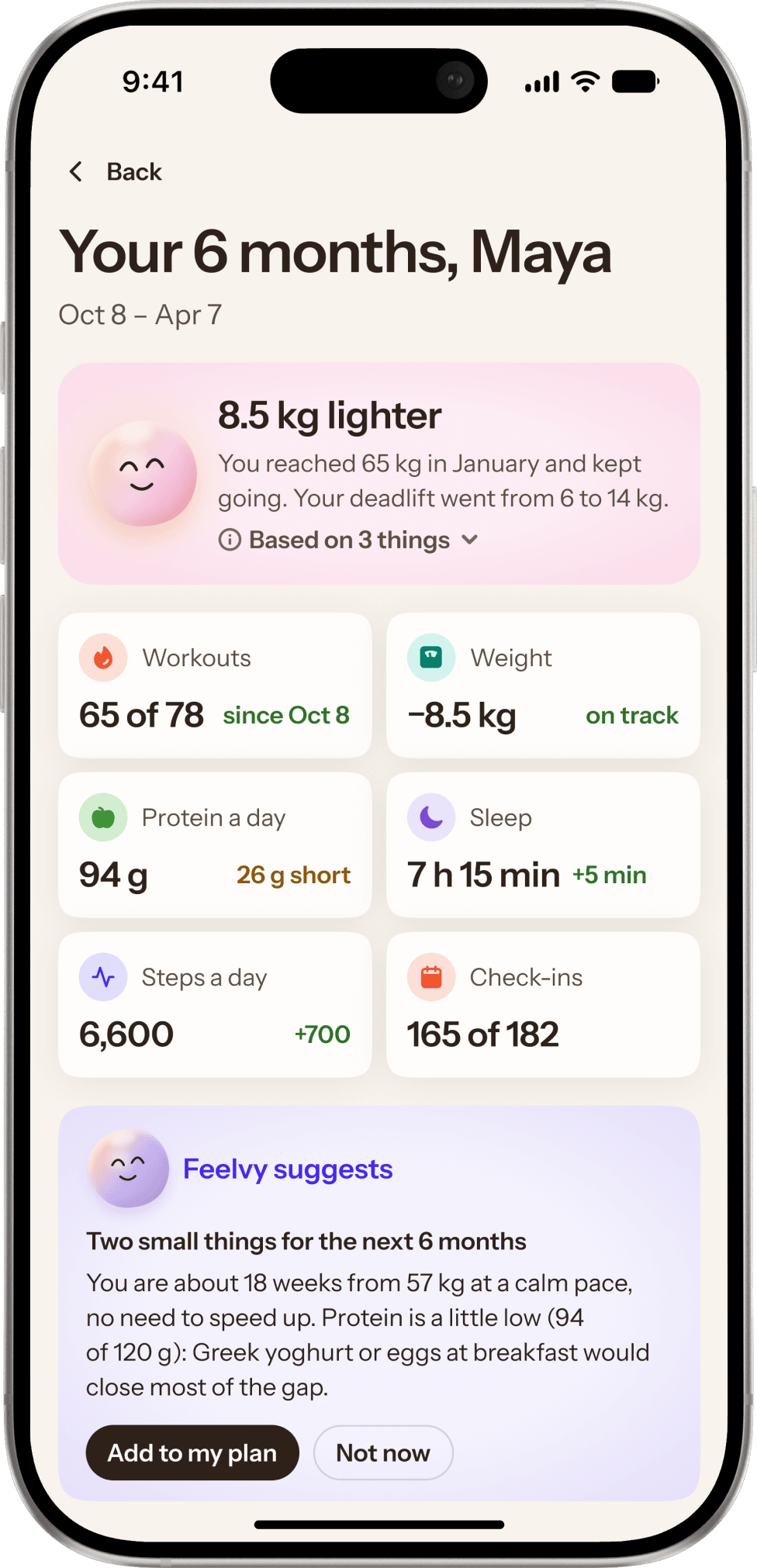
Progress you can see
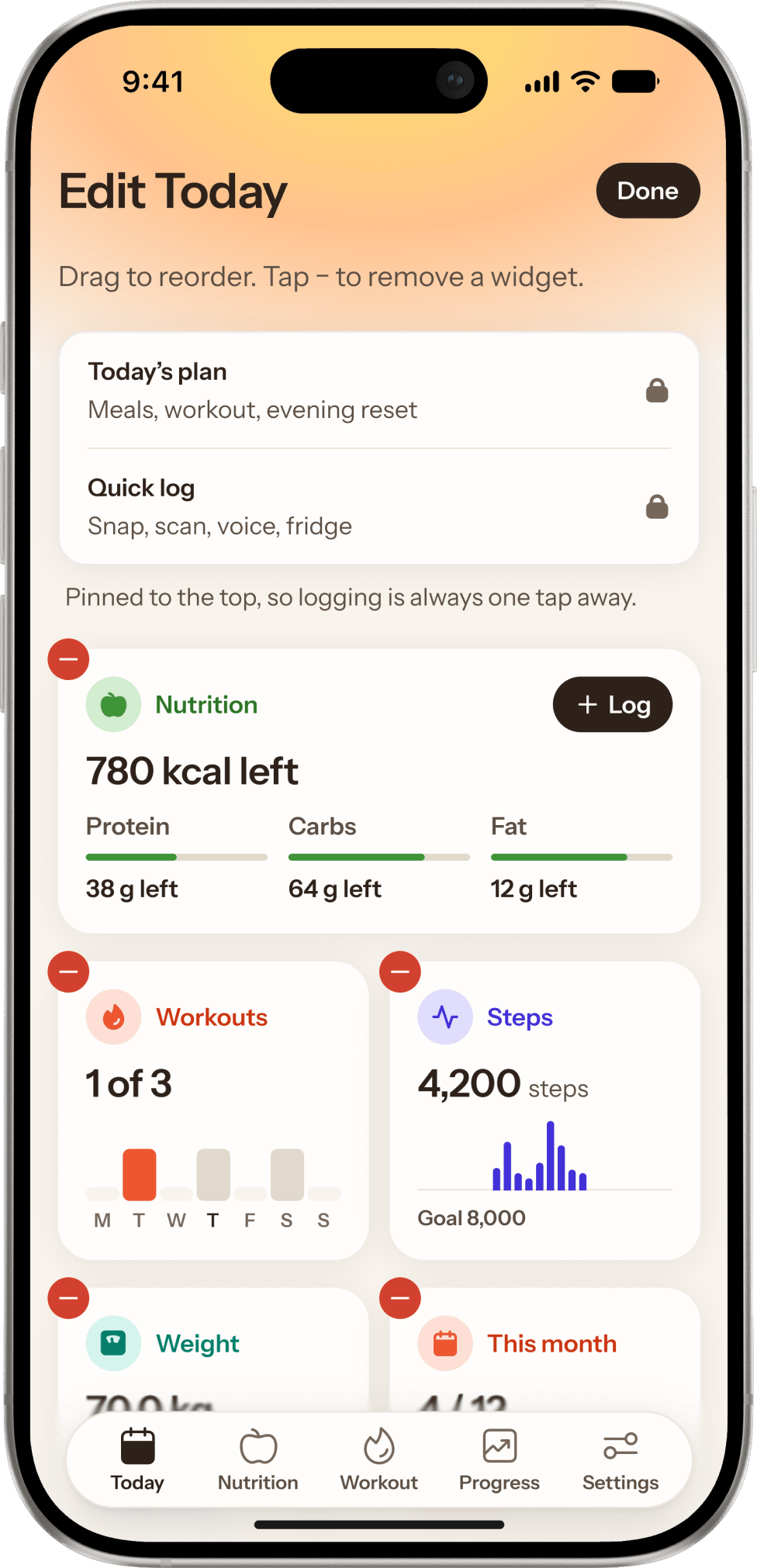
Maya sees her numbers every day and compares them with her own past, week by week and over six months.
01Numbers on Today
Widgets on Today show what’s left to eat, workouts, steps, weight and the monthly goal of 12 with its reward.
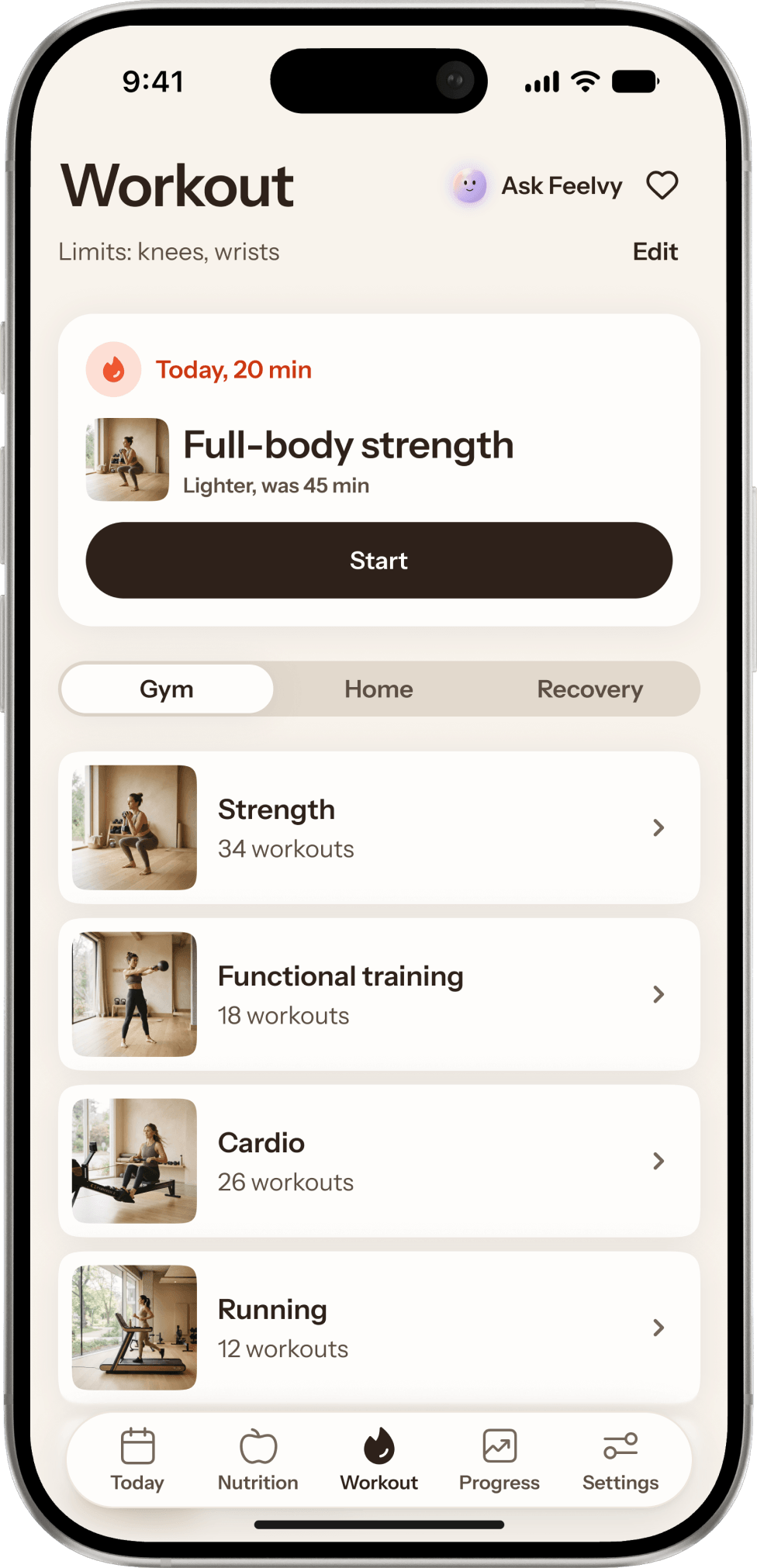
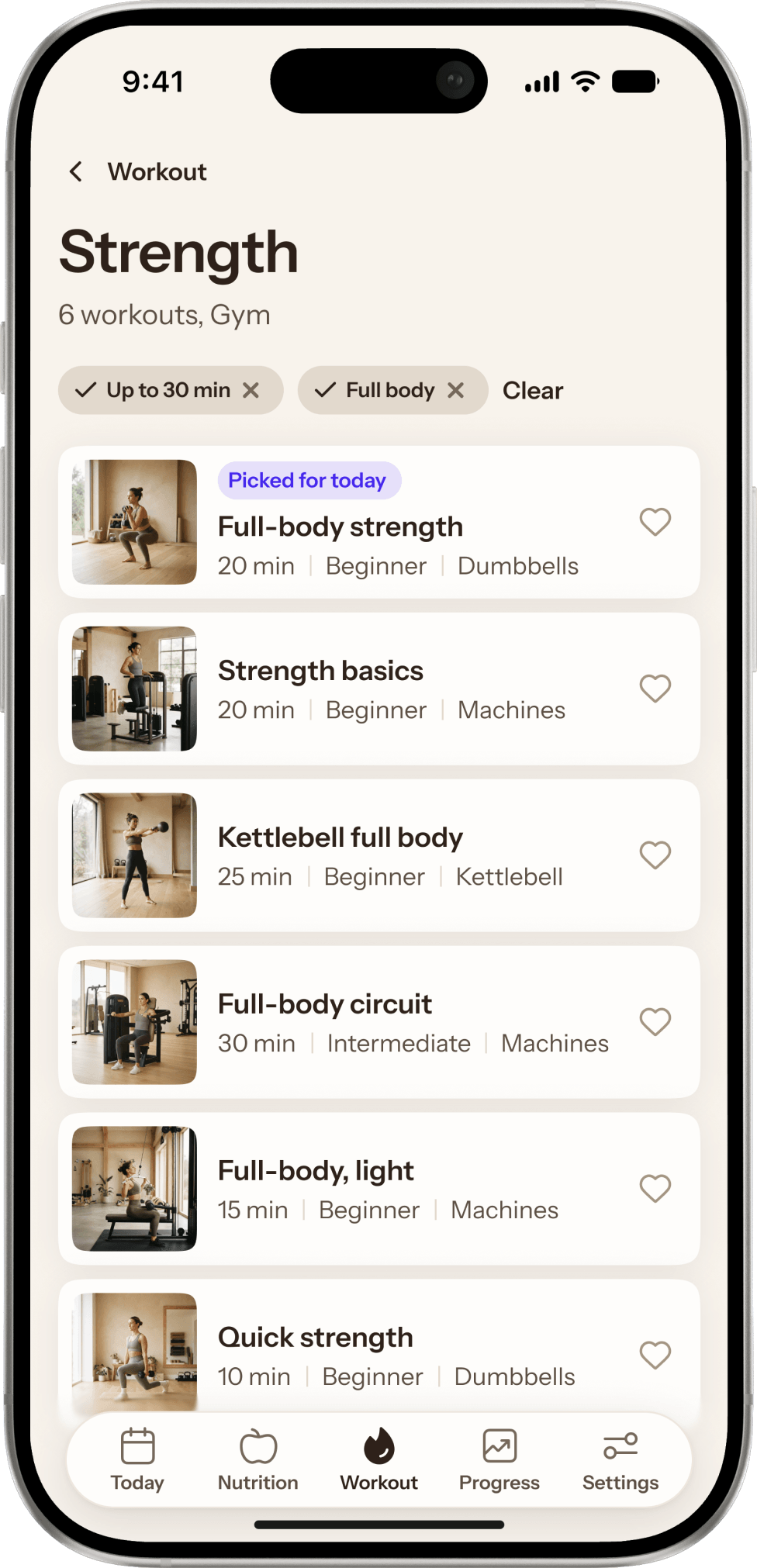
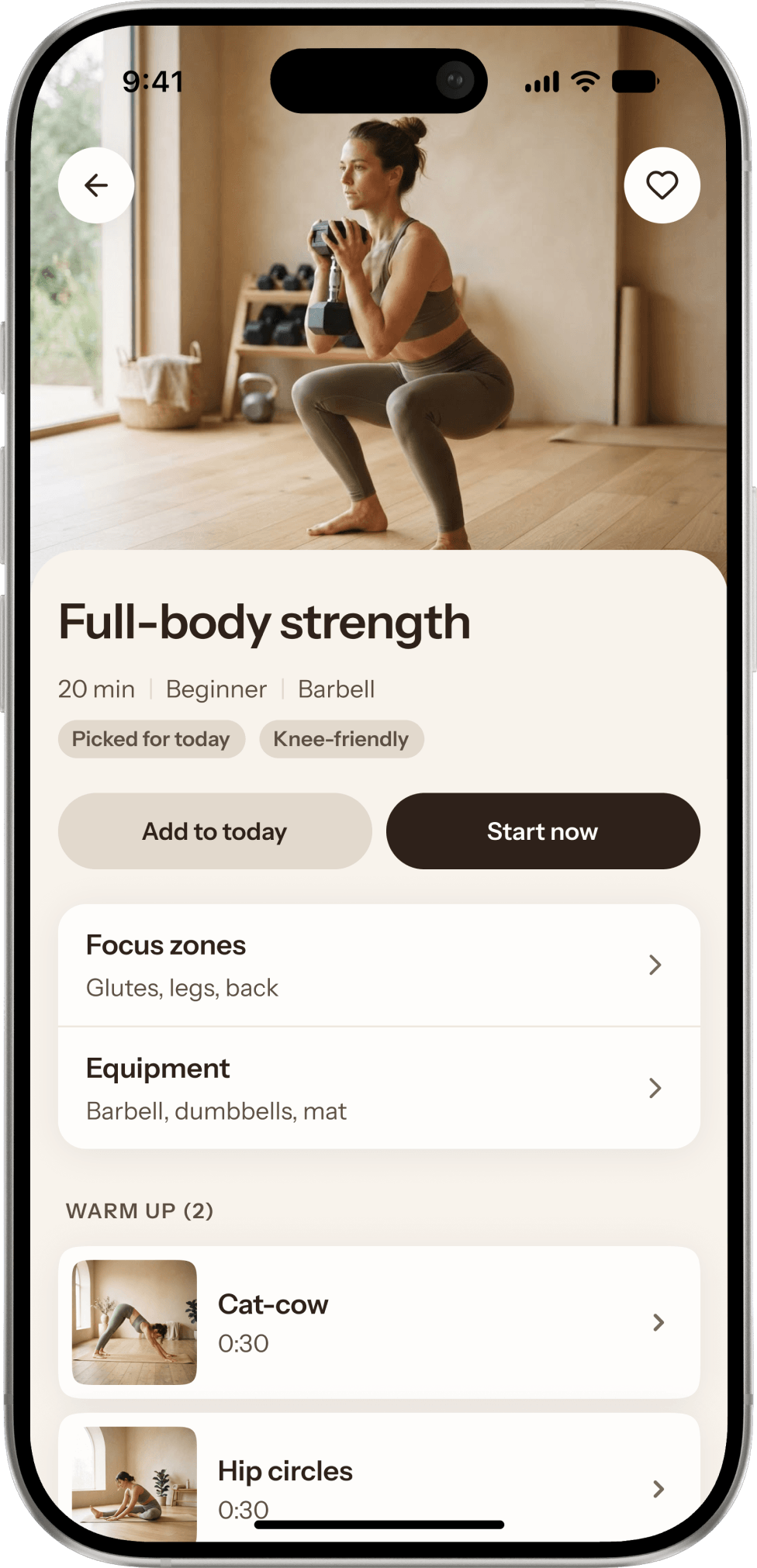
Training that adapts
Maya’s workout is already lighter today. She picks it, trains set by set and swaps what doesn’t work for her.
01Today’s workout
Workout opens with today’s plan: full-body strength, 20 min instead of 45. Her limits, knees and wrists, are set.
[ Visual Language ]
Every kind of day deserves a place
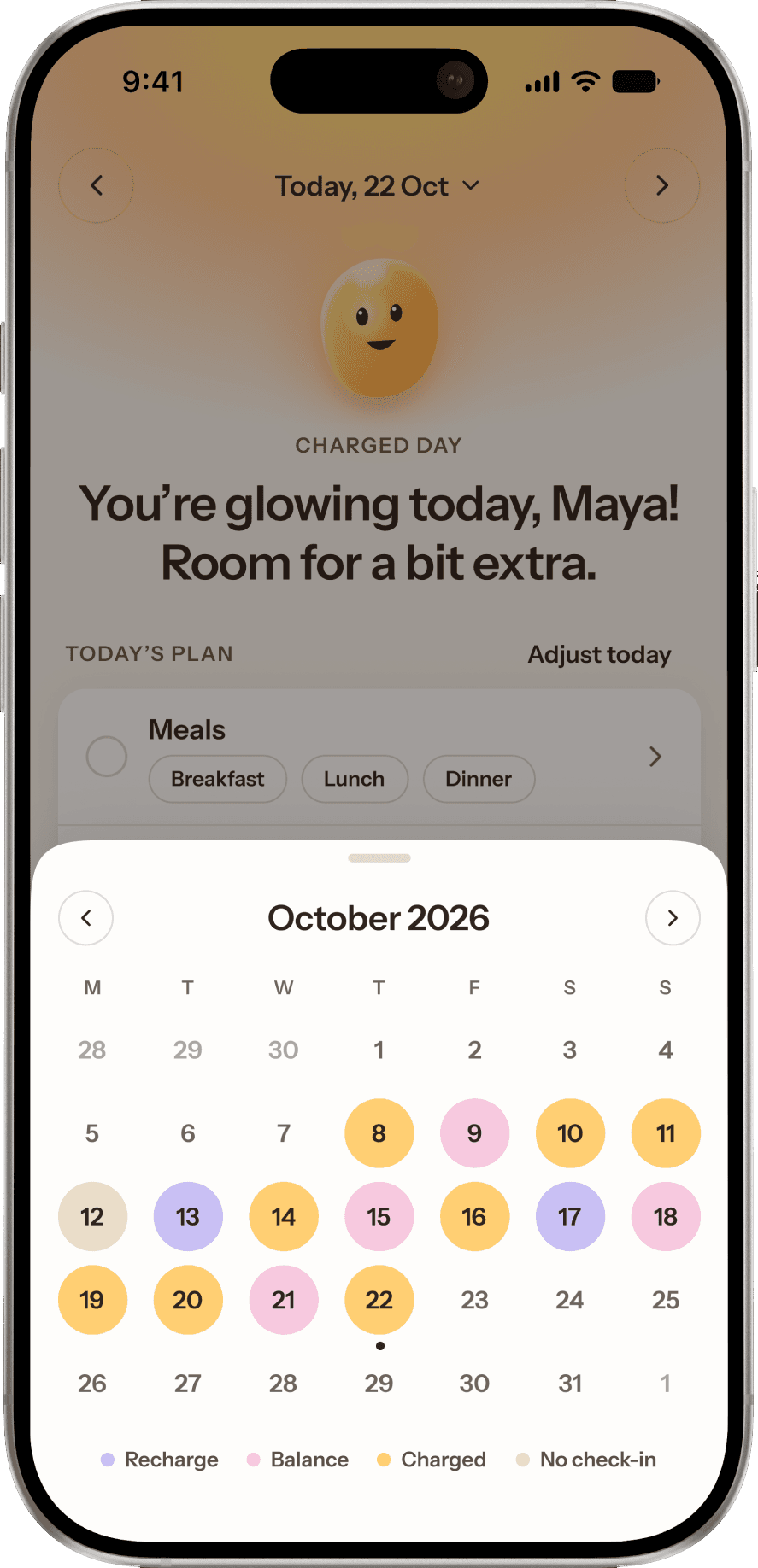
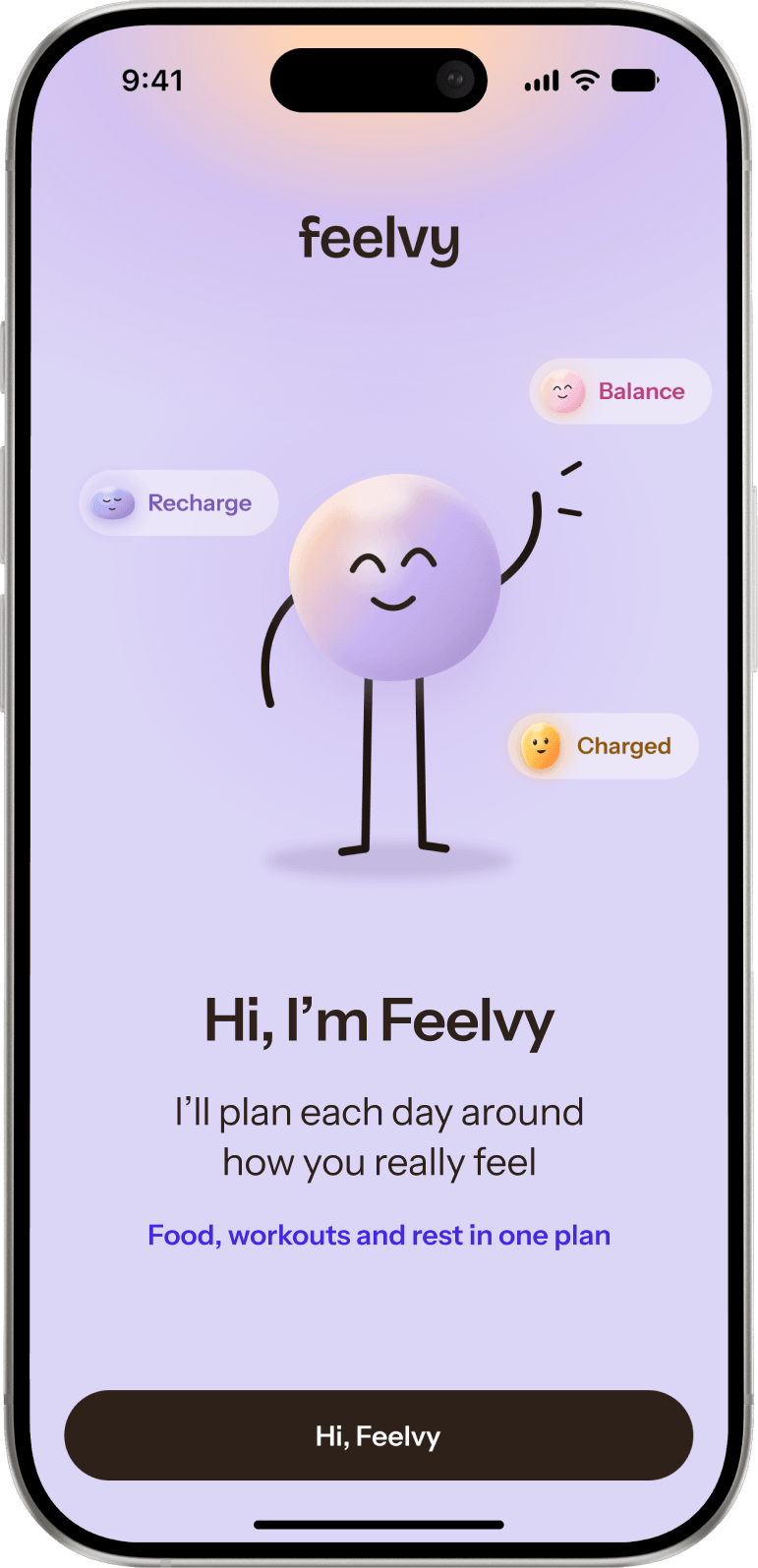
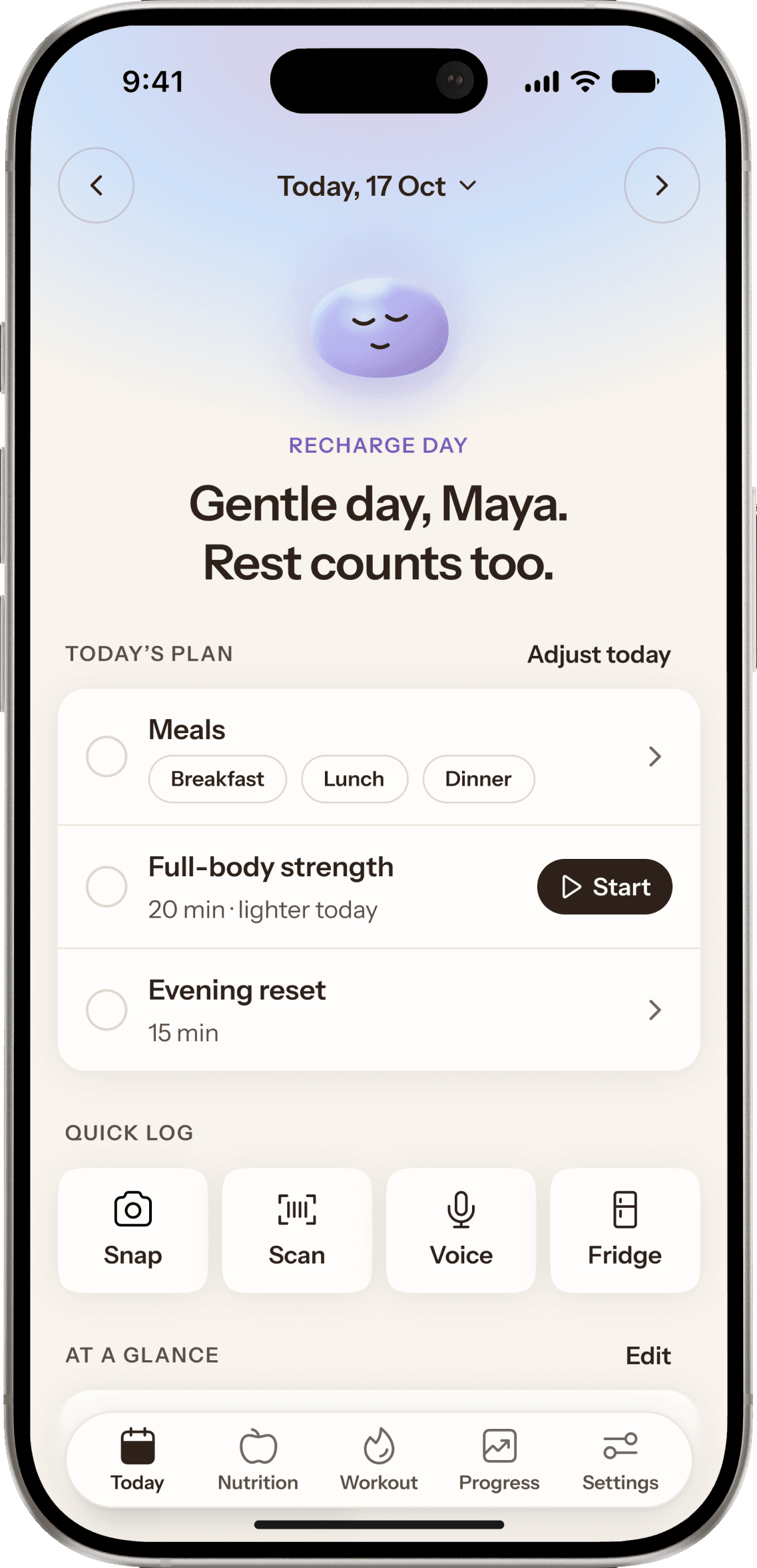
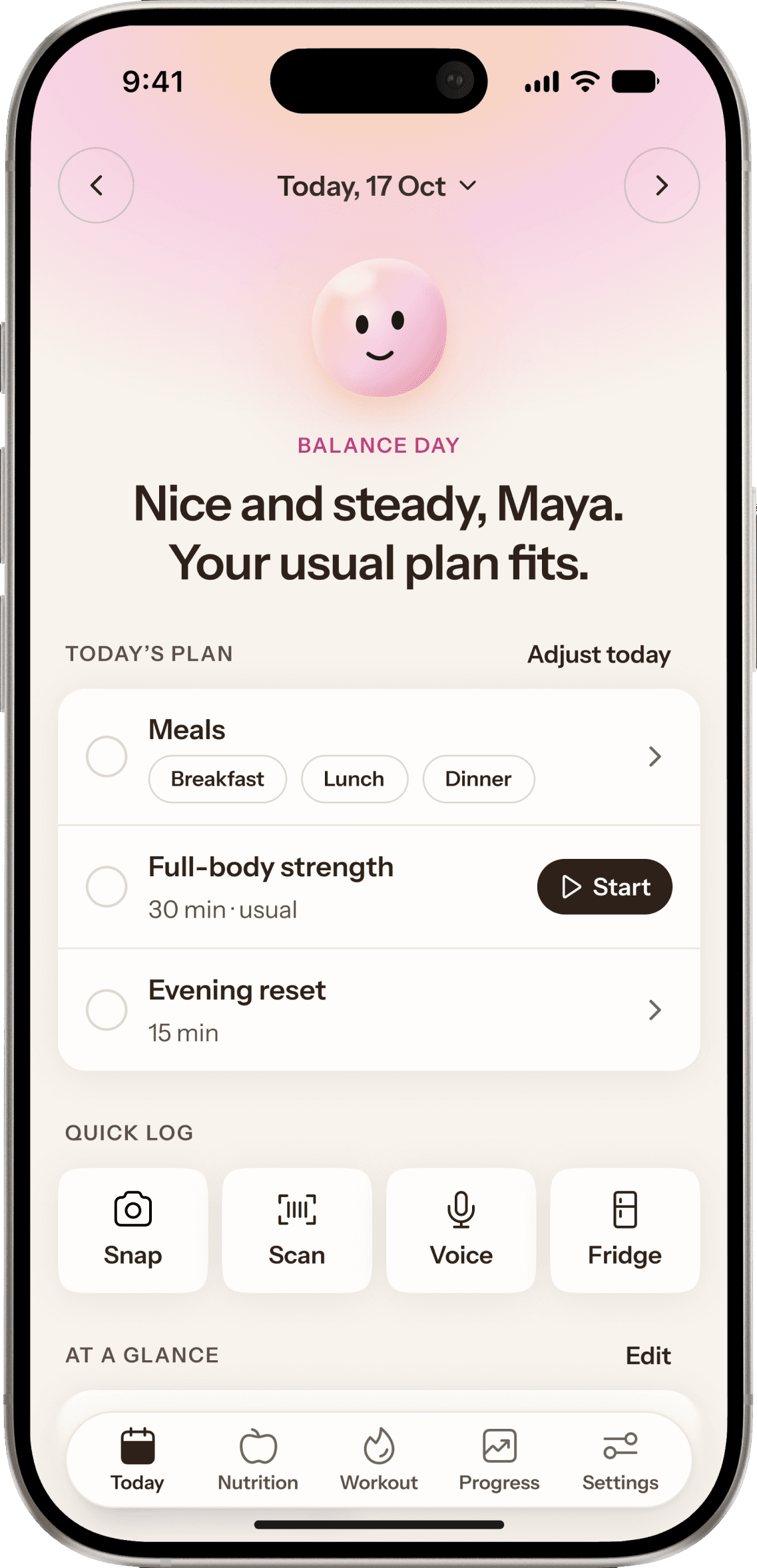
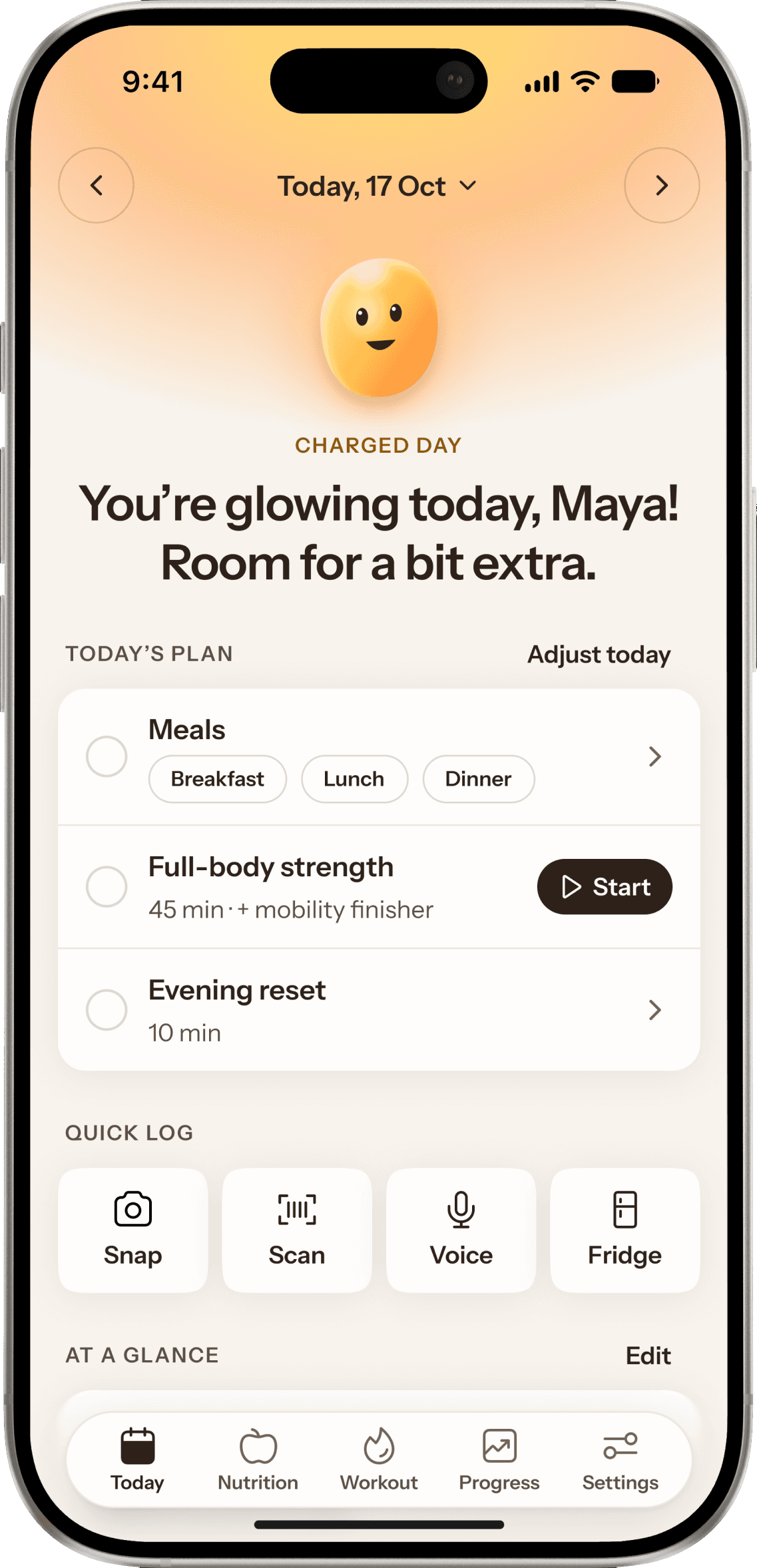
I wanted Feelvy to feel supportive rather than demanding. Its expressive character and adaptive colors reflect the user's daily energy:
- Recharge. A lighter day.
- Balance. Steady energy.
- Charged. More energy.
The character's expression and the Today screen's background change together, making each state recognizable without labeling it as good or bad.



[ Reflection ]
Good personalization gives people a choice
I took Feelvy from the initial brief and user research through product definition, information architecture, wireframes, and high-fidelity iOS design. The project reinforced three lessons:
- Control is part of personalization. Even relevant recommendations need room for human judgement.
- Transparency matters. AI-generated estimates and suggestions should be easy to understand and correct.
- Design for imperfect days. A healthy routine should accommodate change, not punish it.
The best personalization helps people make decisions, not just follow instructions.